Skip to content

Inscriptions

Inscription plates from Epigraphia Telanganica

These ink impressions, called estampages, come from the plates of Epigraphia Telanganica, published by the Government of Telangana in 2023. They show the inscriptions as the stones carry them, some with carved emblems above the text. The publisher permits their use for non-commercial education with full credit.

Volume I

Karimnagar, Arikesari II, 946
This record in the database

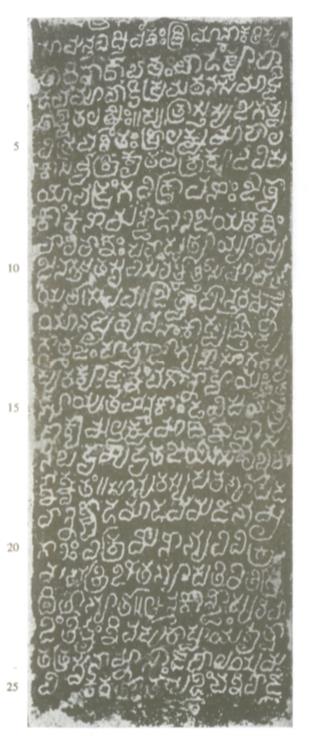
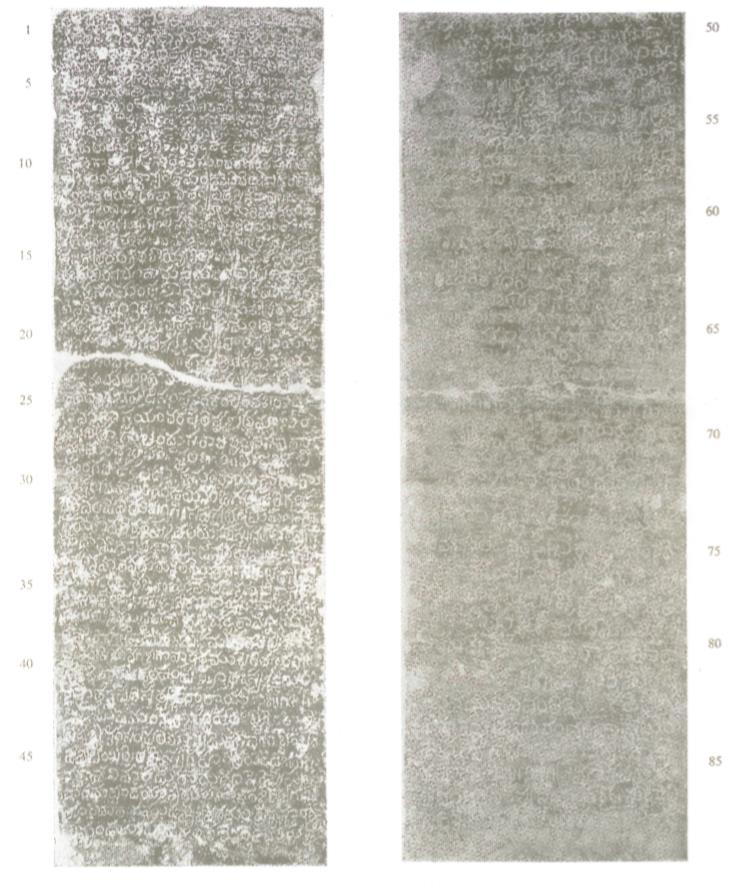
Ink impressions of two faces of a tall stone, side by side. Pale rounded letters stand on a dark ground, and printed numbers mark every fourth line.
This ink impression shows the first and second sides of the inscription of Arikesari II at Karimnagar, dated 946. Arikesari II was a Chalukya king of Vemulavada. The stone now lies in the local museum.Epigraphia Telanganica, Vol. I (Dr MCR HRD Institute, Government of Telangana, 2023), plate 1, p. 426. Reproduced for non-commercial educational use, as the publisher permits.
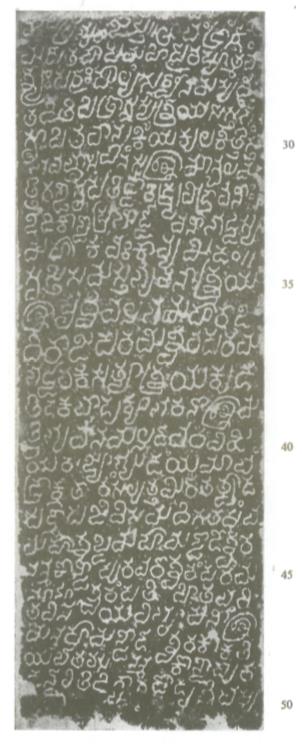
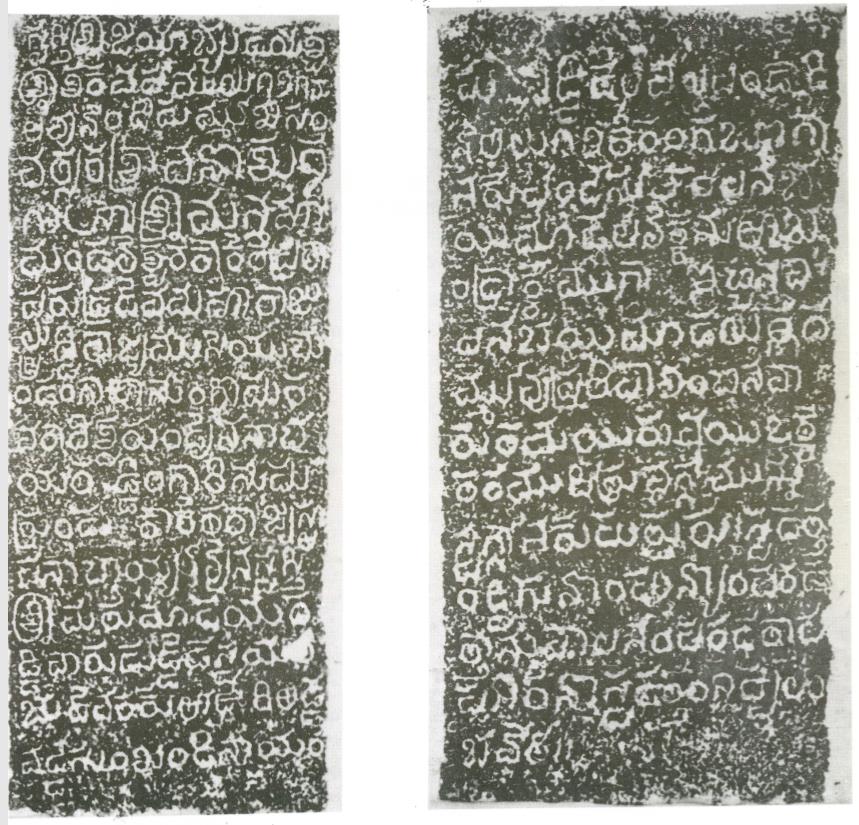
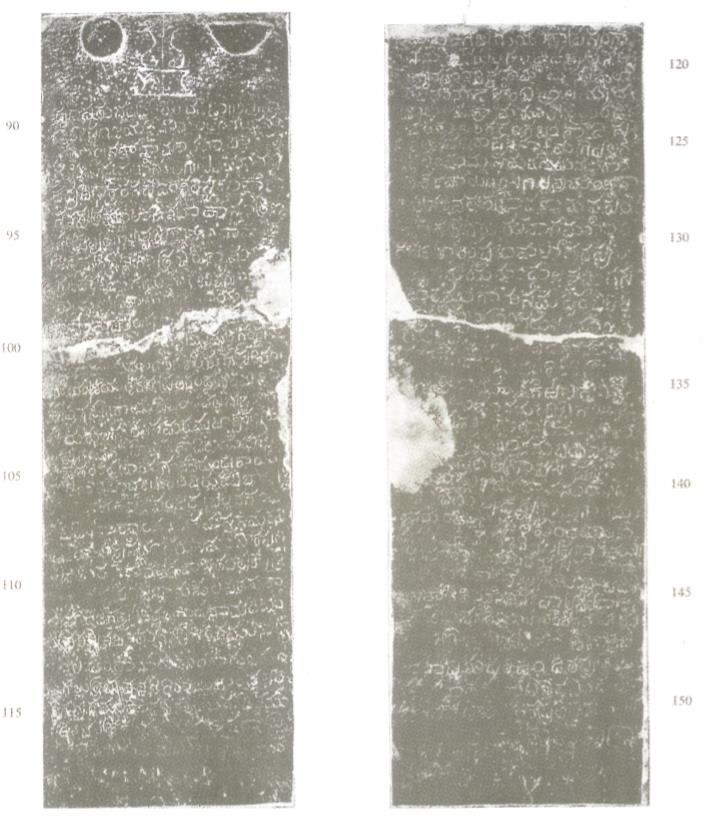
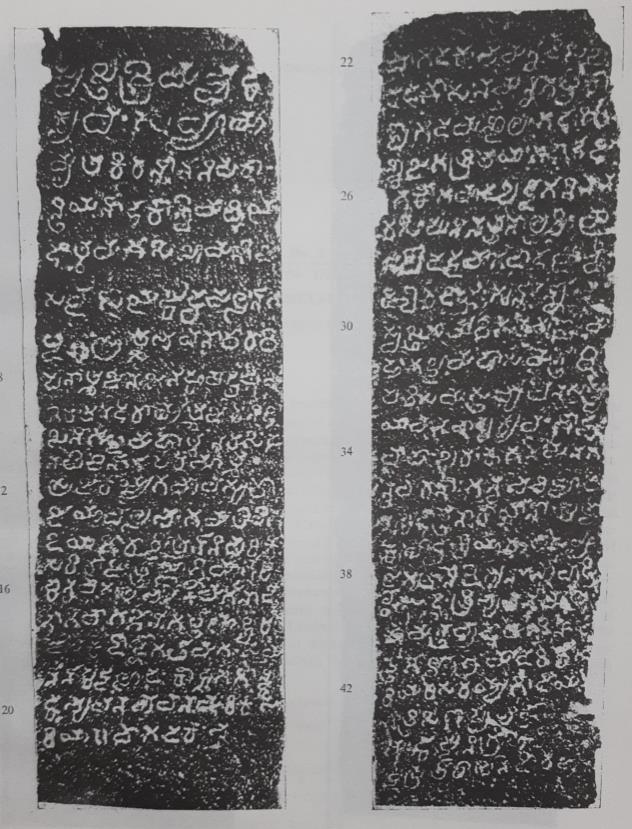
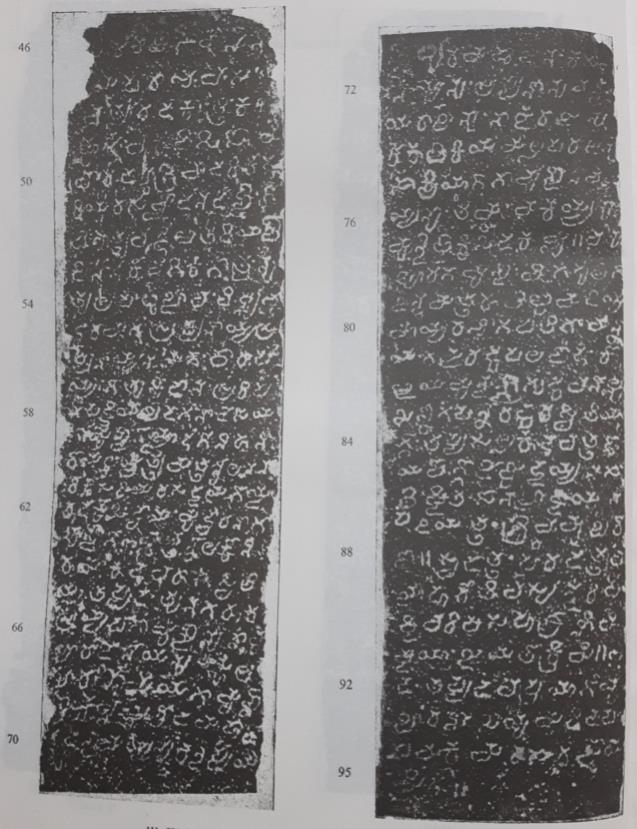
Ink impressions of two more faces of the same stone. Rows of pale letters fill both faces, and printed numbers run from 46 to 95.
This ink impression shows the third and fourth sides of the inscription of Arikesari II at Karimnagar. The record gives the family of the Chalukya kings of Vemulavada.Epigraphia Telanganica, Vol. I (Dr MCR HRD Institute, Government of Telangana, 2023), plate 1, p. 427. Reproduced for non-commercial educational use, as the publisher permits.

Vemulavada, Arikesari II, 10th century

This record in the database

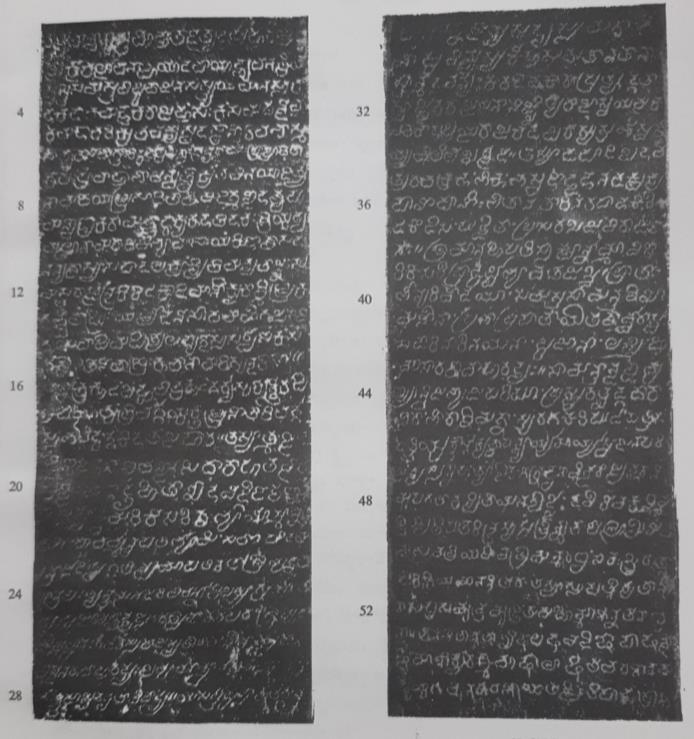
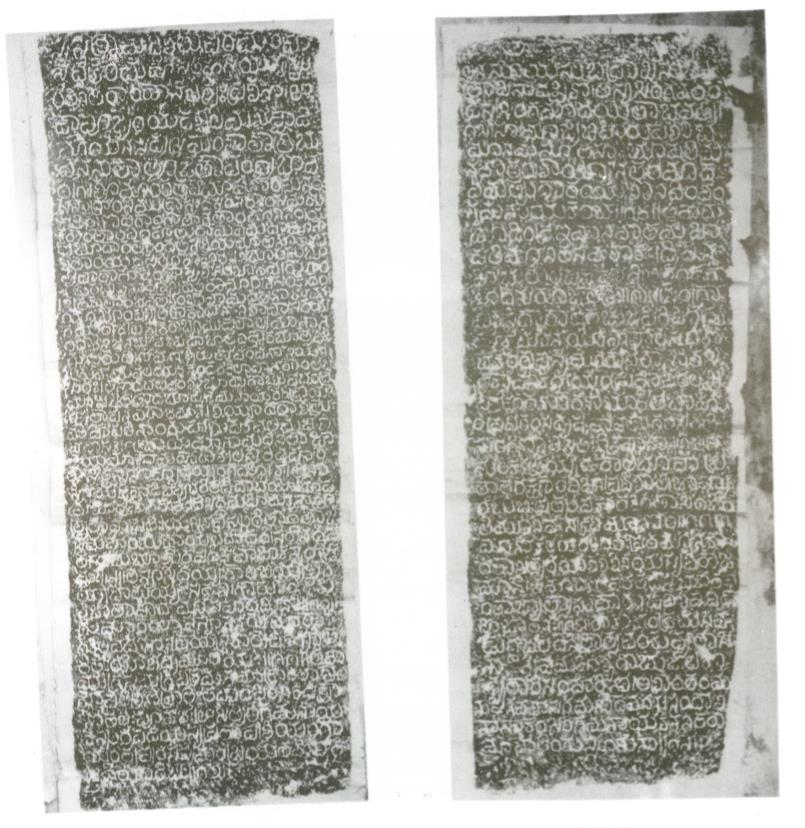
Ink impressions of two faces of a pillar, side by side. Small pale letters fill both faces, and printed numbers mark every fourth line.
This ink impression shows the first and second sides of the pillar inscription of Arikesari II at Vemulavada. The text traces the family of the Chalukya kings of Vemulavada from Vinayaditya to Arikesari II.Epigraphia Telanganica, Vol. I (Dr MCR HRD Institute, Government of Telangana, 2023), plate 2, p. 428. Reproduced for non-commercial educational use, as the publisher permits.
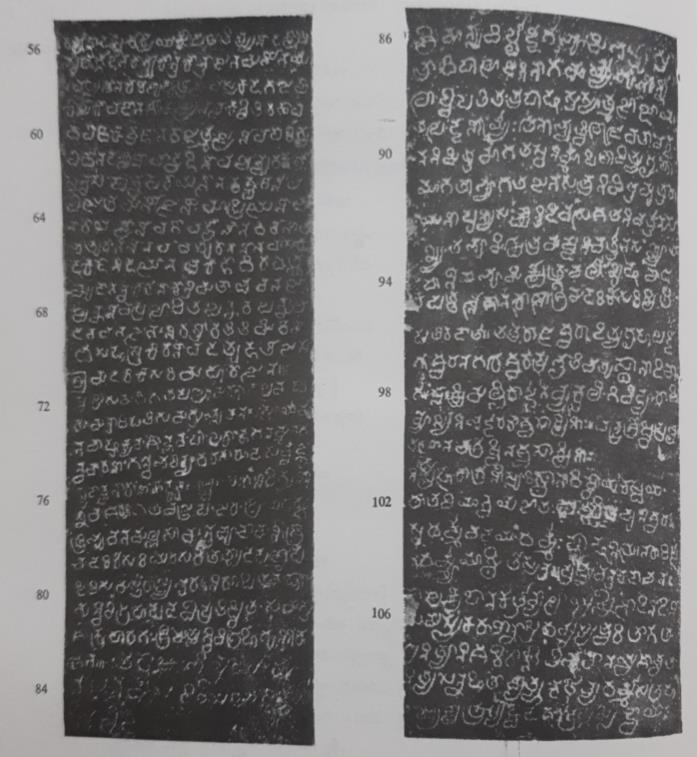
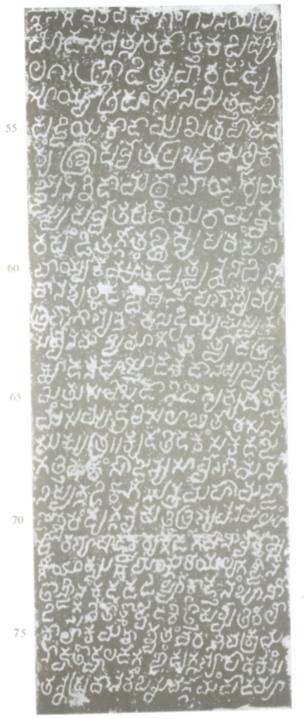
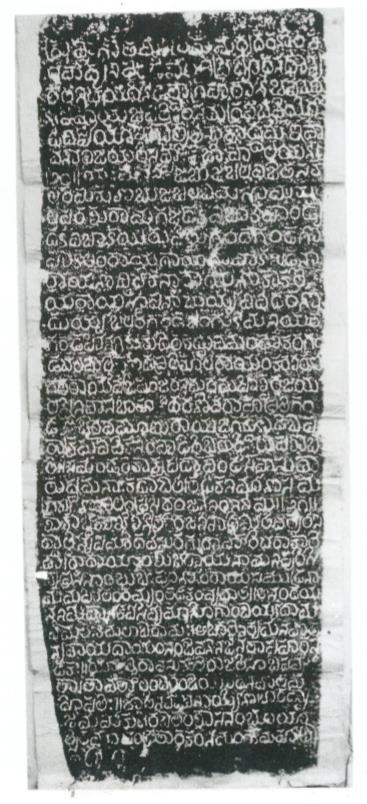
Ink impressions of the other two faces of the same pillar. Printed numbers run from 56 to about 108.
This ink impression shows the third and fourth sides of the pillar inscription of Arikesari II at Vemulavada. The four sides together carry about 108 lines of text.Epigraphia Telanganica, Vol. I (Dr MCR HRD Institute, Government of Telangana, 2023), plate 2, p. 429. Reproduced for non-commercial educational use, as the publisher permits.

Malleswaram, Jagadekamalla I, 1033 and 1038

This inscription is not yet in the site’s database.
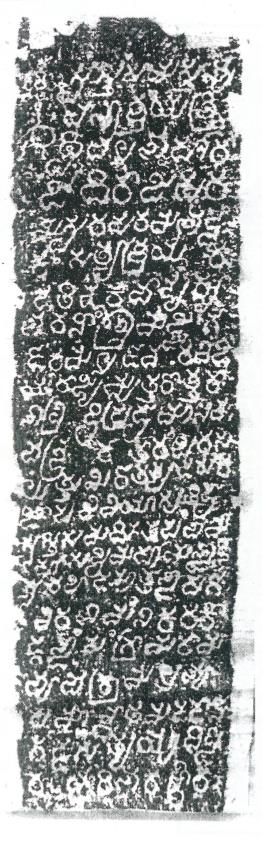
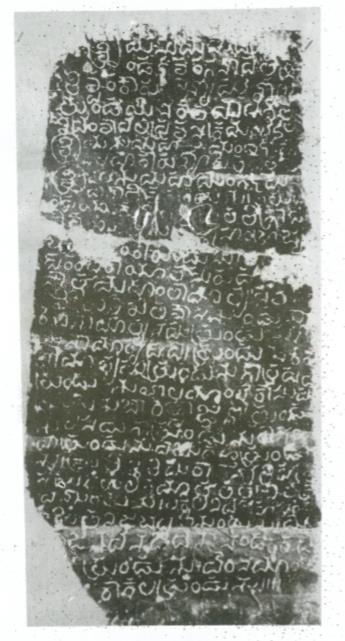
An ink impression of one narrow face of a stone. Large pale letters stand on a dark, speckled ground.
This ink impression shows the first side of the inscription of the Western Chalukya king Jagadekamalla I at Malleswaram. The chief Anemarasa of Kanduru made two grants, dated 1033 and 1038, to the teacher Jagadindu Pandita.Epigraphia Telanganica, Vol. I (Dr MCR HRD Institute, Government of Telangana, 2023), plate 3, p. 430. Reproduced for non-commercial educational use, as the publisher permits.

Bodhan, Somesvara I, 1056

This inscription is not yet in the site’s database.
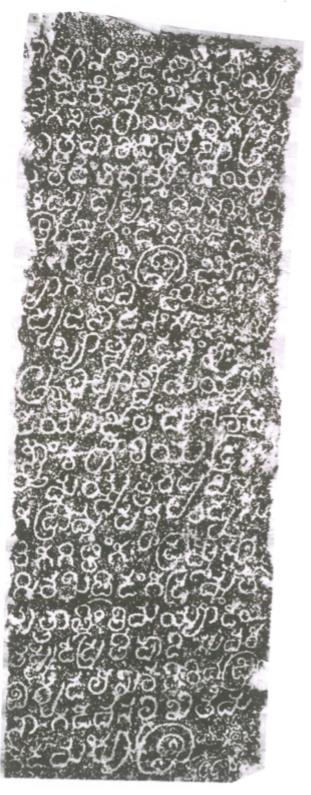
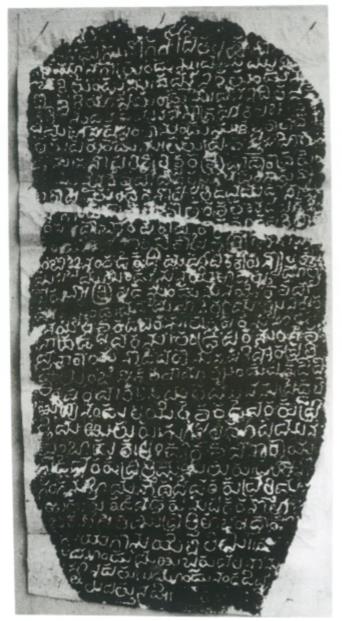
An ink impression of one narrow face of a pillar. Rows of pale letters cover a grey, speckled ground.
This ink impression shows the third side of the inscription of the Western Chalukya king Somesvara I at Bodhan, dated 1056. The record gives house sites, oil mills and a flower garden near the Indranarayana temple.Epigraphia Telanganica, Vol. I (Dr MCR HRD Institute, Government of Telangana, 2023), plate 6, p. 435. Reproduced for non-commercial educational use, as the publisher permits.

Bodhan, Somesvara II, 1072

This inscription is not yet in the site’s database.
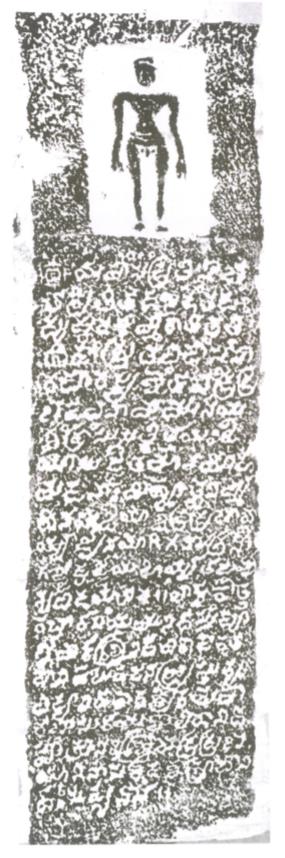
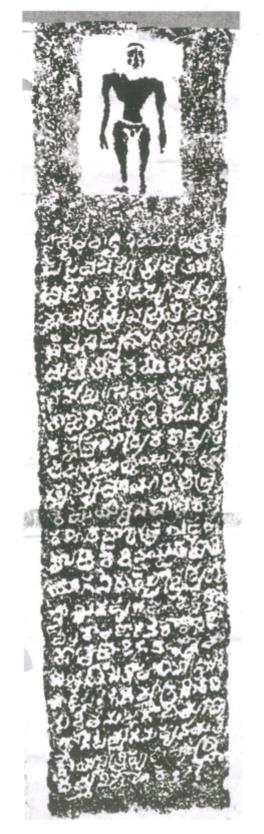
An ink impression of one face of a pillar. A standing, unclothed Jaina teacher is carved in a frame at the top, with rows of letters below.
This ink impression shows the first side of the inscription of the time of Somesvara II at Bodhan, dated 1072. A standing Jaina Tirthankara is carved above the text. The record honours the Jaina teacher Chandraprabha after his death.Epigraphia Telanganica, Vol. I (Dr MCR HRD Institute, Government of Telangana, 2023), plate 8, p. 438. Reproduced for non-commercial educational use, as the publisher permits.
An ink impression of another face of the same pillar. A second standing Jaina teacher is carved in a frame at the top, above rows of letters.
This ink impression shows the fourth side of the Jaina memorial inscription at Bodhan, dated 1072. A standing Jaina Tirthankara is carved above the text on this side as well.Epigraphia Telanganica, Vol. I (Dr MCR HRD Institute, Government of Telangana, 2023), plate 8, p. 439. Reproduced for non-commercial educational use, as the publisher permits.

Puduru, Vikramaditya VI, 1087

This inscription is not yet in the site’s database.
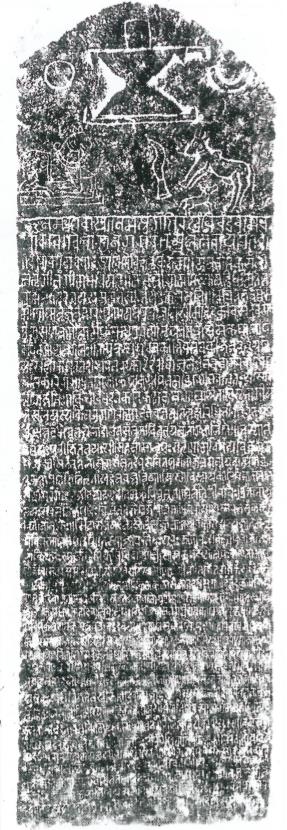
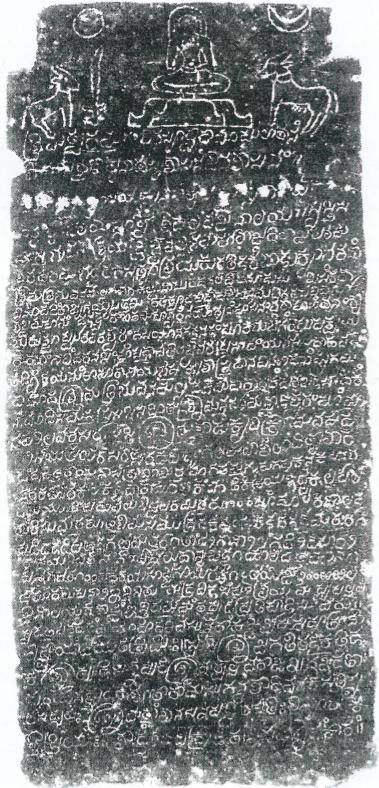
An ink impression of an inscribed slab. A seated Jaina teacher sits under a canopy at the top, with the sun, the moon and an animal on each side.
This ink impression shows the inscription of Vikramaditya VI at Puduru, dated 1087. A seated Jaina Tirthankara is carved above the text, with the sun and the moon. The chief Hallavarasa gave land to the Jaina teacher Kanakasena.Epigraphia Telanganica, Vol. I (Dr MCR HRD Institute, Government of Telangana, 2023), plate 9, p. 440. Reproduced for non-commercial educational use, as the publisher permits.

Polepalli, Vikramaditya VI, about 1099

This inscription is not yet in the site’s database.
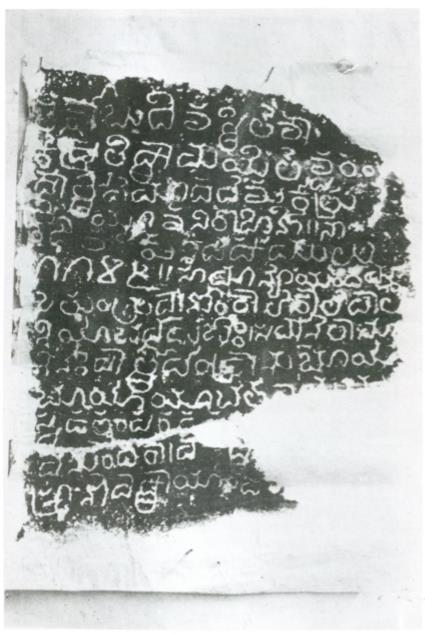
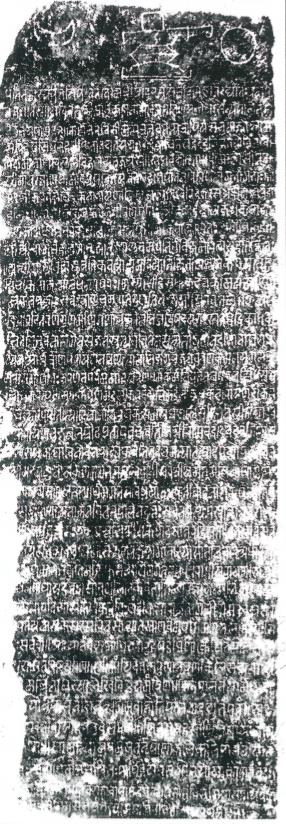
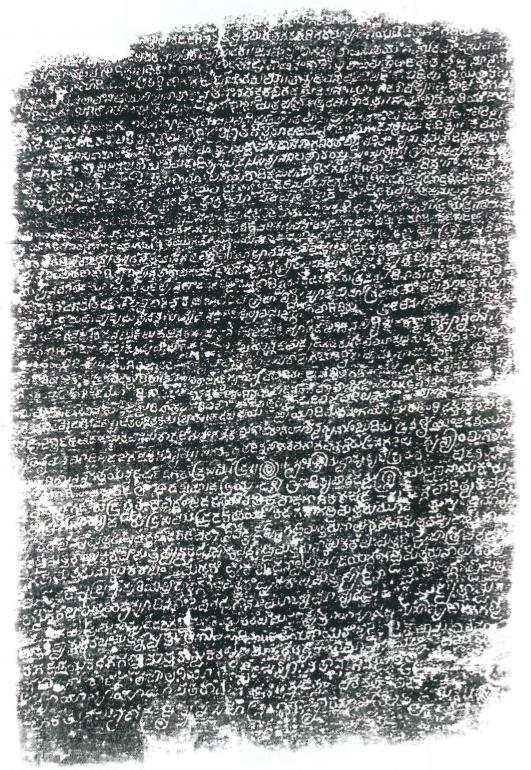
An ink impression of a broad slab covered with many rows of small, close letters on a dark ground.
This ink impression shows the first side of the inscription of the Western Chalukya king Vikramaditya VI at Polepalli. The letters are small and close together.Epigraphia Telanganica, Vol. I (Dr MCR HRD Institute, Government of Telangana, 2023), plate 10, p. 442. Reproduced for non-commercial educational use, as the publisher permits.

Guduru, Kumara Somesvara, 1124

This record in the database

An ink impression of one face of a pillar with a rounded top. A panel at the top shows the sun, a linga and a cow, above rows of letters.
This ink impression shows the first side of the pillar inscription of Kumara Somesvara at Guduru, dated 1124. Kumara Somesvara was a son of the Western Chalukya king Vikramaditya VI. The sun, a linga and a cow are carved above the text.Epigraphia Telanganica, Vol. I (Dr MCR HRD Institute, Government of Telangana, 2023), plate 11, p. 444. Reproduced for non-commercial educational use, as the publisher permits.
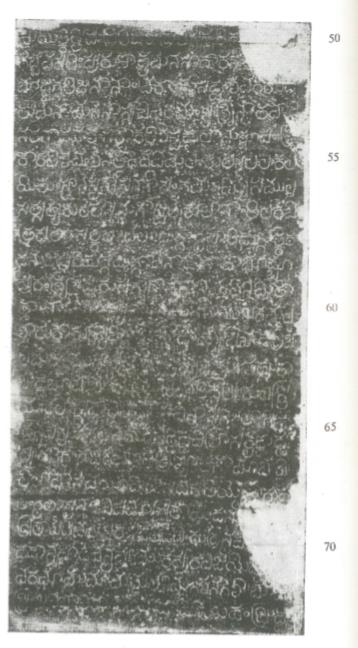
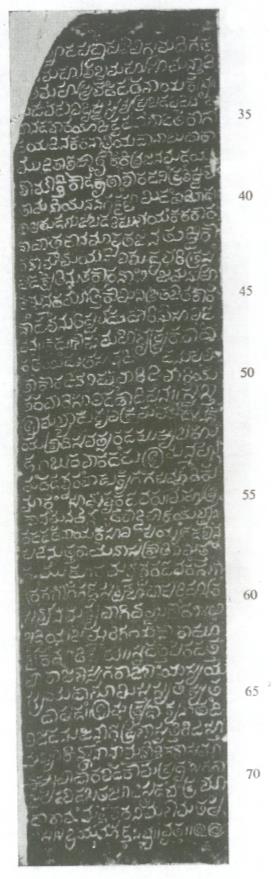
An ink impression of the second face of the same pillar. Rows of pale letters stand on a dark ground, and printed numbers run from 35 to 70.
This ink impression shows the second side of the pillar inscription of Kumara Somesvara at Guduru. Kumara Somesvara governed the Kollipaka region for his father.Epigraphia Telanganica, Vol. I (Dr MCR HRD Institute, Government of Telangana, 2023), plate 11, p. 444. Reproduced for non-commercial educational use, as the publisher permits.
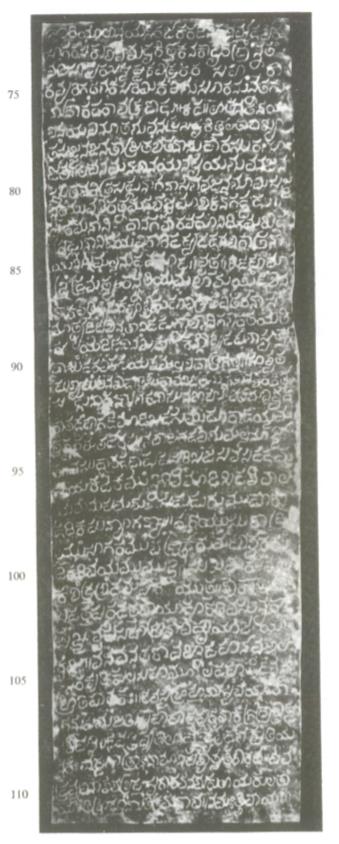
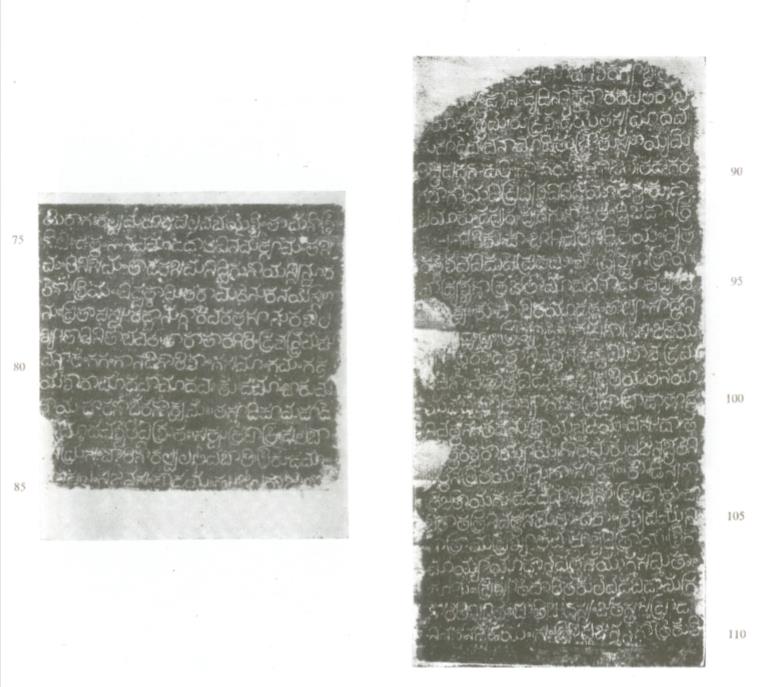
An ink impression of the third face of the same pillar. Printed numbers beside the letters run from 75 to 110.
This ink impression shows the third side of the pillar inscription of Kumara Somesvara at Guduru, dated 1124.Epigraphia Telanganica, Vol. I (Dr MCR HRD Institute, Government of Telangana, 2023), plate 11, p. 445. Reproduced for non-commercial educational use, as the publisher permits.
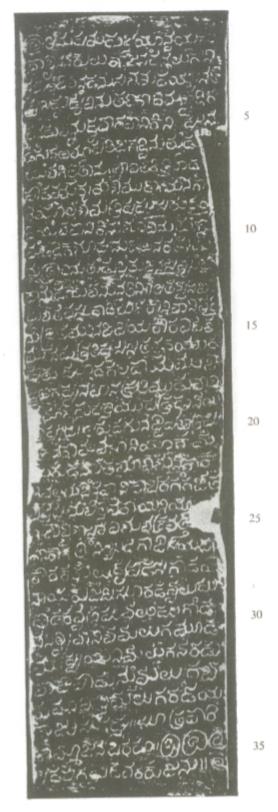
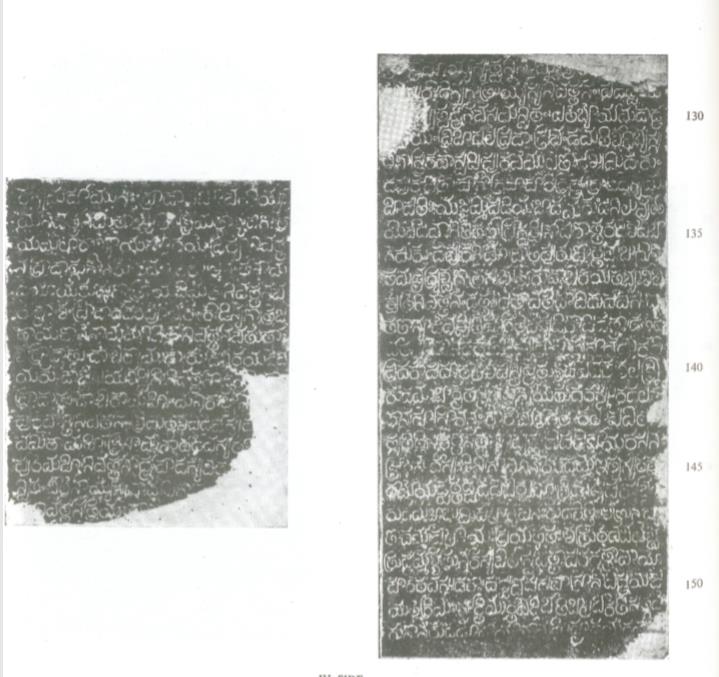
An ink impression of the fourth face of the same pillar. Printed numbers beside the letters start again at 5 and run to 35.
This ink impression shows the fourth side of the pillar inscription at Guduru. The line numbers on this side start again from the beginning.Epigraphia Telanganica, Vol. I (Dr MCR HRD Institute, Government of Telangana, 2023), plate 11, p. 445. Reproduced for non-commercial educational use, as the publisher permits.

Jadcherla, Somesvara III, 1125

This record in the database

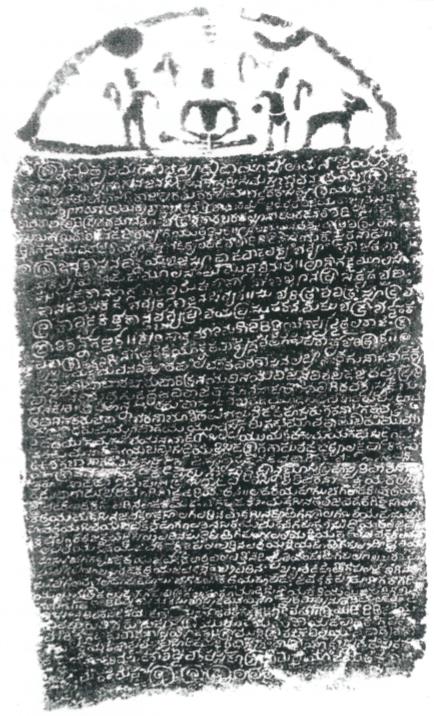
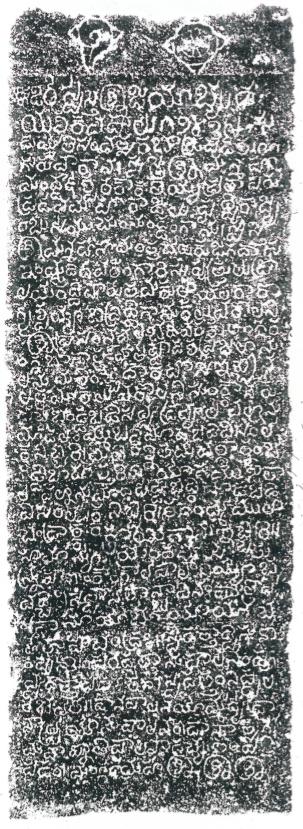
An ink impression of a slab with a rounded top. The top shows the sun, two standing persons, an object on a stand and an animal. Close rows of letters fill the rest.
This ink impression shows the inscription of the time of the Western Chalukya king Somesvara III at Jadcherla, dated 1125. The rounded top of the slab shows the sun, two standing persons and an animal.Epigraphia Telanganica, Vol. I (Dr MCR HRD Institute, Government of Telangana, 2023), plate 12, p. 446. Reproduced for non-commercial educational use, as the publisher permits.

Volume II

Kazipet, Beta II, 1090

This record in the database

An ink impression of one face of a pillar. Pale rounded letters stand on a grey ground, and printed numbers run from 1 to 25.
This ink impression shows the first side of the Kakatiya pillar inscription at Kazipet, dated 24 November 1090. Epigraphia Telanganica titles it the Kazipet inscription of Duggaraja, the elder son of Beta II. The sources differ on whether Beta II or Duggaraja made the grant.Epigraphia Telanganica, Vol. II (Dr MCR HRD Institute, Government of Telangana, 2023), plate 1, p. 378. Reproduced for non-commercial educational use, as the publisher permits.
An ink impression of the second face of the same pillar. Printed numbers run from about 26 to 50.
This ink impression shows the second side of the Kakatiya pillar inscription at Kazipet. The inscription gives a village to the Kalamukha teacher Ramesvara Pandita of Sriparvata.Epigraphia Telanganica, Vol. II (Dr MCR HRD Institute, Government of Telangana, 2023), plate 1, p. 378. Reproduced for non-commercial educational use, as the publisher permits.
An ink impression of the third face of the same pillar. Printed numbers run from about 52 to 77.
This ink impression shows the third side of the Kakatiya pillar inscription at Kazipet, dated 1090.Epigraphia Telanganica, Vol. II (Dr MCR HRD Institute, Government of Telangana, 2023), plate 1, p. 379. Reproduced for non-commercial educational use, as the publisher permits.
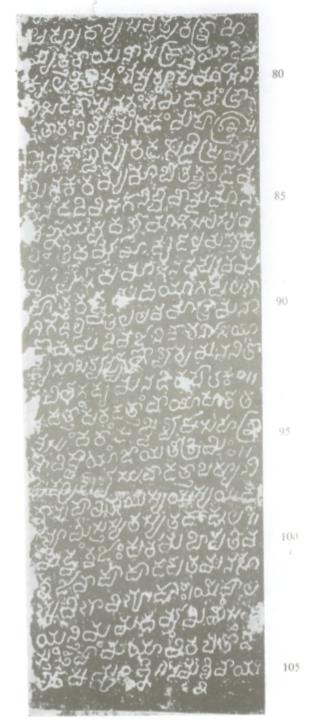
An ink impression of the fourth face of the same pillar. Printed numbers run from about 78 to 105.
This ink impression shows the fourth side of the Kakatiya pillar inscription at Kazipet. The date of the grant is a solar eclipse on 24 November 1090.Epigraphia Telanganica, Vol. II (Dr MCR HRD Institute, Government of Telangana, 2023), plate 1, p. 379. Reproduced for non-commercial educational use, as the publisher permits.

Sanigaram, Beta II, 1107

This record in the database

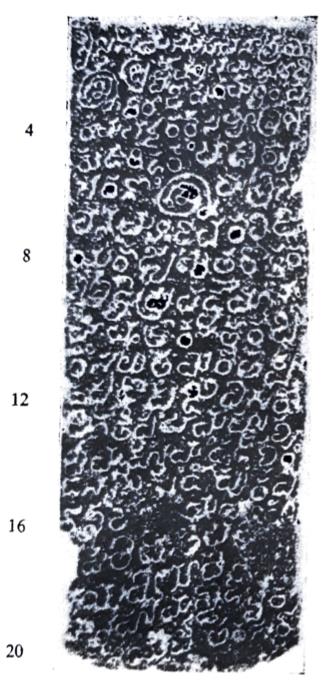
An ink impression of one face of a pillar. Large pale letters stand on a dark ground, and printed numbers run from 1 to 20.
This ink impression shows the first side of the pillar inscription at Sanigaram, dated 10 January 1107. The Kakatiya chief Beta II ruled there under the Western Chalukya king Vikramaditya VI.Epigraphia Telanganica, Vol. II (Dr MCR HRD Institute, Government of Telangana, 2023), plate 3, p. 382. Reproduced for non-commercial educational use, as the publisher permits.
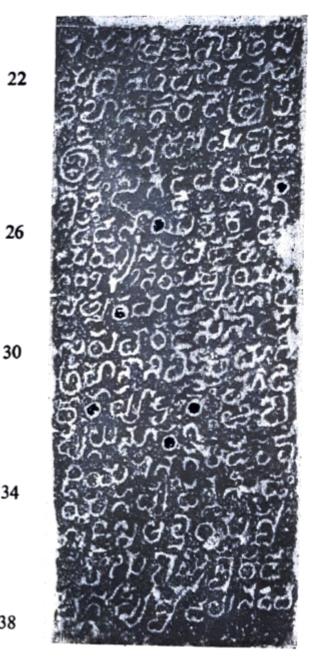
An ink impression of the second face of the same pillar. Printed numbers run from 22 to 38.
This ink impression shows the second side of the Sanigaram pillar inscription of the time of Beta II.Epigraphia Telanganica, Vol. II (Dr MCR HRD Institute, Government of Telangana, 2023), plate 3, p. 382. Reproduced for non-commercial educational use, as the publisher permits.
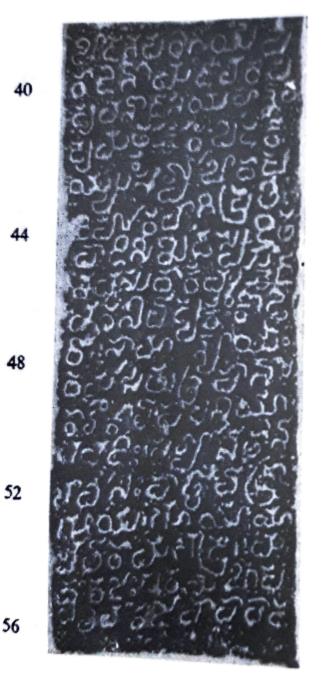
An ink impression of the third face of the same pillar. Printed numbers run from 40 to 56.
This ink impression shows the third side of the Sanigaram pillar inscription of the time of Beta II.Epigraphia Telanganica, Vol. II (Dr MCR HRD Institute, Government of Telangana, 2023), plate 3, p. 383. Reproduced for non-commercial educational use, as the publisher permits.
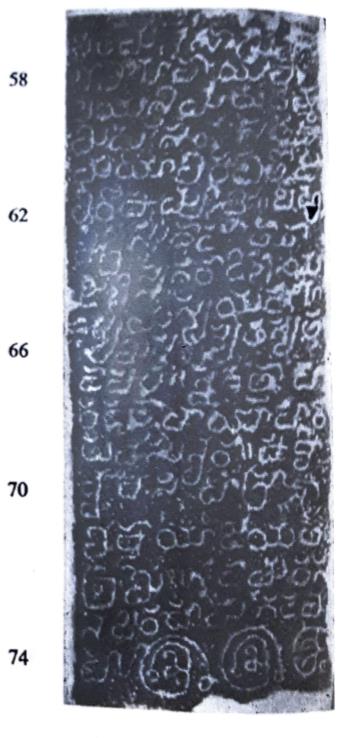
An ink impression of the fourth face of the same pillar. Printed numbers run from 58 to 74.
This ink impression shows the fourth side of the Sanigaram pillar inscription. The pillar stands in front of the old Siva temple in the village.Epigraphia Telanganica, Vol. II (Dr MCR HRD Institute, Government of Telangana, 2023), plate 3, p. 383. Reproduced for non-commercial educational use, as the publisher permits.

Itikala, Harihara, 1148

This record in the database

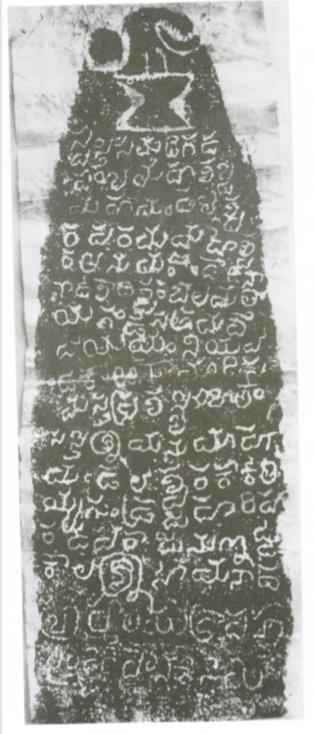
An ink impression of one face of a pillar that narrows toward the top. The sun, the moon and a linga on a pedestal are carved at the top, above large pale letters.
This ink impression shows the first side of the pillar inscription of the Kakatiya chief Harihara at Itikala, dated 1148. The sun, the moon and a linga are carved above the text.Epigraphia Telanganica, Vol. II (Dr MCR HRD Institute, Government of Telangana, 2023), plate 5, p. 386. Reproduced for non-commercial educational use, as the publisher permits.
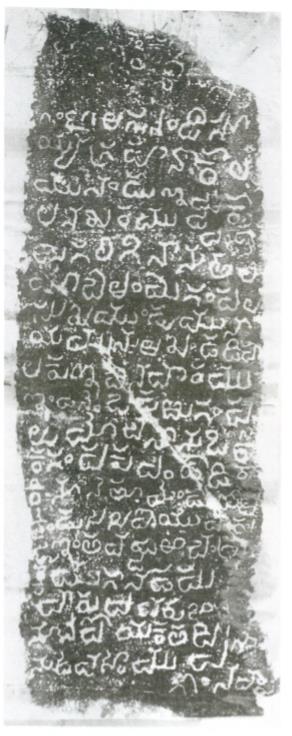
An ink impression of the third face of the same pillar. A crack runs across the face, and large pale letters stand on a dark ground.
This ink impression shows the third side of the Itikala pillar inscription of Harihara, son of Gundaraja. The record gives a share of the trade income of the merchants to the god Somanatha.Epigraphia Telanganica, Vol. II (Dr MCR HRD Institute, Government of Telangana, 2023), plate 5, p. 387. Reproduced for non-commercial educational use, as the publisher permits.
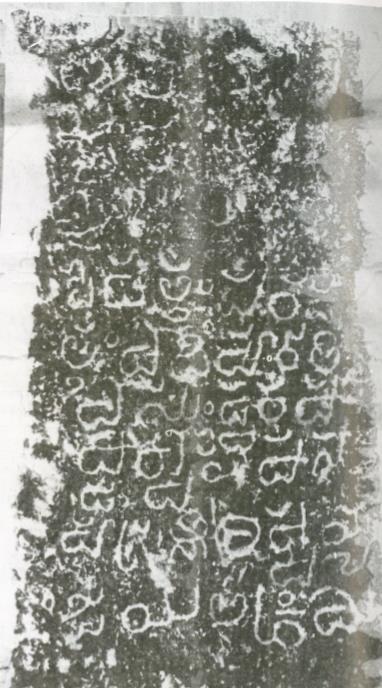
An ink impression of the fourth face of the same pillar. The upper part is worn, and large letters are clear in the lower part.
This ink impression shows the fourth side of the Itikala pillar inscription of Harihara. The upper part of this side is worn.Epigraphia Telanganica, Vol. II (Dr MCR HRD Institute, Government of Telangana, 2023), plate 5, p. 387. Reproduced for non-commercial educational use, as the publisher permits.

Karimnagar, Rudra Deva, 1171

This record in the database

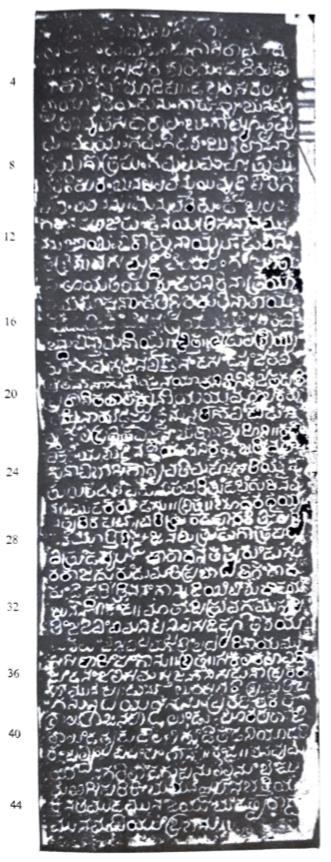
An ink impression of one face of a pillar. Small pale letters stand on a dark ground, and printed numbers run from 1 to 45.
This ink impression shows the first side of the pillar inscription of Gangadhara at Karimnagar, dated 13 January 1171. Gangadhara was a minister of the Kakatiya king Rudra Deva.Epigraphia Telanganica, Vol. II (Dr MCR HRD Institute, Government of Telangana, 2023), plate 6, p. 388. Reproduced for non-commercial educational use, as the publisher permits.
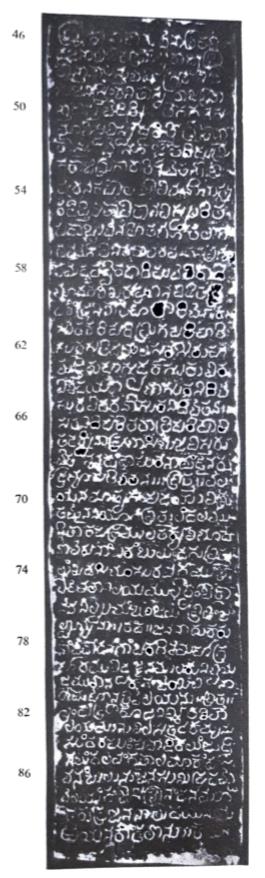
An ink impression of the second face of the same pillar. Printed numbers run from 46 to 88.
This ink impression shows the second side of the Karimnagar inscription of Gangadhara. Gangadhara set up gods at several places and gave gifts to them.Epigraphia Telanganica, Vol. II (Dr MCR HRD Institute, Government of Telangana, 2023), plate 6, p. 388. Reproduced for non-commercial educational use, as the publisher permits.
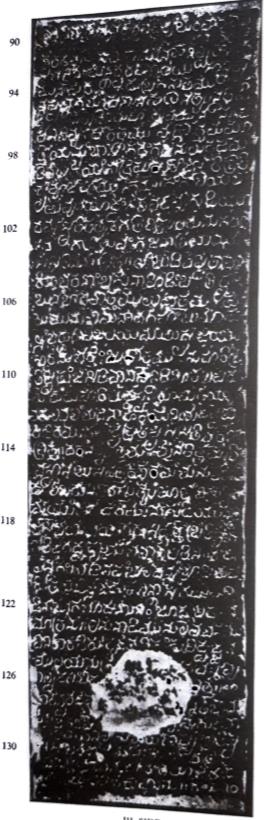
An ink impression of the third face of the same pillar. Printed numbers run from 90 to 130, and a pale patch near the foot hides some letters.
This ink impression shows the third side of the Karimnagar inscription of Gangadhara, minister of Rudra Deva. A damaged patch near the foot hides a few lines.Epigraphia Telanganica, Vol. II (Dr MCR HRD Institute, Government of Telangana, 2023), plate 6, p. 389. Reproduced for non-commercial educational use, as the publisher permits.

Katakuru, Ganapati Deva, 1202

This record in the database

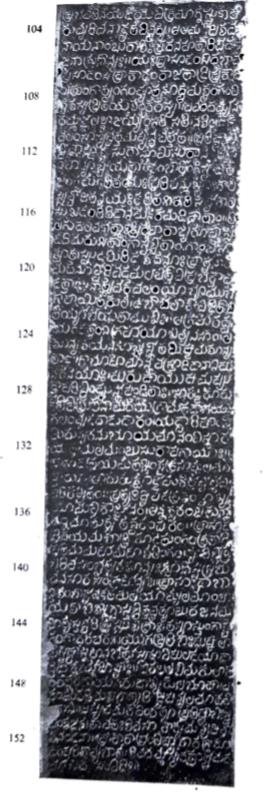
An ink impression of one face of a tall stone. Small pale letters fill the face, and printed numbers run from 104 to 152.
This ink impression shows the third side of the inscription of the time of Ganapati Deva at Katakuru, dated 1202. The record gives a long family history of the Viriyala chiefs.Epigraphia Telanganica, Vol. II (Dr MCR HRD Institute, Government of Telangana, 2023), plate 7, p. 391. Reproduced for non-commercial educational use, as the publisher permits.
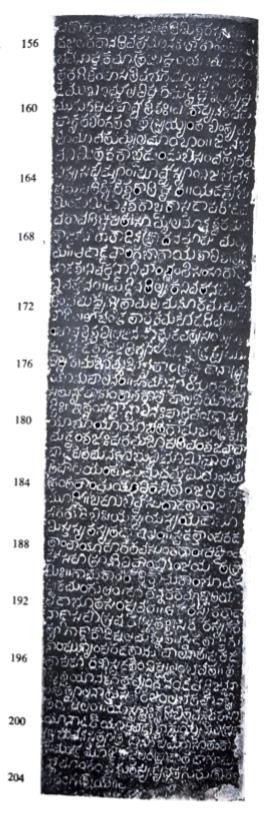
An ink impression of the fourth face of the same stone. Printed numbers run from 156 to 204.
This ink impression shows the fourth side of the Katakuru inscription of the time of Ganapati Deva, dated 1202.Epigraphia Telanganica, Vol. II (Dr MCR HRD Institute, Government of Telangana, 2023), plate 7, p. 391. Reproduced for non-commercial educational use, as the publisher permits.

Kundavaram, Kundamamba, 1213

This record in the database

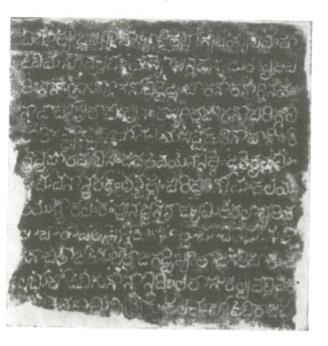
An ink impression of the broken upper part of an inscribed stone. Rows of pale letters stand on a dark ground.
This ink impression shows the upper part of the first side of the Kundavaram inscription, dated 22 April 1213. Kundamamba was the sister of the Kakatiya king Ganapati Deva.Epigraphia Telanganica, Vol. II (Dr MCR HRD Institute, Government of Telangana, 2023), plate 9, p. 394. Reproduced for non-commercial educational use, as the publisher permits.
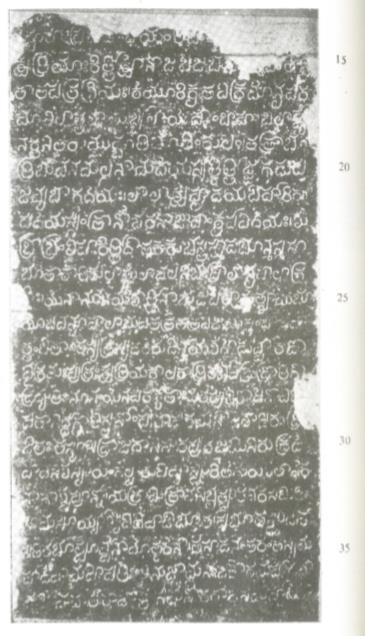
An ink impression of a tall part of an inscribed stone with a broken top. Printed numbers run from 15 to 37.
This ink impression shows the lower part of the first side of the Kundavaram inscription of Kundamamba. The text opens with a prayer to Varaha, the emblem of the Kakatiya family.Epigraphia Telanganica, Vol. II (Dr MCR HRD Institute, Government of Telangana, 2023), plate 9, p. 394. Reproduced for non-commercial educational use, as the publisher permits.
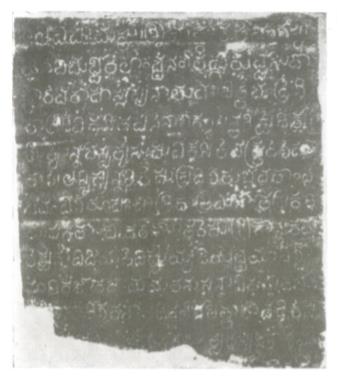
An ink impression of a small, nearly square part of an inscribed stone. Rows of pale letters cover it.
This ink impression shows the upper part of the second side of the Kundavaram inscription of Kundamamba, dated 1213.Epigraphia Telanganica, Vol. II (Dr MCR HRD Institute, Government of Telangana, 2023), plate 9, p. 395. Reproduced for non-commercial educational use, as the publisher permits.
An ink impression of a tall part of an inscribed stone with broken edges. Printed numbers run from 50 to 72.
This ink impression shows the lower part of the second side of the Kundavaram inscription. Kundamamba gave the village of Kundapura to Brahmins and built a tank called Kundasamudram.Epigraphia Telanganica, Vol. II (Dr MCR HRD Institute, Government of Telangana, 2023), plate 9, p. 395. Reproduced for non-commercial educational use, as the publisher permits.
Ink impressions of two broken parts of an inscribed stone, side by side. Printed numbers run from 75 to 111.
This ink impression shows the third side of the Kundavaram inscription of Kundamamba in two parts. Kundamamba built temples of Kundesvara, Vishnu and the Sun.Epigraphia Telanganica, Vol. II (Dr MCR HRD Institute, Government of Telangana, 2023), plate 9, p. 396. Reproduced for non-commercial educational use, as the publisher permits.
Ink impressions of two broken parts of an inscribed stone, side by side. Printed numbers run up to 152.
This ink impression shows the fourth side of the Kundavaram inscription in two parts. The poet Balabharati composed the text.Epigraphia Telanganica, Vol. II (Dr MCR HRD Institute, Government of Telangana, 2023), plate 9, p. 397. Reproduced for non-commercial educational use, as the publisher permits.

Kondapaka, Ganapati Deva, 1225

This record in the database

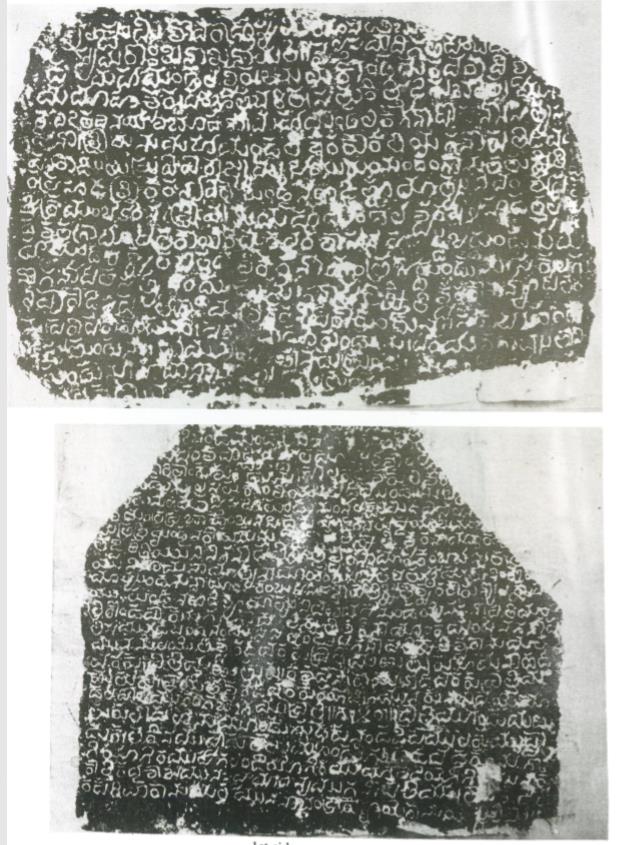
Ink impressions of two pieces of a broken stone, one above the other. Rows of large pale letters stand on a dark ground.
This ink impression shows the first side of the inscription of Ganapati Deva at Kondapaka, dated 13 January 1225. The stone is broken, so the book prints two pieces.Epigraphia Telanganica, Vol. II (Dr MCR HRD Institute, Government of Telangana, 2023), plate 10, p. 398. Reproduced for non-commercial educational use, as the publisher permits.
An ink impression of another face of the broken stone. Cracks cross the face, and rows of pale letters stand on a dark ground.
This ink impression shows the second side of the Kondapaka inscription of Ganapati Deva, dated 1225.Epigraphia Telanganica, Vol. II (Dr MCR HRD Institute, Government of Telangana, 2023), plate 10, p. 399. Reproduced for non-commercial educational use, as the publisher permits.
An ink impression of the third face of the broken stone. A crack crosses the upper part, and rows of letters fill the face.
This ink impression shows the third side of the Kondapaka inscription of Ganapati Deva, dated 1225.Epigraphia Telanganica, Vol. II (Dr MCR HRD Institute, Government of Telangana, 2023), plate 10, p. 399. Reproduced for non-commercial educational use, as the publisher permits.
An ink impression of a broken face of the stone. Large pale letters fill the upper part, and the lower part is missing.
This ink impression shows the fourth side of the Kondapaka inscription of Ganapati Deva. Only part of this side survives.Epigraphia Telanganica, Vol. II (Dr MCR HRD Institute, Government of Telangana, 2023), plate 10, p. 400. Reproduced for non-commercial educational use, as the publisher permits.

Karimnagar, Ganapati Deva, 1246

This record in the database

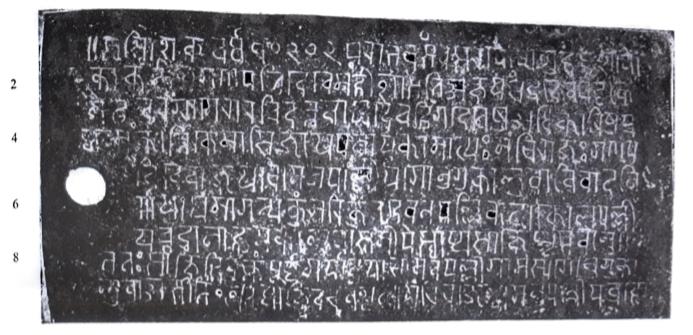
An ink impression of a wide copper plate with a round hole at the left. Lines of Nagari letters cross the plate, with printed line numbers in the margin.
This ink impression shows the first side of the copper-plate grant of Ganapati Deva from Karimnagar, dated 15 December 1246. The text is in Nagari letters.Epigraphia Telanganica, Vol. II (Dr MCR HRD Institute, Government of Telangana, 2023), plate 11, p. 401. Reproduced for non-commercial educational use, as the publisher permits.
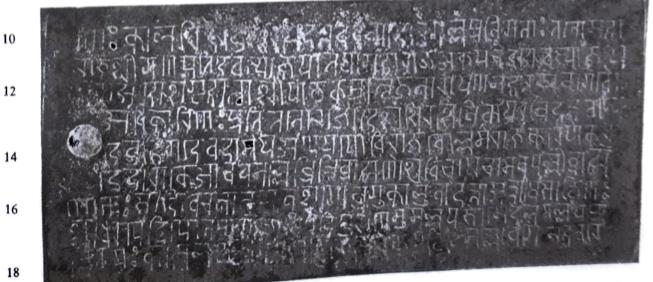
An ink impression of the other face of a copper plate with a round hole at the left. Printed numbers run from 10 to 18.
This ink impression shows the second side of the Karimnagar copper-plate grant of Ganapati Deva. The round hole held the plates together.Epigraphia Telanganica, Vol. II (Dr MCR HRD Institute, Government of Telangana, 2023), plate 11, p. 401. Reproduced for non-commercial educational use, as the publisher permits.
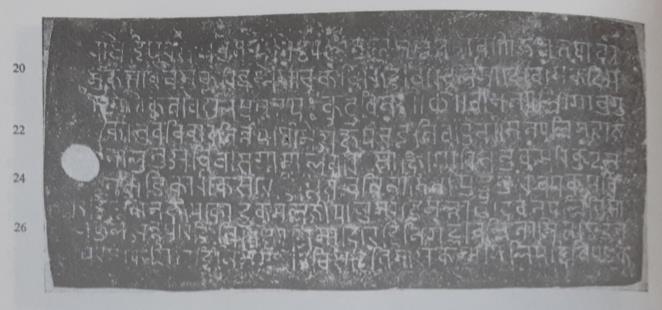
An ink impression of the second copper plate, with a round hole at the left. Printed numbers run from 20 to 26.
This ink impression shows the third side of the Karimnagar copper-plate grant of Ganapati Deva, dated 1246.Epigraphia Telanganica, Vol. II (Dr MCR HRD Institute, Government of Telangana, 2023), plate 11, p. 402. Reproduced for non-commercial educational use, as the publisher permits.
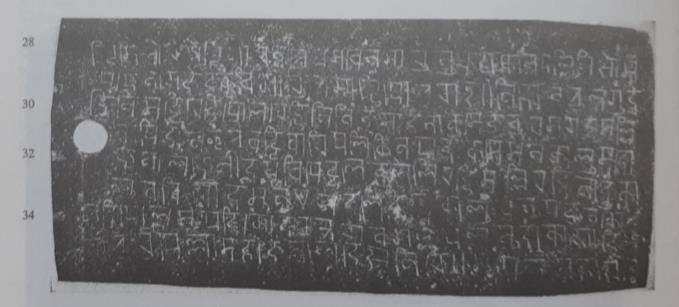
An ink impression of the last face of the copper plates, with a round hole at the left. Printed numbers run from 28 to 34.
This ink impression shows the fourth side of the Karimnagar copper-plate grant of Ganapati Deva. The grant uses Sanskrit and Telugu in Nagari letters.Epigraphia Telanganica, Vol. II (Dr MCR HRD Institute, Government of Telangana, 2023), plate 11, p. 402. Reproduced for non-commercial educational use, as the publisher permits.

Kalvakol, Ganapati Deva, undated

This record in the database

An ink impression of one face of a pillar. Many rows of small letters fill the face, and the ground is dark and patchy.
This ink impression shows the first side of the inscription of Ganapati Deva at Kalvakol. The record is in Sanskrit, and it is not dated.Epigraphia Telanganica, Vol. II (Dr MCR HRD Institute, Government of Telangana, 2023), plate 12, p. 403. Reproduced for non-commercial educational use, as the publisher permits.
An ink impression of a second face of the same stone. The upper part is pale and patchy, and letters are clearer in the lower part.
This ink impression shows the second side of the Kalvakol inscription of Ganapati Deva. The upper part of this side is faint.Epigraphia Telanganica, Vol. II (Dr MCR HRD Institute, Government of Telangana, 2023), plate 12, p. 403. Reproduced for non-commercial educational use, as the publisher permits.

Volume III

Bandaramesvarapalli, Rudrama Devi, 1264

This record in the database

An ink impression of an inscribed stone. Large, deep letters stand out in white on a dark ground.
This ink impression shows the first side of the inscription of the time of Rudrama Devi at Bandaramesvarapalli, dated 1264. The record calls the ruler Rudradeva Maharaja.Epigraphia Telanganica, Vol. III (Dr MCR HRD Institute, Government of Telangana, 2023), plate 1, p. 312. Reproduced for non-commercial educational use, as the publisher permits.
An ink impression of a second face of the stone. Large letters fill the upper half, and the lower half is worn.
This ink impression shows the second side of the Bandaramesvarapalli inscription. The chief Gumdaya gave a village to the god Ramanatha.Epigraphia Telanganica, Vol. III (Dr MCR HRD Institute, Government of Telangana, 2023), plate 1, p. 312. Reproduced for non-commercial educational use, as the publisher permits.

Bhutpur, Rudrama Devi, 1271

This record in the database

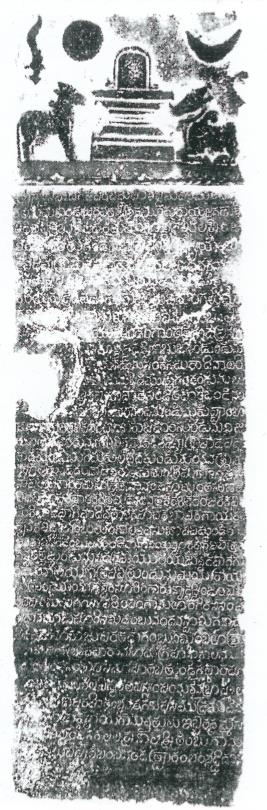
An ink impression of one face of a pillar. A dagger, the sun, the moon, a linga on a stepped pedestal and two cattle are carved at the top, above small letters.
This ink impression shows the first side of the pillar inscription of the time of Rudrama Devi at Bhutpur, dated 1271. A dagger, the sun, the moon, a linga and two cattle are carved above the text.Epigraphia Telanganica, Vol. III (Dr MCR HRD Institute, Government of Telangana, 2023), plate 2, p. 313. Reproduced for non-commercial educational use, as the publisher permits.
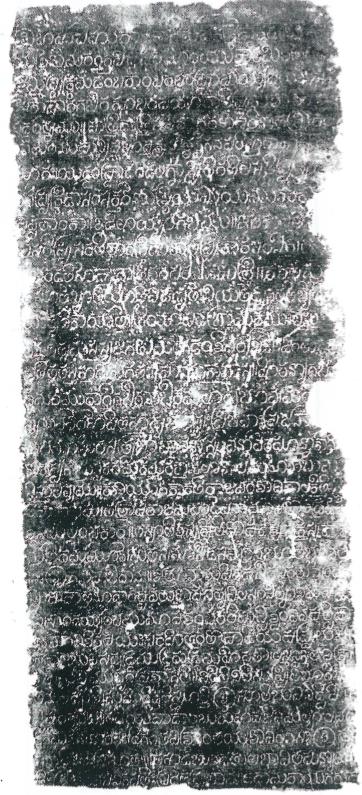
An ink impression of the second face of the same pillar. Rows of small letters cover a dark, patchy ground.
This ink impression shows the second side of the Bhutpur pillar inscription. Malayala Gunda built a tank and named it after his master Ganapati Deva.Epigraphia Telanganica, Vol. III (Dr MCR HRD Institute, Government of Telangana, 2023), plate 2, p. 313. Reproduced for non-commercial educational use, as the publisher permits.
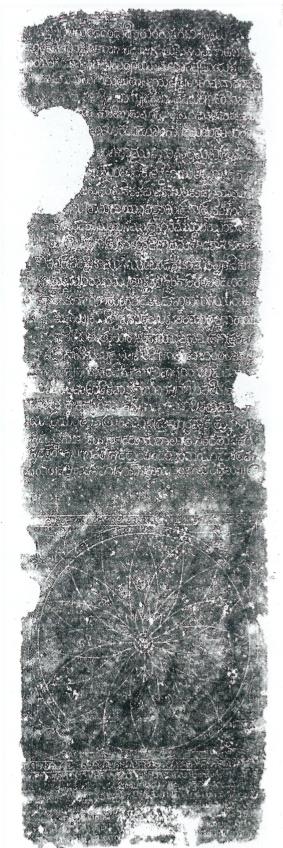
An ink impression of the fourth face of the same pillar. A large circular diagram of many petals fills the lower half, below faint letters.
This ink impression shows the fourth side of the Bhutpur pillar inscription. A large circular design with many petals is cut below the text.Epigraphia Telanganica, Vol. III (Dr MCR HRD Institute, Government of Telangana, 2023), plate 2, p. 314. Reproduced for non-commercial educational use, as the publisher permits.

Makthal, Yadava Ramachandra, 1295

This record in the database

An ink impression of a pillar face with a rounded top. The sun, the moon and a linga on a pedestal are carved at the top. Worn carvings of a person and an animal are below them.
This ink impression shows the first side of the inscription of the Yadava king Ramachandra at Makthal, dated 1295. The sun, the moon and a linga are carved above the Nagari text.Epigraphia Telanganica, Vol. III (Dr MCR HRD Institute, Government of Telangana, 2023), plate 3, p. 315. Reproduced for non-commercial educational use, as the publisher permits.
An ink impression of the second face of the same pillar. The moon, a linga on a pedestal and the sun are carved at the top, above small Nagari letters.
This ink impression shows the second side of the Makthal inscription of Ramachandra. The text gives the family of the Yadava kings of Devagiri.Epigraphia Telanganica, Vol. III (Dr MCR HRD Institute, Government of Telangana, 2023), plate 3, p. 315. Reproduced for non-commercial educational use, as the publisher permits.

Duddeda, Pratapa Rudra, 1296

This inscription is not yet in the site’s database.
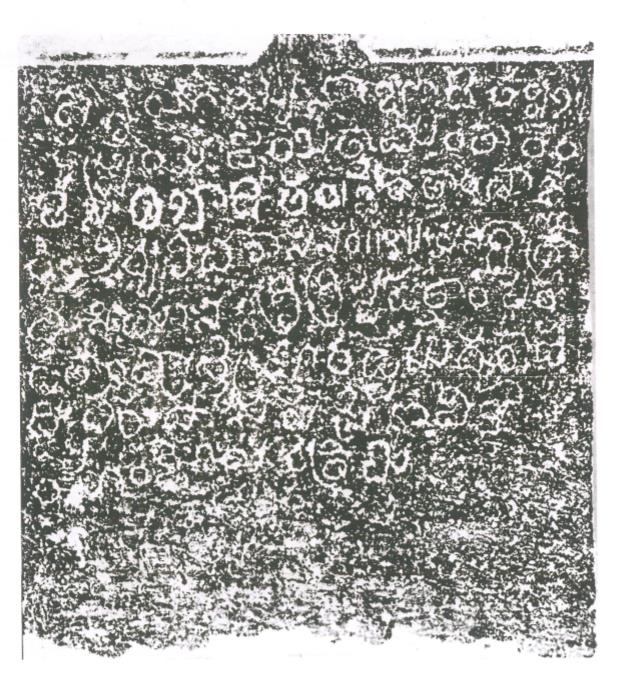
Ink impressions of two faces of a pillar, side by side. Very large pale letters stand on a dark ground.
This ink impression shows the first and second sides of the inscription of the time of Pratapa Rudra at Duddeda, dated 16 July 1296. The chief Madayaraddi remitted a tax for the god Svayambhu.Epigraphia Telanganica, Vol. III (Dr MCR HRD Institute, Government of Telangana, 2023), plate 4, p. 316. Reproduced for non-commercial educational use, as the publisher permits.

Kalvakol, Pratapa Rudra, 1321

This inscription is not yet in the site’s database.
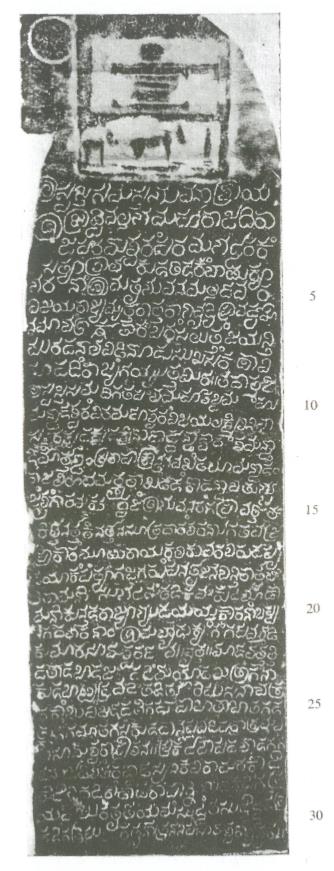
An ink impression of one face of a pillar. A conch and a discus are carved at the top, above rows of pale letters.
This ink impression shows the inscription of the time of Pratapa Rudra at Kalvakol, dated 1321. A conch and a discus, the emblems of Vishnu, are carved above the text.Epigraphia Telanganica, Vol. III (Dr MCR HRD Institute, Government of Telangana, 2023), plate 6, p. 318. Reproduced for non-commercial educational use, as the publisher permits.

Volume IV

Ainavolu, Anapota Nayaka, 1369

This record in the database

Ink impressions of two faces of a pillar, side by side. The left face is legible, and the right face is very pale. Printed numbers run from 1 to 85.
This ink impression shows the first and second sides of the inscription of Anapota Nayaka at Ainavolu, dated 19 July 1369. The second side is very faint.Epigraphia Telanganica, Vol. IV (Dr MCR HRD Institute, Government of Telangana, 2023), plate 1, p. 250. Reproduced for non-commercial educational use, as the publisher permits.
Ink impressions of the other two faces of the pillar. The sun, the moon and a worn emblem are carved at the top of the left face. A crack crosses both faces.
This ink impression shows the third and fourth sides of the Ainavolu inscription of Anapota Nayaka. The sun and the moon are carved above the text. Anapota gave the village to the god Mailaradeva.Epigraphia Telanganica, Vol. IV (Dr MCR HRD Institute, Government of Telangana, 2023), plate 1, p. 251. Reproduced for non-commercial educational use, as the publisher permits.

Rayavaram, Anavota Nayaka, 1380

This inscription is not yet in the site’s database.
Ink impressions of two faces of a pillar, side by side. Rows of pale letters fill both faces.
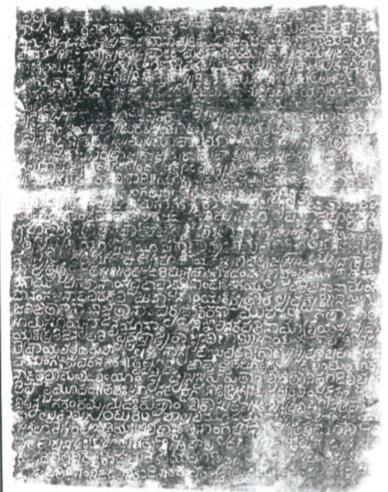
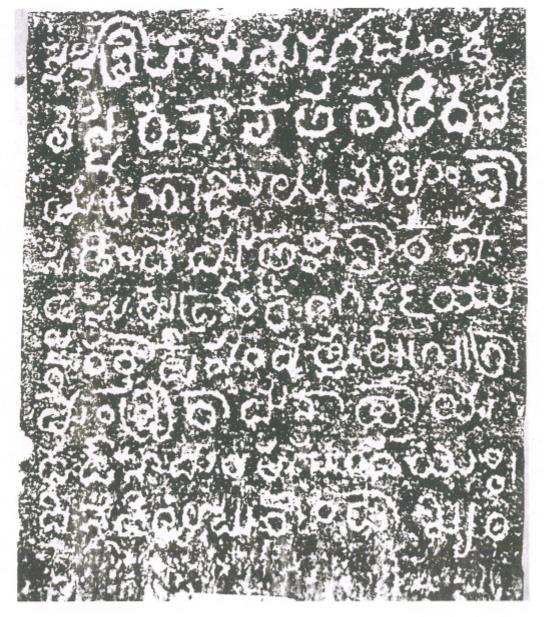
This ink impression shows the first and second sides of the inscription of the Velama chief Anavota Nayaka at Rayavaram, dated 19 January 1380. The text gives the family of the Recherla chiefs.Epigraphia Telanganica, Vol. IV (Dr MCR HRD Institute, Government of Telangana, 2023), plate 2, p. 252. Reproduced for non-commercial educational use, as the publisher permits.
An ink impression of one face of a pillar. Clear pale letters stand on a very dark ground.
This ink impression shows the third side of the Rayavaram inscription of Anavota Nayaka, dated 1380.Epigraphia Telanganica, Vol. IV (Dr MCR HRD Institute, Government of Telangana, 2023), plate 2, p. 253. Reproduced for non-commercial educational use, as the publisher permits.

Darapalli, Alauddin Bahman Shah, 1453

This record in the database

Ink impressions of two faces of a stone, side by side. Large letters stand on a dark ground, and a worn carving is at the top of the left face.
This ink impression shows the first and second sides of the Darapalli inscription of the time of Alauddin Bahman Shah, dated 1453. The record tells of a tank called Pamnasamudram.Epigraphia Telanganica, Vol. IV (Dr MCR HRD Institute, Government of Telangana, 2023), plate 3, p. 254. Reproduced for non-commercial educational use, as the publisher permits.

Sri Rangapuram, Rajas of Wanaparthy, 1909

This record in the database

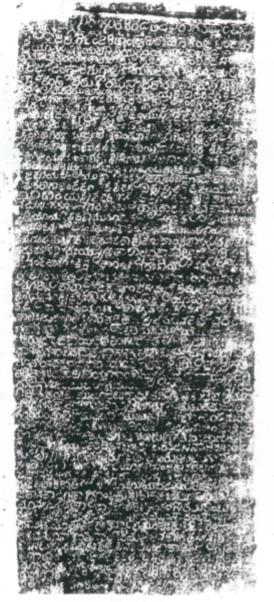
An ink impression of a broad slab covered with many rows of small Telugu letters.
This ink impression shows the first side of the inscription of the Rajas of Wanaparthy at Sri Rangapuram, dated 12 January 1909. The text gives a long family history of the Wanaparthy Rajas.Epigraphia Telanganica, Vol. IV (Dr MCR HRD Institute, Government of Telangana, 2023), plate 4, p. 255. Reproduced for non-commercial educational use, as the publisher permits.
An ink impression of the second face of the same slab. Many rows of small Telugu letters cover it.
This ink impression shows the second side of the Sri Rangapuram inscription of the Rajas of Wanaparthy, dated 1909.Epigraphia Telanganica, Vol. IV (Dr MCR HRD Institute, Government of Telangana, 2023), plate 4, p. 256. Reproduced for non-commercial educational use, as the publisher permits.