Skip to content

Warangal · Telangana

Kakatiya.

The Kakatiya dynasty of Warangal, c. 1000–1323 CE

The Kakatiyas were a dynasty that ruled from the Telangana plateau between about 1000 and 1323 CE. Their name comes from Kakati, which the sources describe as a town, a goddess, or both. The early chiefs governed from Anumakonda, now Hanamakonda, as vassals of the Western Chalukyas. Rudra Deva was ruling by 1158 and proclaimed the dynasty’s independence in 1163. The court later moved to Orugallu, the modern Warangal. At its height the kingdom covered much of present-day Telangana and Andhra Pradesh. In 1323 an army of the Delhi Sultanate took Warangal, and Pratapa Rudra surrendered.

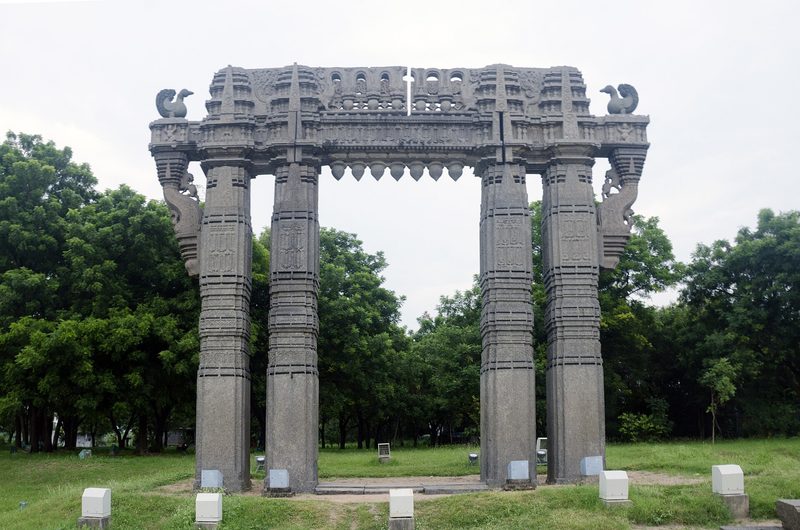
The rulers and their generals built irrigation tanks, because no perennial river served their capitals. Their temples still stand at Hanamakonda and Palampet, and four stone gateways survive inside Warangal Fort.
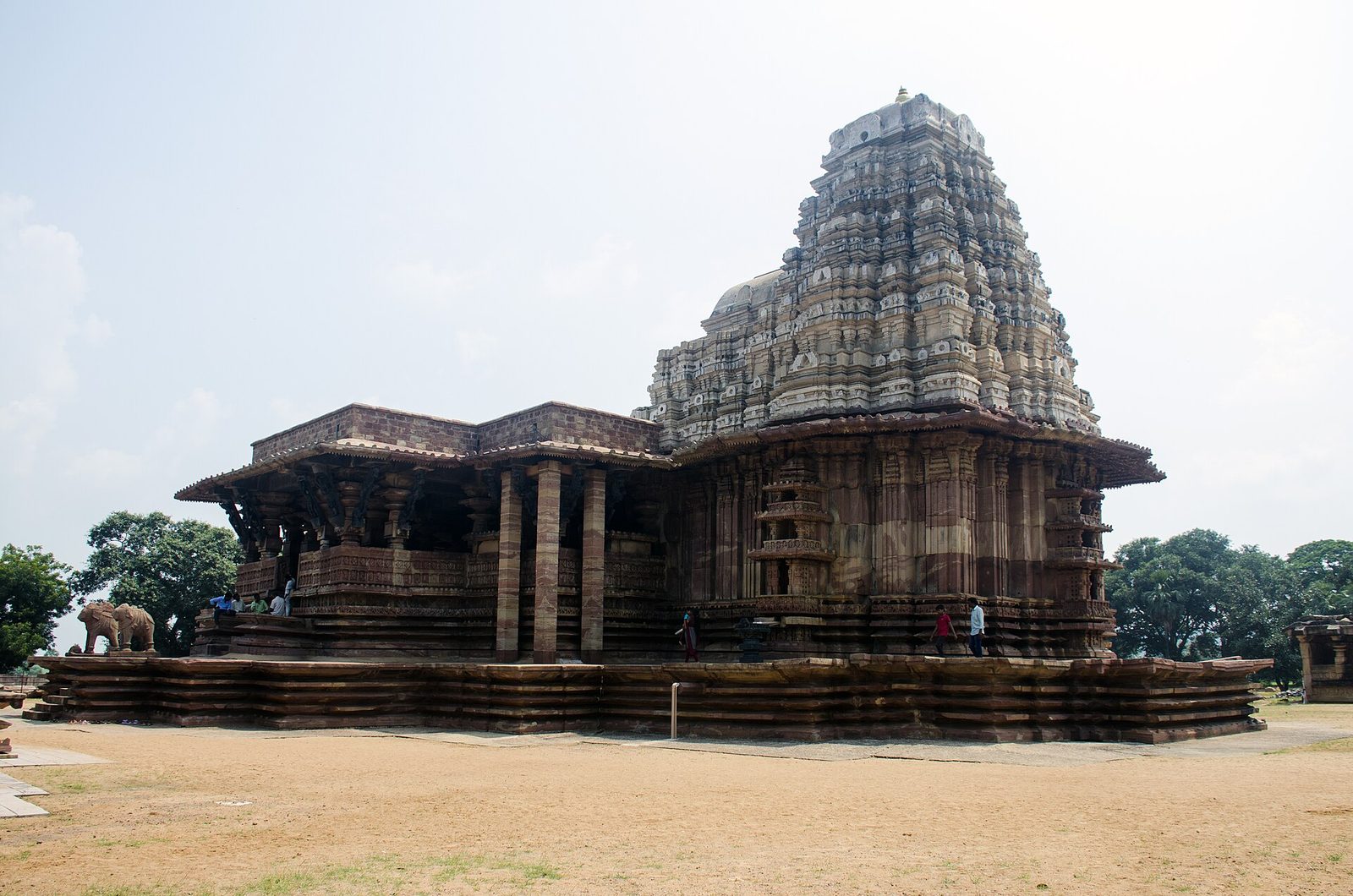
Ramappa Temple under a pale sky: the tall tiered vimana at right and the pillared mandapa at left on a wide stepped platform, with a bare earth courtyard in the foreground
Photo: Rangan Datta Wiki, via Wikimedia Commons · CC BY-SA 4.0

From the Mauryas to the Nizams

The full timeline →

The Kakatiyas held Telangana for about three centuries. The chart shows the powers that ruled before and after them. Select a bar to read about each power.

Rulers of the Warangal line

Ten rulers, from Beta I, a vassal of the Western Chalukyas, to the capture of Pratapa Rudra in 1323. The dynasty reached its height under Ganapati Deva, who ruled 1199–1262.

  1. c. 996–1051Beta IFounder of the line
  2. c. 1052–1076Prola I
  3. c. 1076–1108Beta II
  4. c. 1108–1116Durgaraja
  5. 1116–1157Prola II
  6. 1158–1195Rudra DevaFounder of sovereignty
  7. 1196–1198/99Mahadeva
  8. 1199–1262Ganapati DevaZenith of the dynasty
  9. 1262–1289Rudrama DeviQueen regnant
  10. 1289–1323Pratapa RudraLast ruler of the Warangal line

Major sites

All 28 sites →

Warangal Fort

Kakatiya, late 12th century to 1323 CE

Warangal Fort was the Kakatiya capital at Orugallu. The great circular fort has an outer earthen wall and an inner masonry wall, with a gate on each of its four sides: north, south, east and west. The Swayambhu temple, the shrine of the dynasty’s tutelary god, stood at its centre.

17.9572° N, 79.6144° E

Thousand Pillar Temple

1163 CE (Saka 1084)

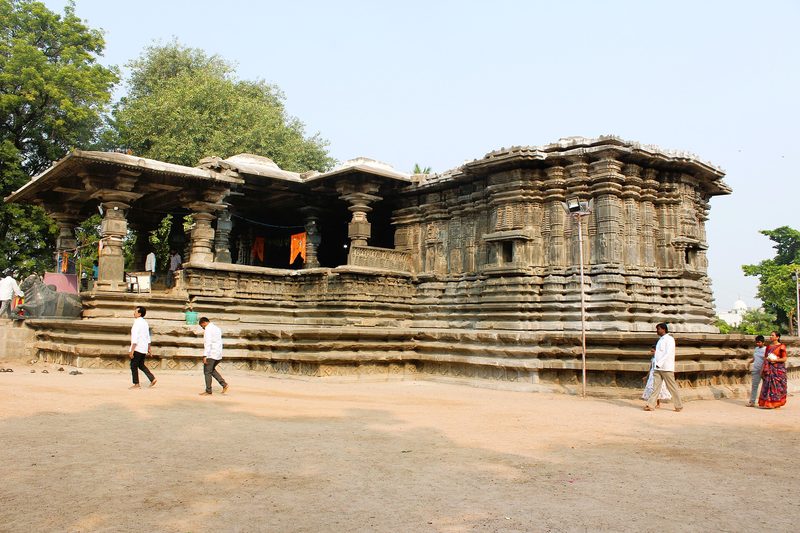
The Thousand Pillar Temple at Hanamakonda is the triple-shrined temple that Rudra Deva consecrated in 1163. Its three shrines are dedicated to Shiva, Vishnu and Surya. The 1900 survey called it one of the finest monuments in the Nizam’s dominions.

18.0038° N, 79.5747° E

Ramappa Temple

1213 CE (Saka 1135)

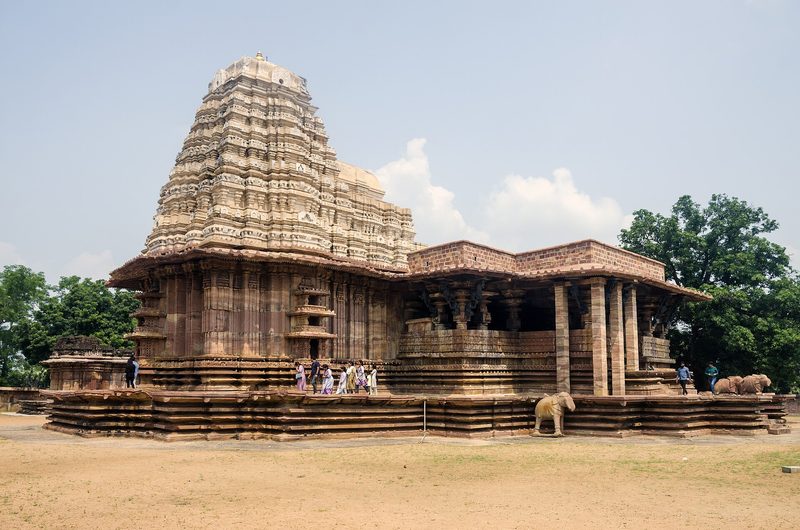
Ramappa Temple, at Palampet, is a single-shrine temple with three entrance porches, built in 1213 by the general Recherla Rudra. It stands on a high, two-tier, star-shaped platform. Its dolerite bracket sculptures and its light brick tower are its best-known features.

18.2594° N, 79.9425° E

Ghanpur Temple Complex

13th century, Kakatiya

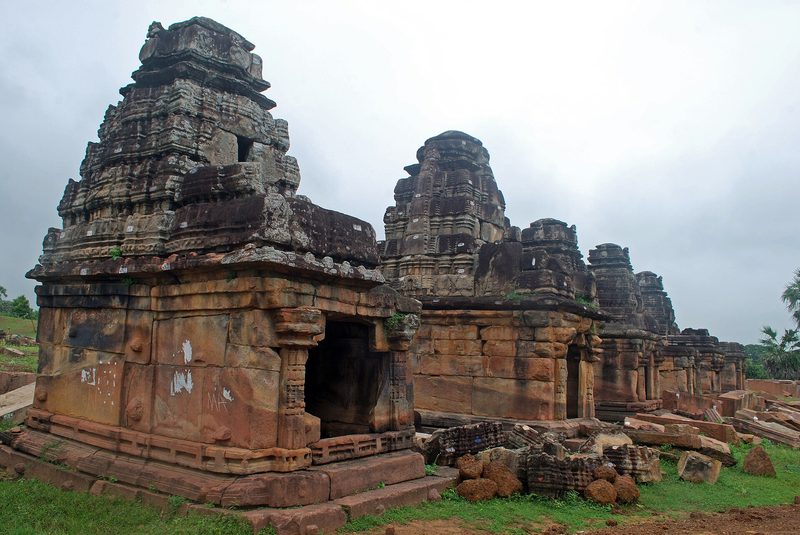
The Ghanpur temples, also called Kota Gullu, are a group of about twenty-two temples within an enclosure 260 feet square in Mulug taluk. They are built of red sandstone and granite.

18.3172° N, 79.8764° E

On method

Site records here are built from epigraphy and from the Archaeological Survey’s 1900 inventory, not from later summary. Where the 1900 surveyors are the only source, that is stated.

On naming

Transliteration varies widely between sources. Every site record carries a list of variant names, so a search finds a site by any spelling a reader is likely to type. Search the sites

On gaps

Ghanpur appears in the census directories but not in the 1900 inventory. Kusumanchi appears in the 1900 inventory but in no modern monograph. Omissions in both directions are flagged.