Old photographs of Kakatiya monuments
These photographs show the Kakatiya monuments as they stood more than a century ago. Many of them come from the reports of the Hyderabad Archaeological Department. They record damage, collapse and repair that later work has changed or hidden. Every photograph is in the public domain.
Warangal Fort
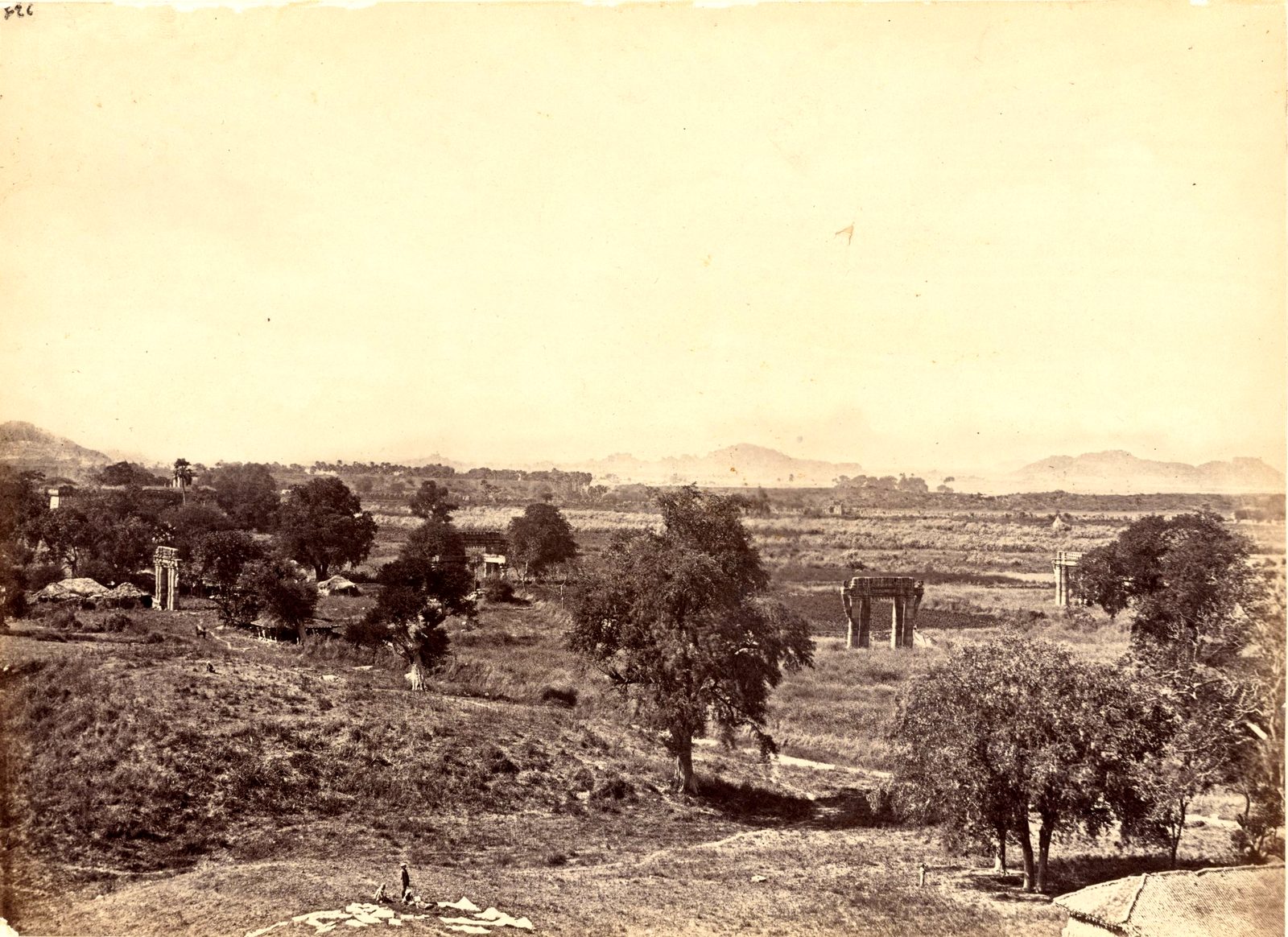
Photographed ca. 1850-1886
This view from a hill in Warangal Fort shows open fields with scattered trees. Stone gateways and pillars stand alone among the fields. The photograph dates from about 1850 to 1886.
Photo: unknown photographer, James Fergusson collection, Boston Public Library, via Digital Commonwealth · Public domain
_from_hill_in_Warangal_Fort_-_DPLA_-_4416d84a3897ccdc16239d00e0c5be90.jpg)
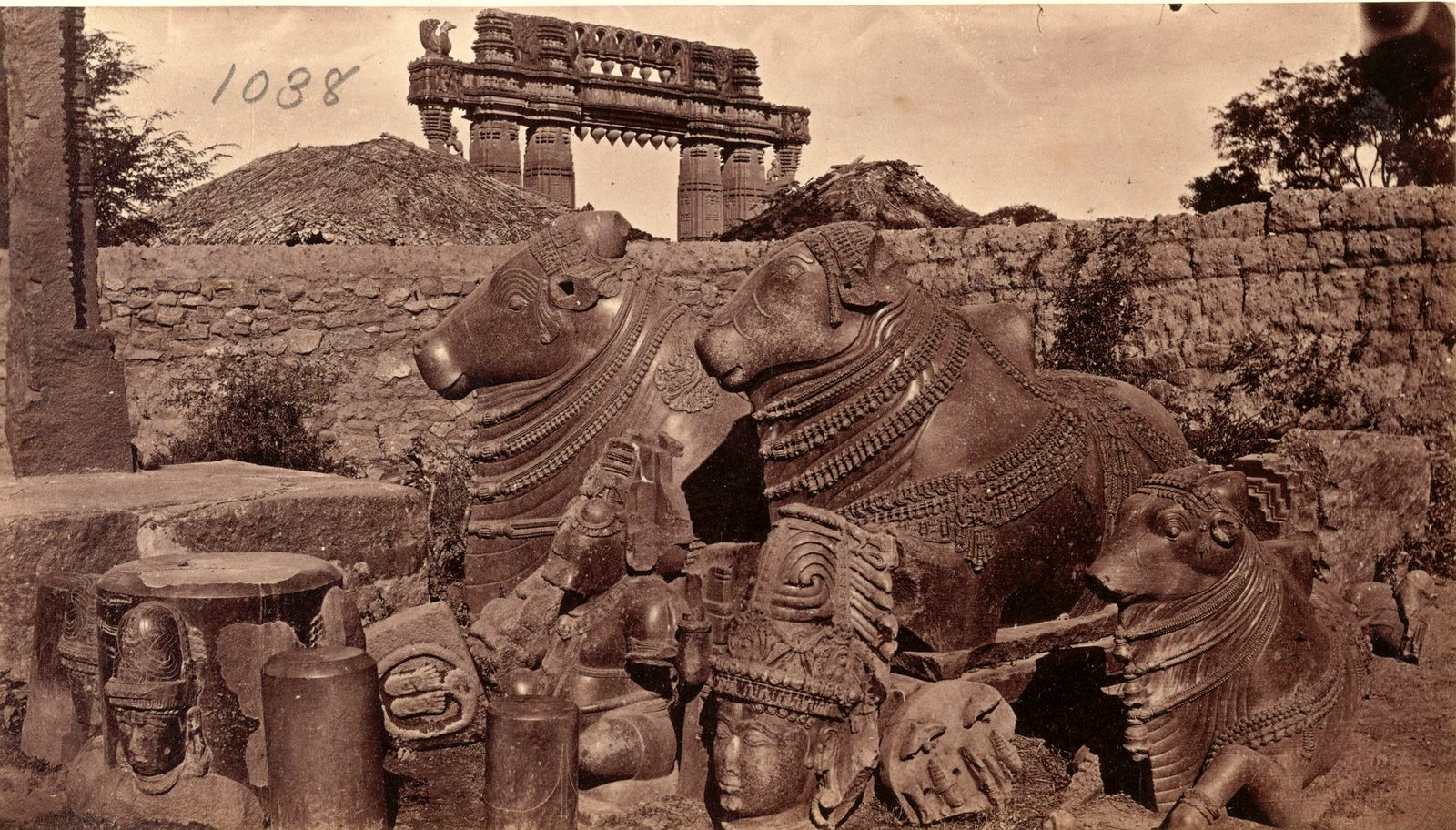
Photographed ca. 1850-1886
Two large carved stone Nandi bulls lie among broken carved stones at Warangal. A carved stone gateway rises behind the wall. The photograph dates from about 1850 to 1886.
Photo: unknown photographer, James Fergusson collection, Boston Public Library, via Digital Commonwealth · Public domain

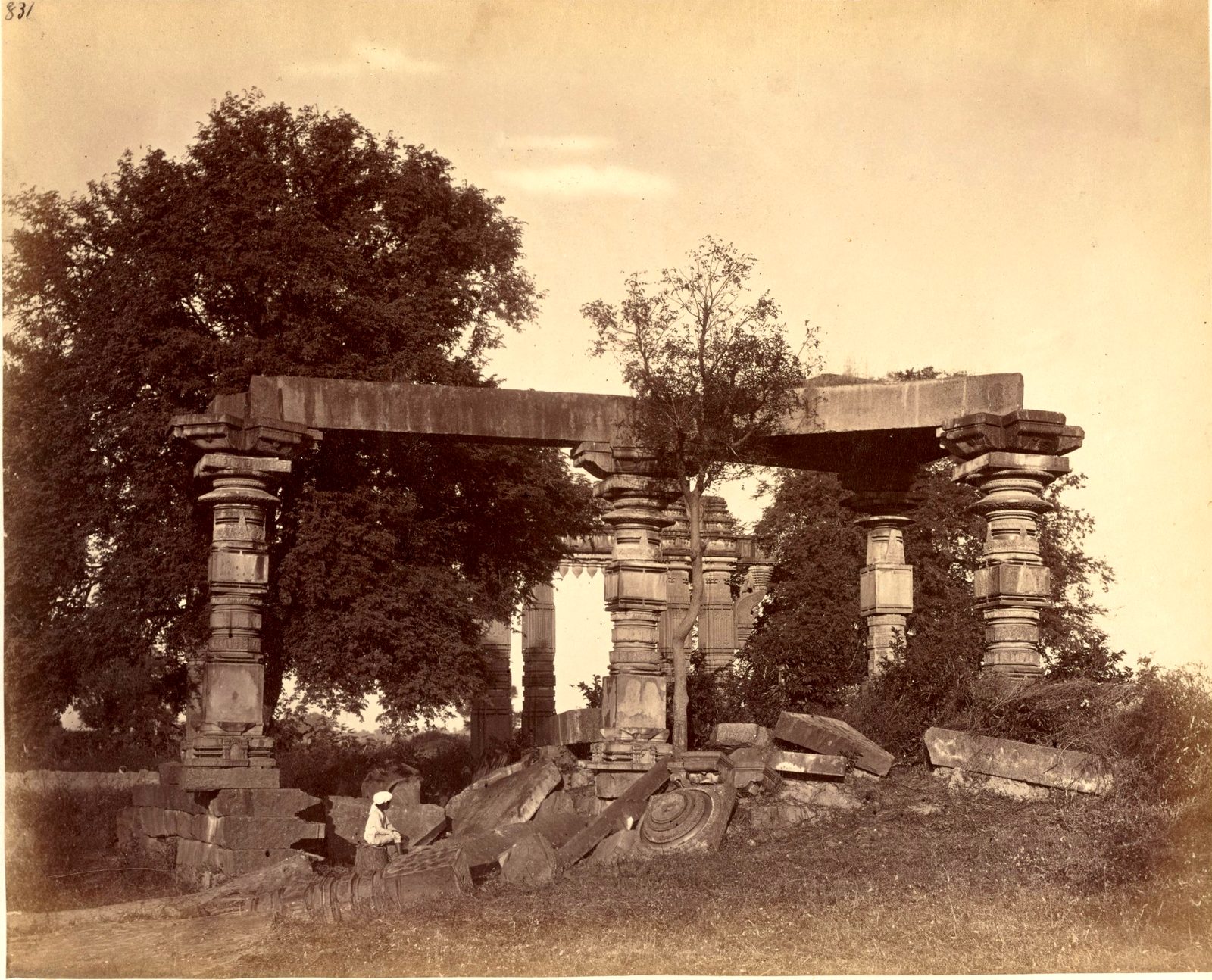
Photographed ca. 1850-1886
Carved stone pillars and a broken beam stand among trees at Warangal. Fallen carved blocks lie at their feet. The photograph dates from about 1850 to 1886.
Photo: unknown photographer, James Fergusson collection, Boston Public Library, via Digital Commonwealth · Public domain

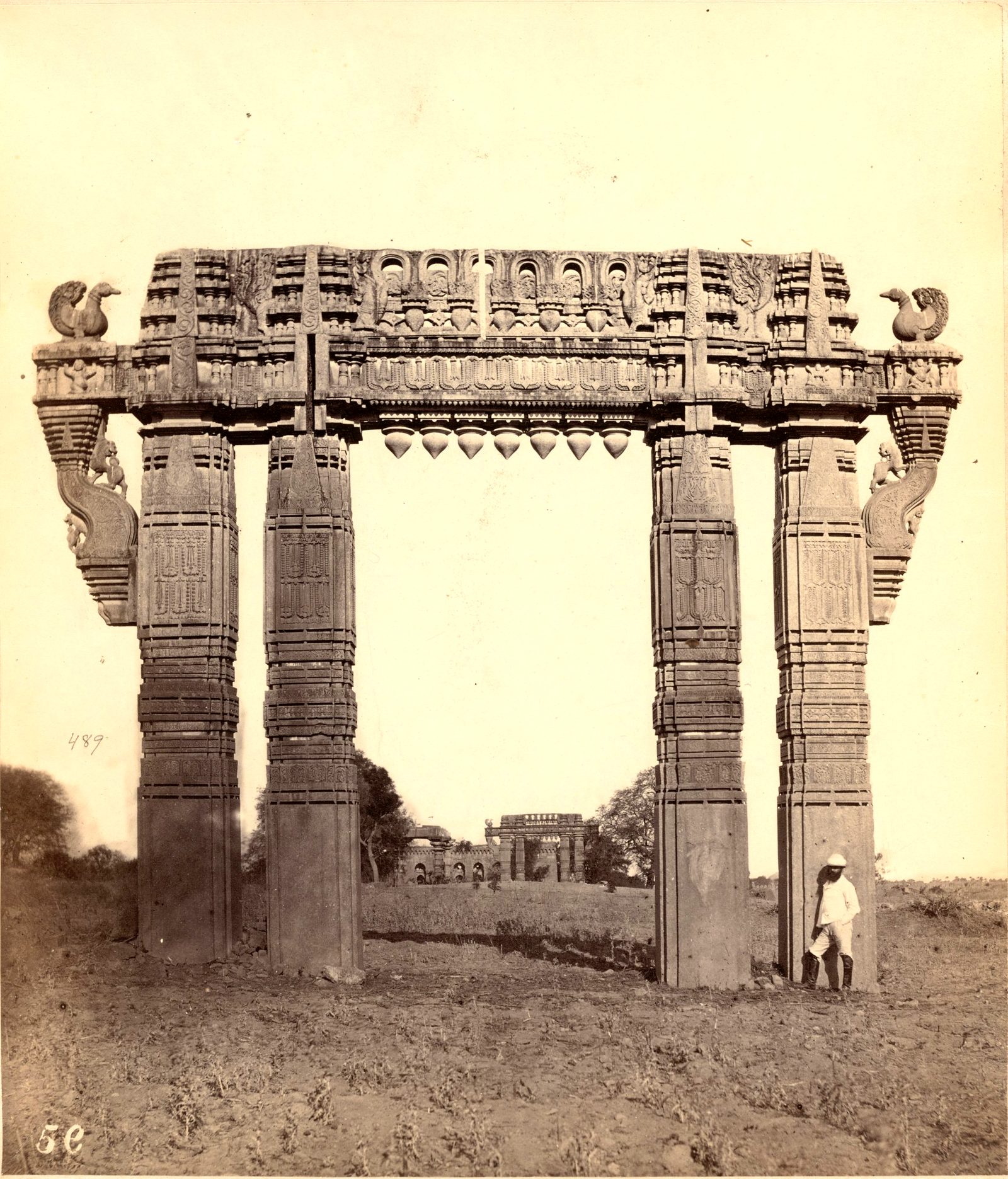
Photographed ca. 1850-1876
This photograph shows one of the carved stone gateways of Warangal Fort in open ground. A long arched building is visible through the gateway. The Boston Public Library dates the photograph to about 1850 to 1876.
Photo: unknown photographer, James Fergusson collection, Boston Public Library, via Digital Commonwealth · Public domain

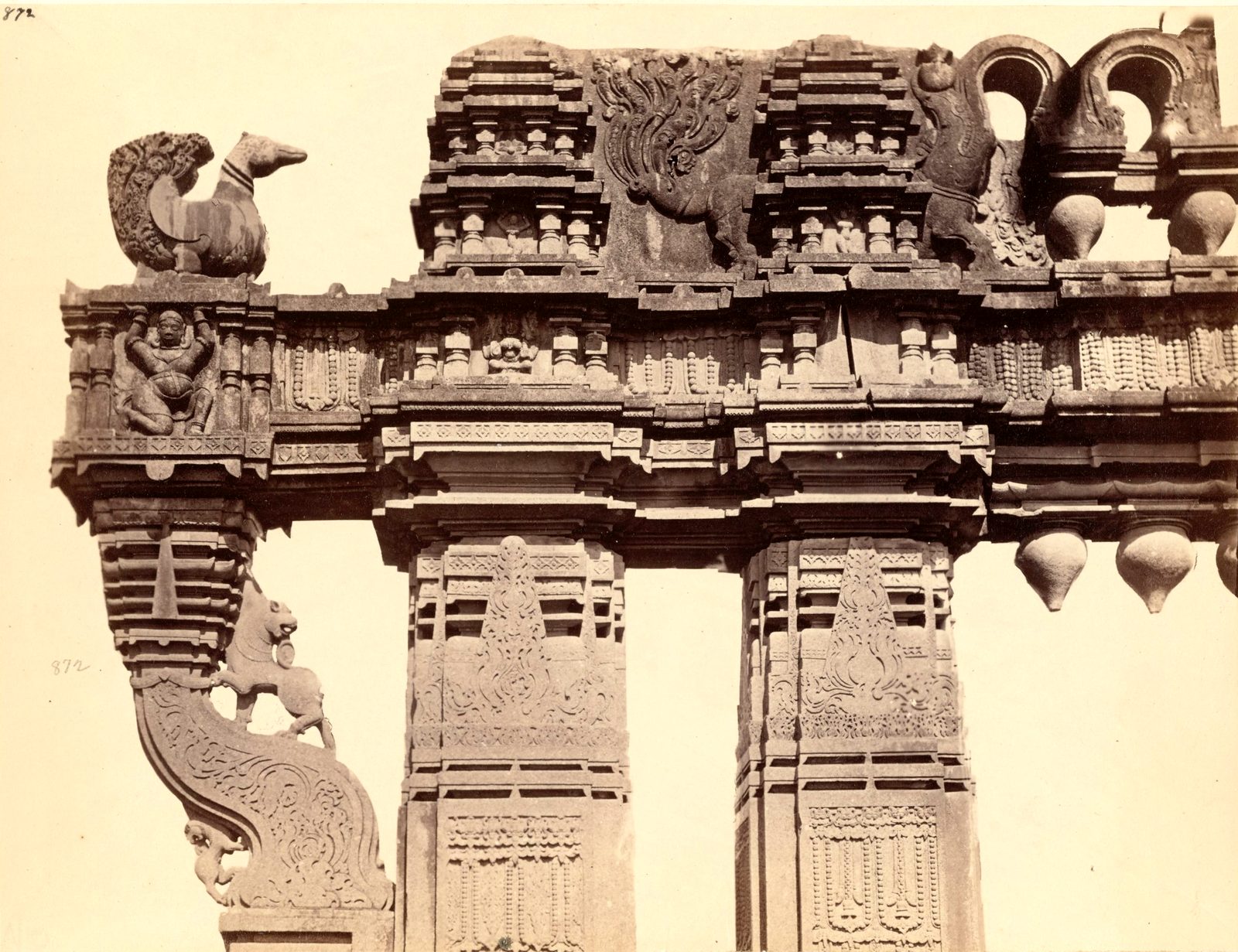
Photographed ca. 1850-1886
This close view shows the carved top of a Warangal Fort gateway. A stone swan sits on the end of the beam, and a rearing animal is carved on the bracket below. The photograph dates from about 1850 to 1886.
Photo: unknown photographer, James Fergusson collection, Boston Public Library, via Digital Commonwealth · Public domain

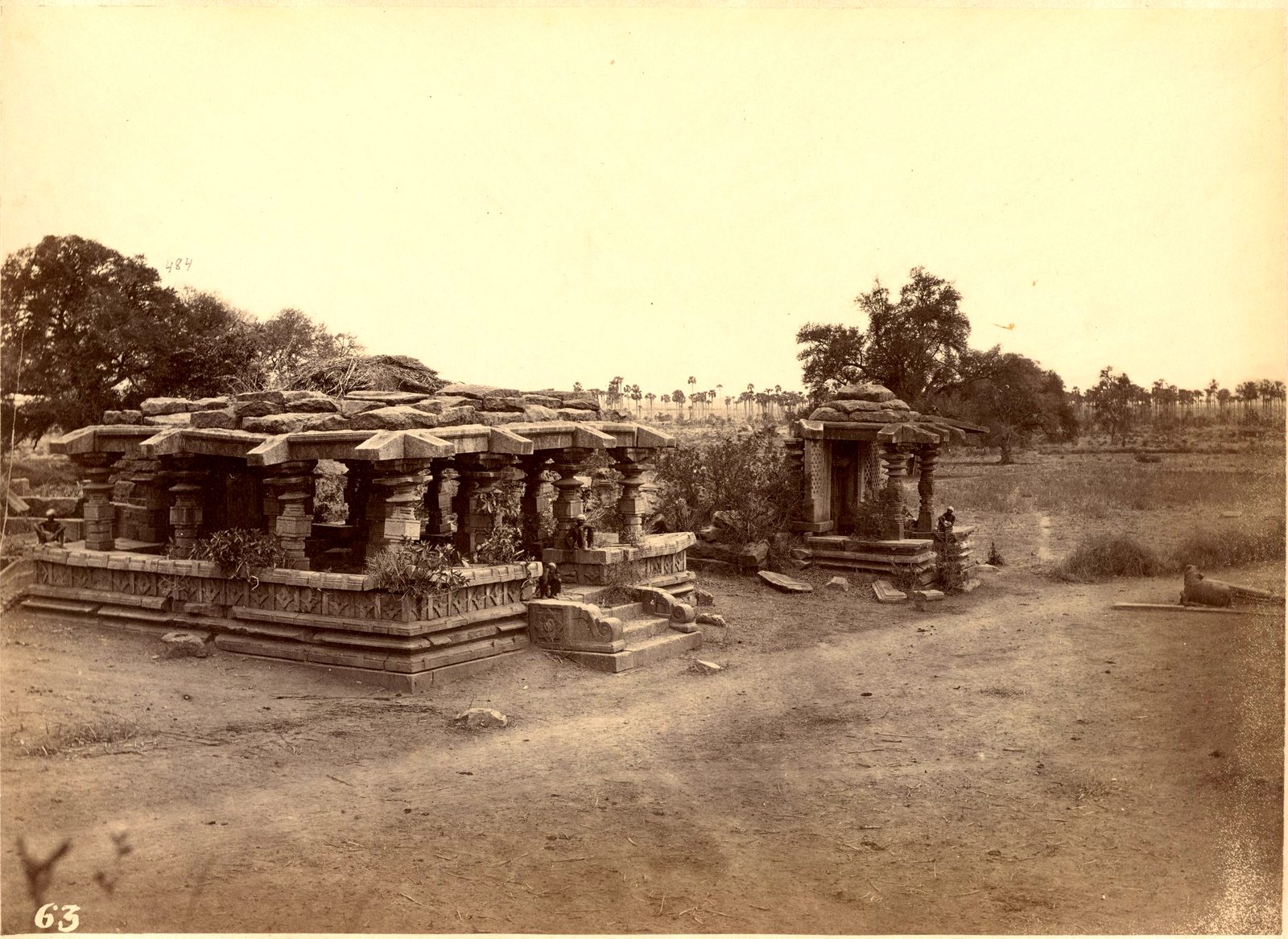
Photographed ca. 1850-1886
The Boston Public Library catalogue names this building a ruined temple at Warangal Fort. Small trees grow on its broken roof. The photograph dates from about 1850 to 1886.
Photo: unknown photographer, James Fergusson collection, Boston Public Library, via Digital Commonwealth · Public domain

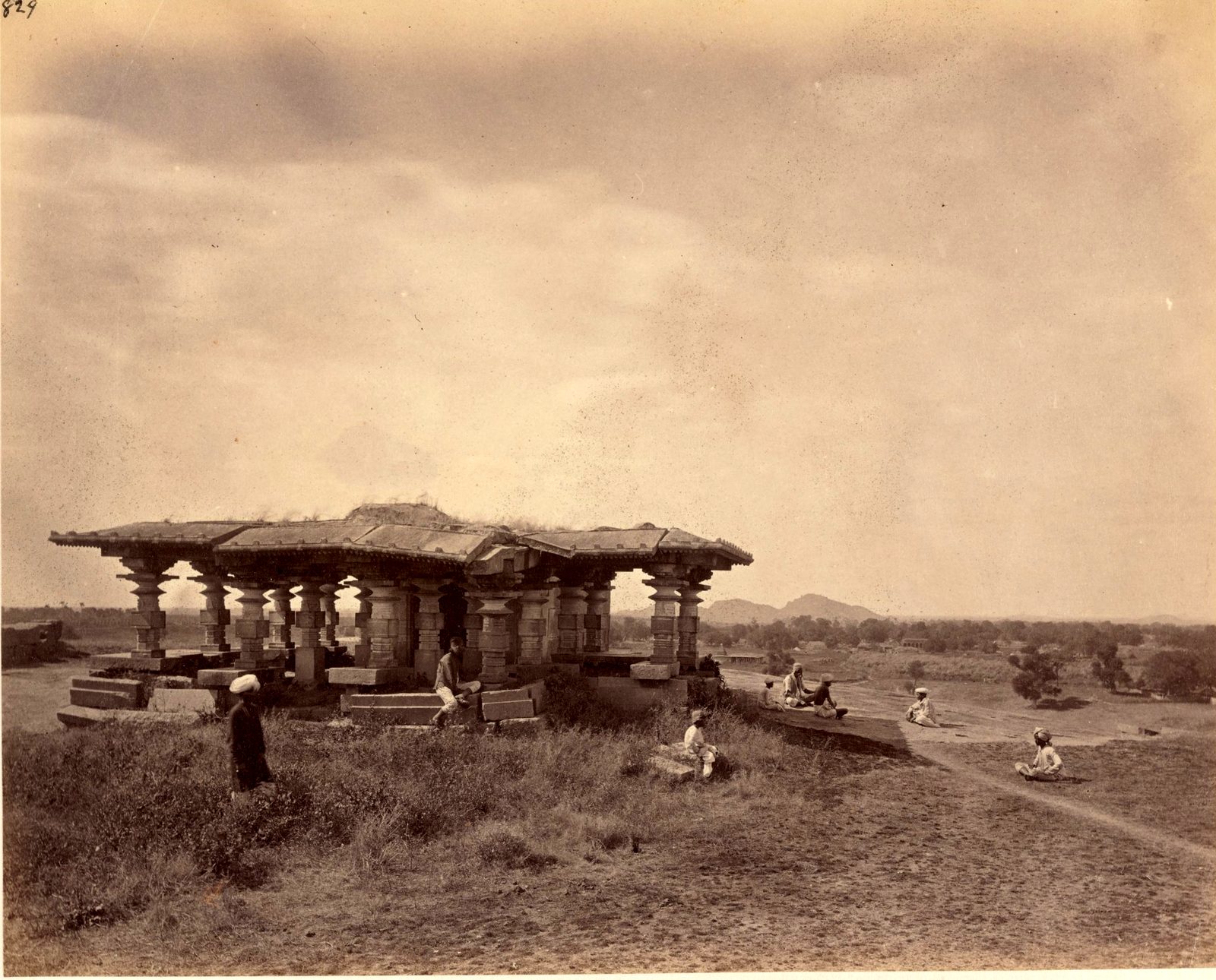
Photographed ca. 1850-1886
This flat-roofed stone pavilion stands in open grassland inside Warangal Fort. Several people sit on the ground nearby. The photograph dates from about 1850 to 1886.
Photo: unknown photographer, James Fergusson collection, Boston Public Library, via Digital Commonwealth · Public domain
_Warangal_Fort_-_DPLA_-_24bbf0f959bd7b3d2f54bbcc8567c35d.jpg)
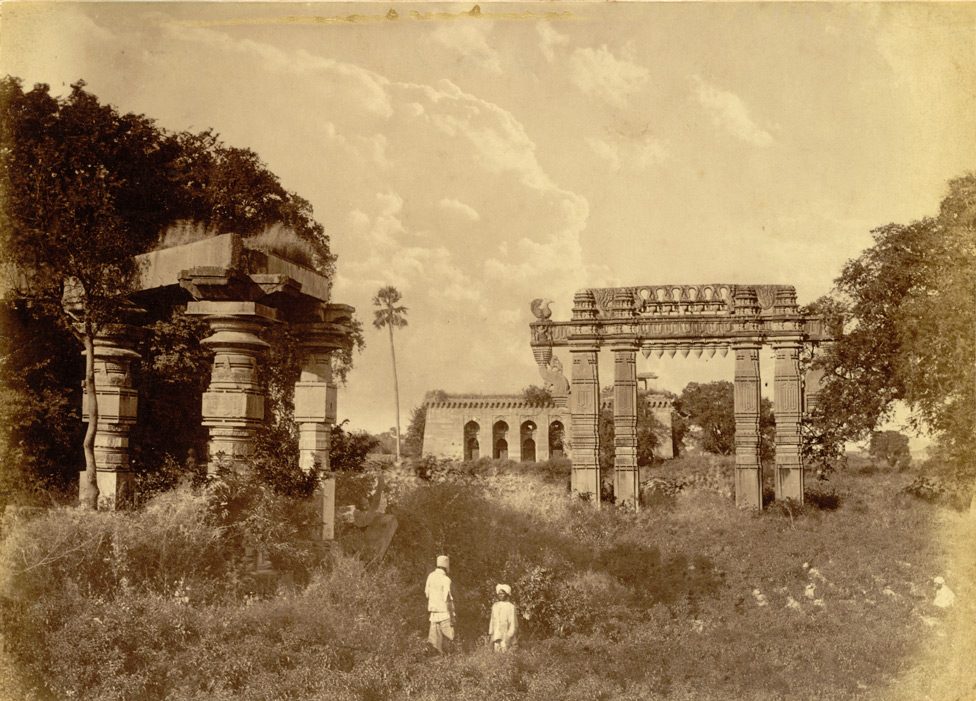
Photographed 1875
The gateway and temple ruins at Warangal photographed in the 1870s: a keerthi thorana stands at right amid scrub, with a ruined pillared structure at left and an arcaded building in the distance.
Photo: unknown photographer, published 1875 (Lee-Warner Collection, British Library), via Wikimedia Commons · Public domain

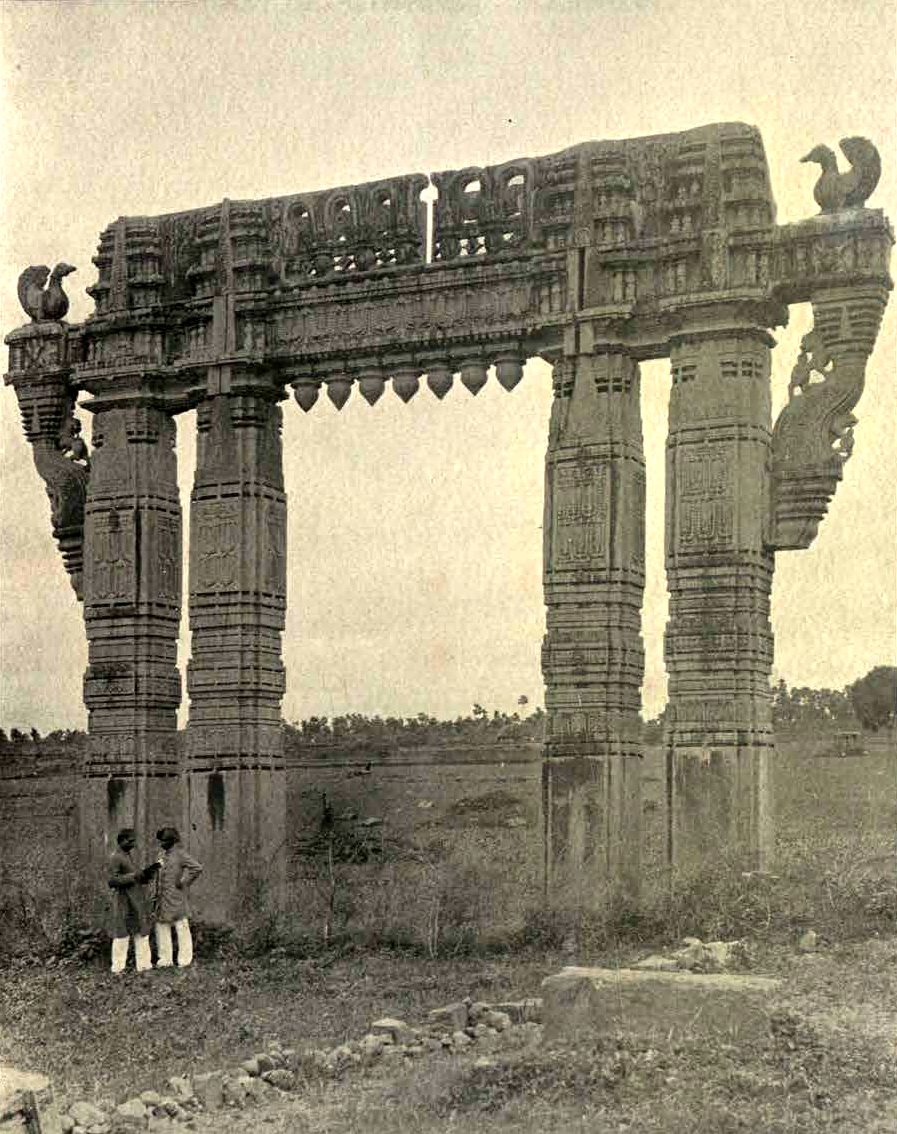
Photographed before 1898
This photograph shows one of the four carved stone gateways at Warangal Fort before 1898. The gateway stands alone in open fields with no wall or fence around it. Campbell's book calls it the Gate of Victory.
Photo: unknown photographer, Glimpses of the Nizam's Dominions (A. Claude Campbell), 1898 · Public domain
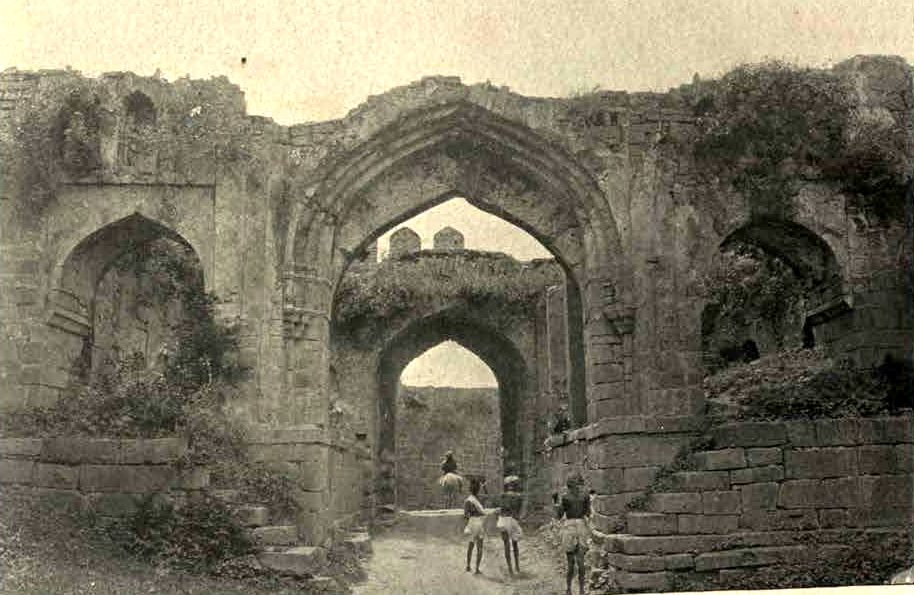
Photographed before 1898
Campbell's book names this ruined gateway the Hyderabad Gate. The same book places this gate on the west side of the outer earth wall of Warangal Fort. Plants grow on the walls in this photograph from before 1898.
Photo: unknown photographer, Glimpses of the Nizam's Dominions (A. Claude Campbell), 1898 · Public domain
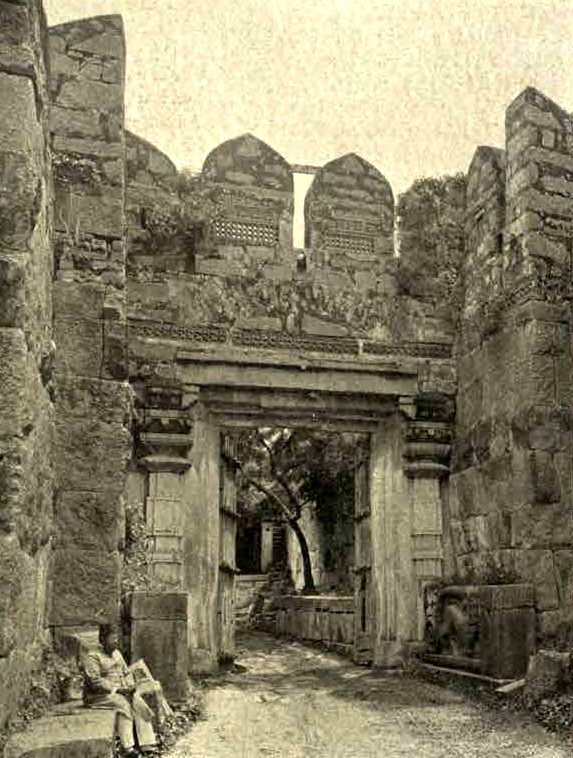
Photographed before 1898
Campbell's book calls this the inner western gate of Warangal Fort. A flat stone doorway stands between high stone walls with pointed parapets. The photograph was published in 1898.
Photo: unknown photographer, Glimpses of the Nizam's Dominions (A. Claude Campbell), 1898 · Public domain
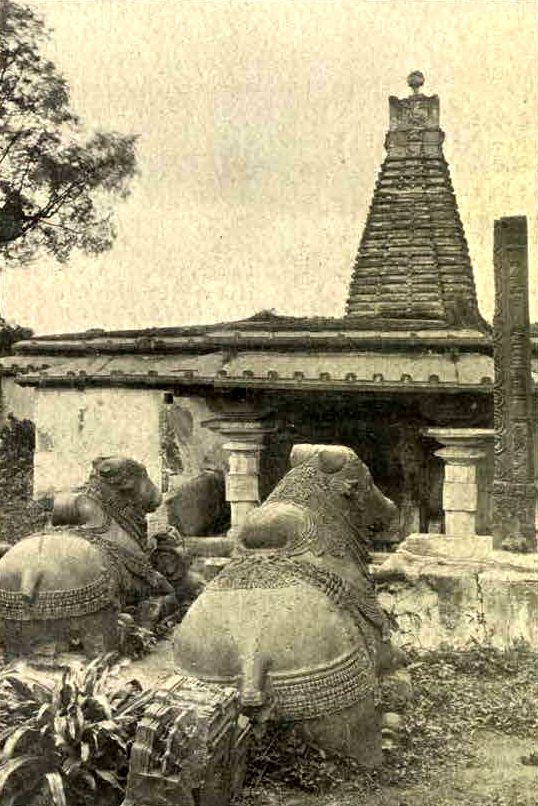
Photographed before 1898
Campbell's book calls this building the half-buried temple of Warangal. The book says that three carved stone bulls lie opposite this temple of Mahadeva. The photograph was published in 1898.
Photo: unknown photographer, Glimpses of the Nizam's Dominions (A. Claude Campbell), 1898 · Public domain
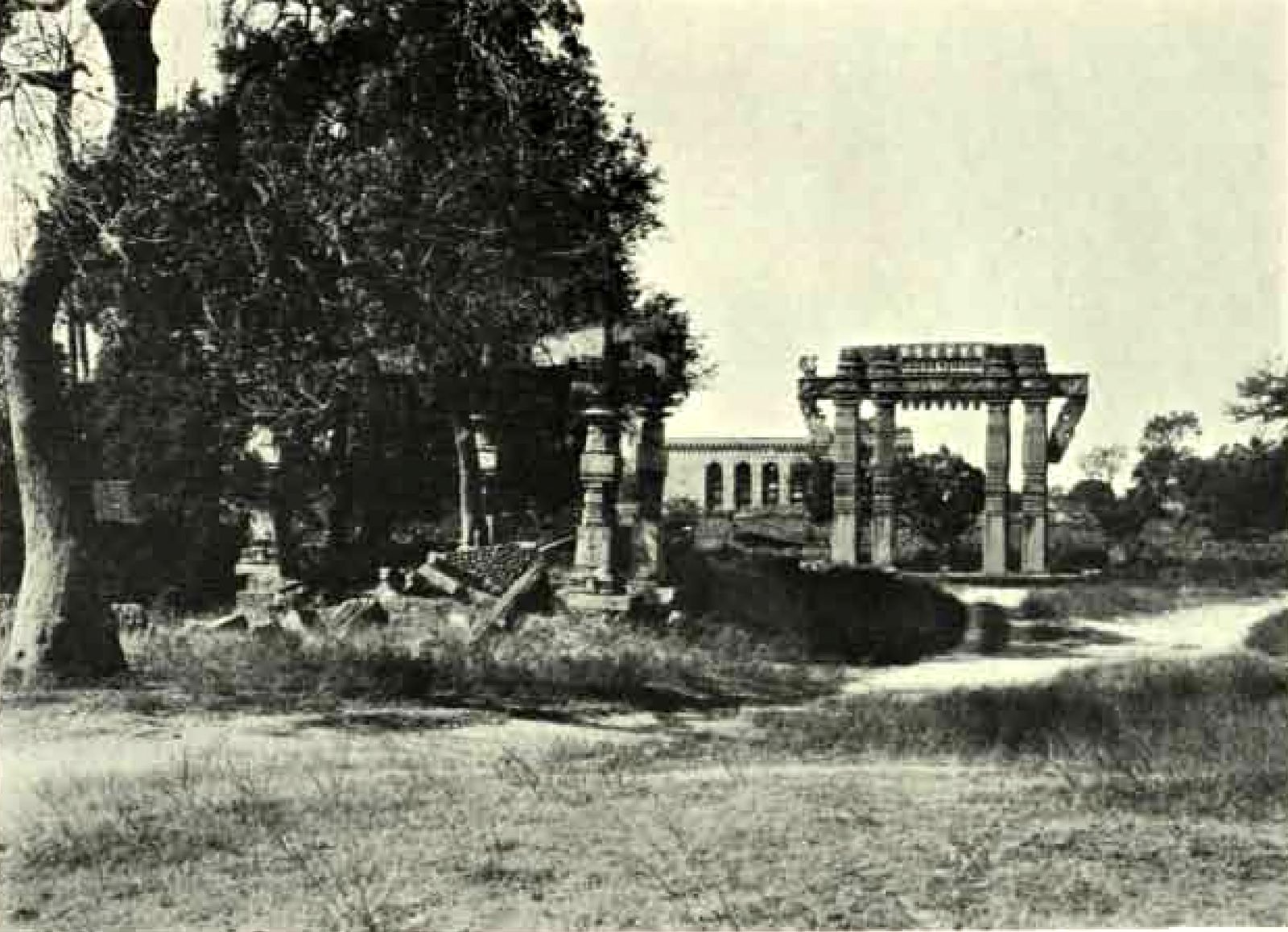
Photographed before 1928
The report for 1925-26 names this view the ruins of the old temple in Warangal Fort. Broken pillars stand under trees, and a carved stone gateway stands nearby. The report was published in 1928.
Photo: Hyderabad Archaeological Department, Annual Report of the Archaeological Department of H.E.H. the Nizam's Dominions for 1925-26, 1928 · Public domain
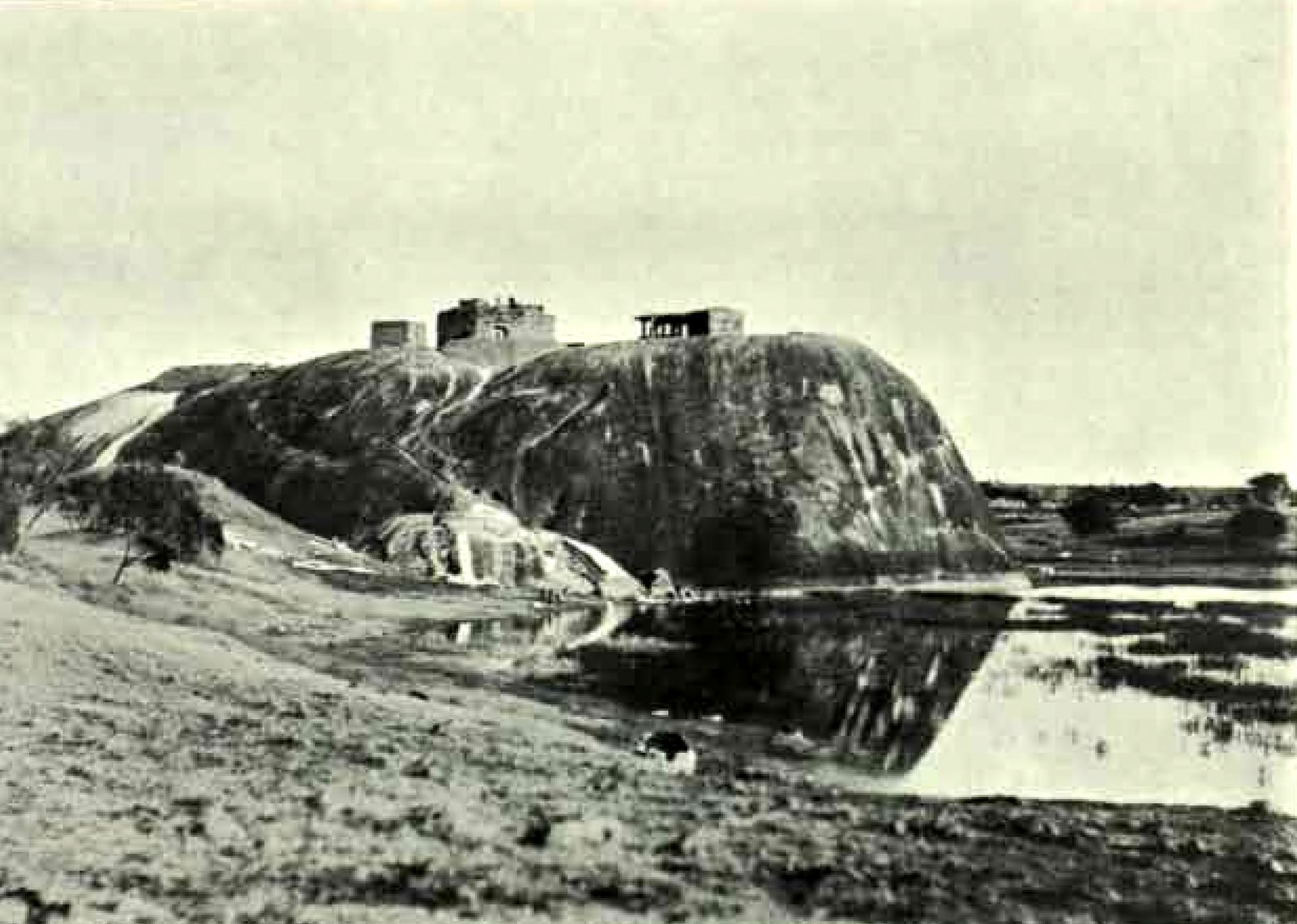
Photographed before 1928
The report for 1925-26 calls this rock Orukkal, the One Rock, of Warangal Fort. Small buildings stand on its top, and water lies at its foot. The report was published in 1928.
Photo: Hyderabad Archaeological Department, Annual Report of the Archaeological Department of H.E.H. the Nizam's Dominions for 1925-26, 1928 · Public domain
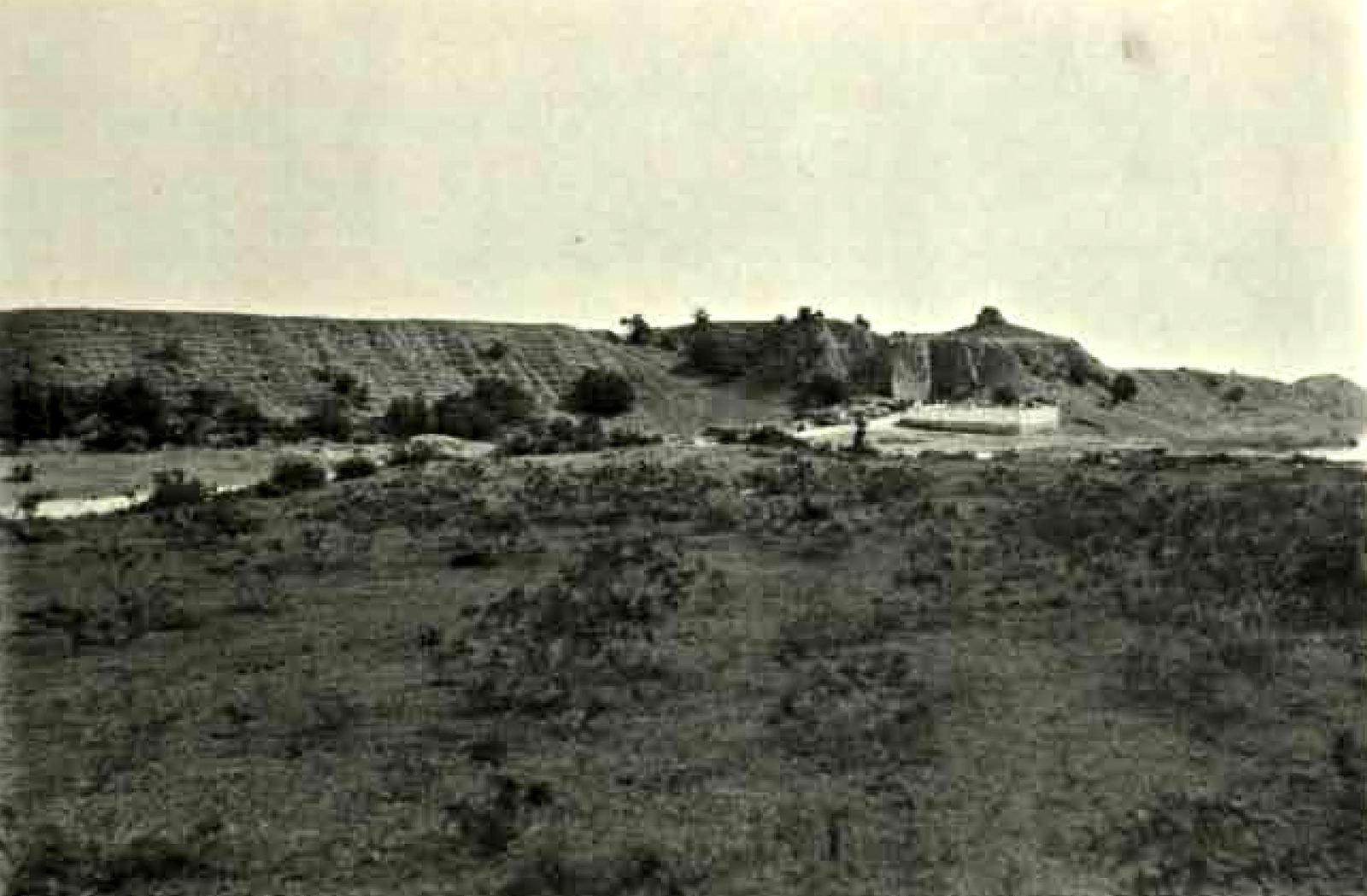
Photographed before 1928
The report for 1925-26 identifies this long earth bank as the old mud wall of Warangal Fort. The report dates the wall to the Hindu period. The report was published in 1928.
Photo: Hyderabad Archaeological Department, Annual Report of the Archaeological Department of H.E.H. the Nizam's Dominions for 1925-26, 1928 · Public domain
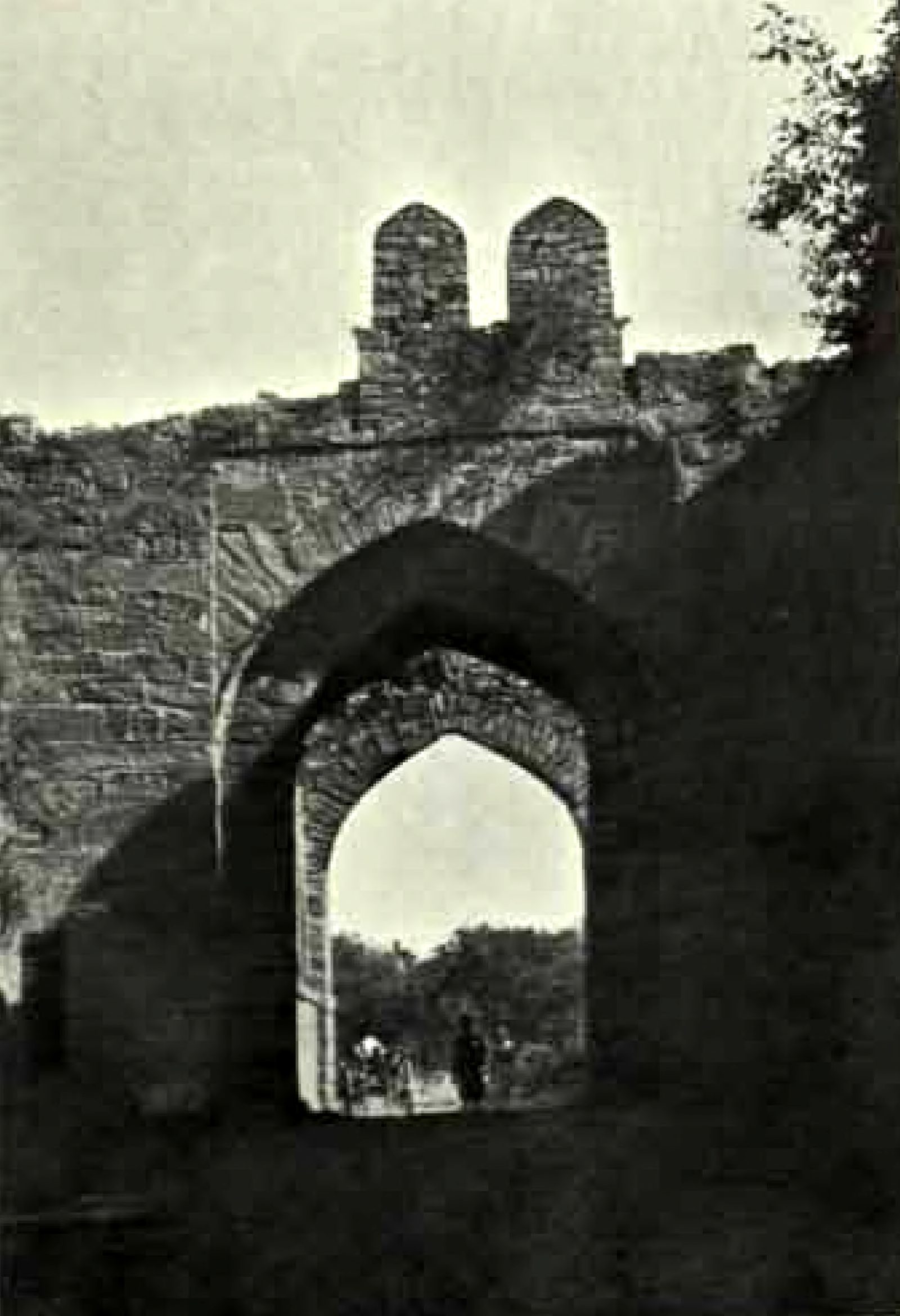
Photographed before 1928
The report for 1925-26 shows this gateway of Warangal Fort and dates it to the Muslim period. Two pointed parapets stand above the arches. The report was published in 1928.
Photo: Hyderabad Archaeological Department, Annual Report of the Archaeological Department of H.E.H. the Nizam's Dominions for 1925-26, 1928 · Public domain
Thousand Pillar Temple
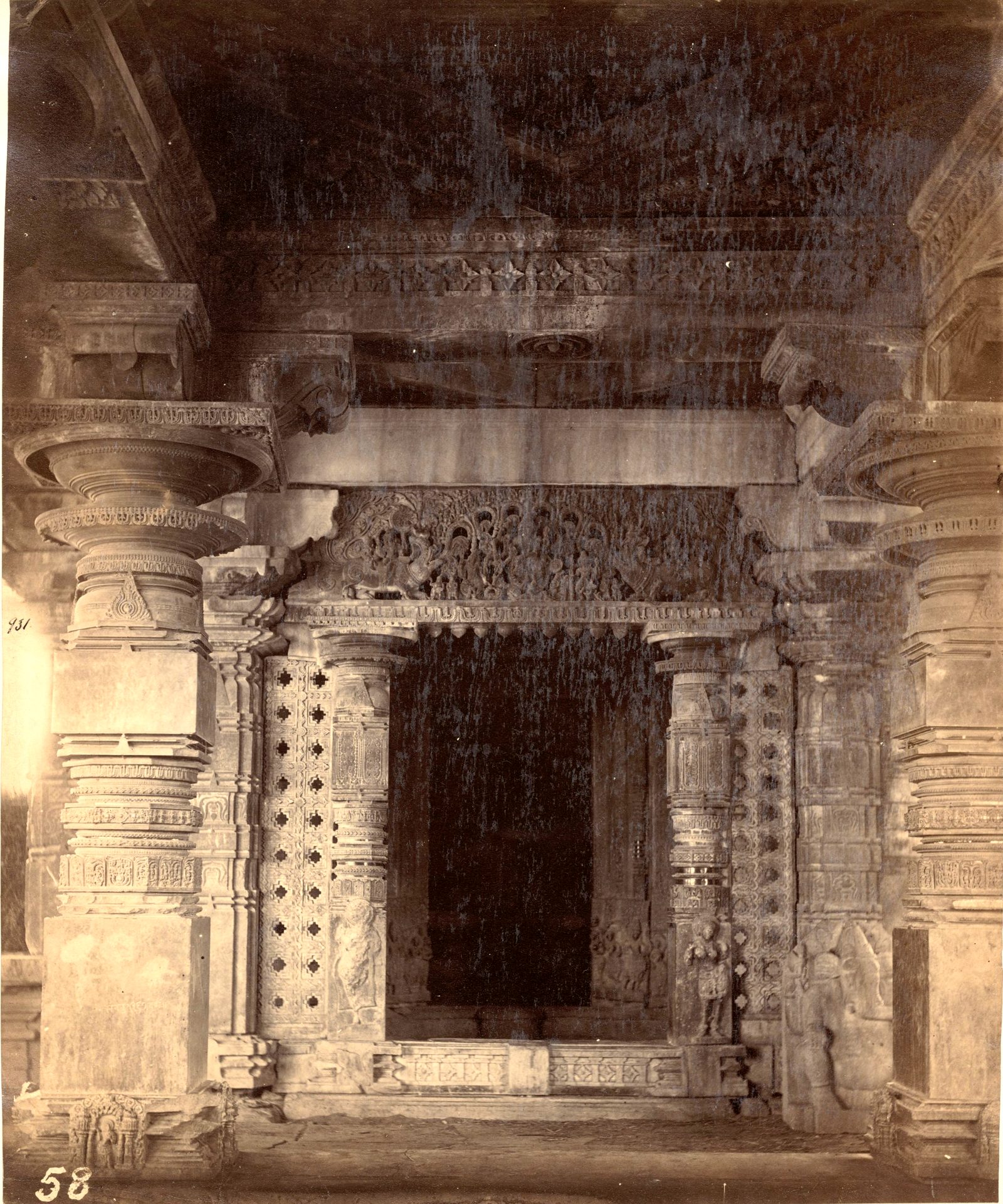
Photographed ca. 1850-1886
This photograph shows a shrine doorway in the Thousand Pillar Temple at Hanamkonda. Pierced stone screens stand on each side of the doorway. The photograph dates from about 1850 to 1886.
Photo: unknown photographer, James Fergusson collection, Boston Public Library, via Digital Commonwealth · Public domain

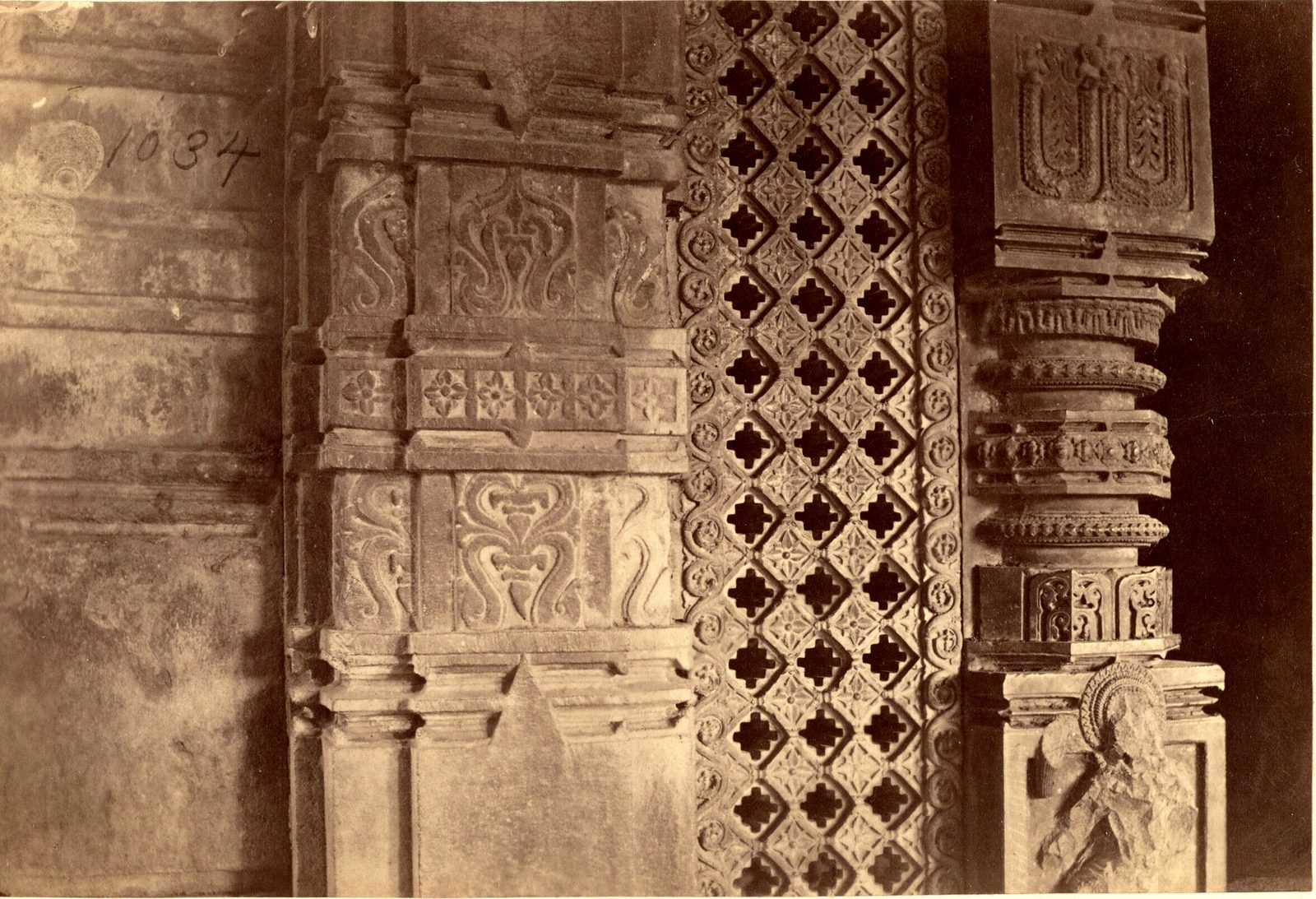
Photographed ca. 1850-1886
This close view shows a doorway of the Thousand Pillar Temple at Hanamkonda. A pierced stone screen stands between a carved jamb and a carved pillar. The photograph dates from about 1850 to 1886.
Photo: unknown photographer, James Fergusson collection, Boston Public Library, via Digital Commonwealth · Public domain

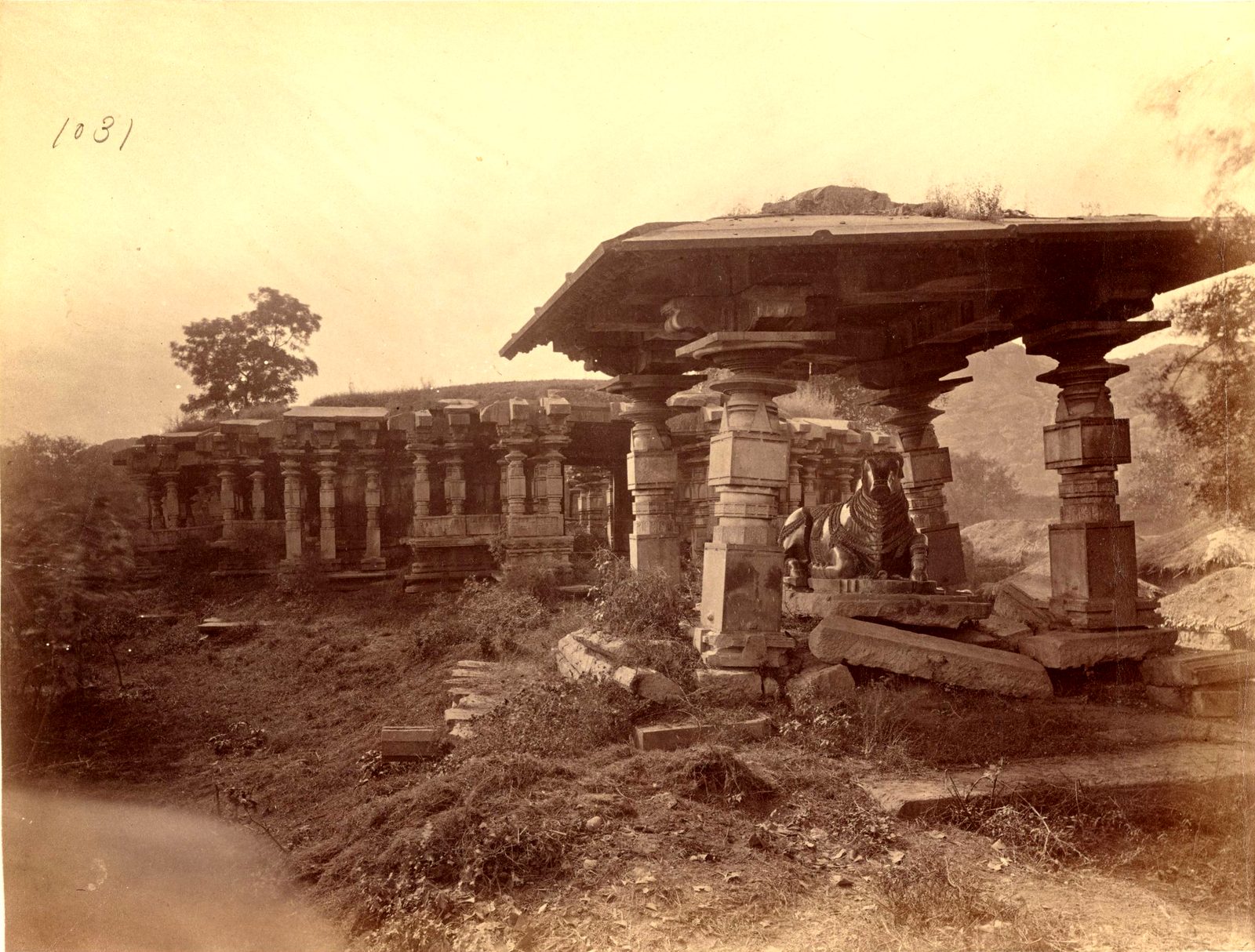
Photographed ca. 1850-1886
The Boston Public Library catalogue names this the Nandi pavilion of the Thousand Pillar Temple. Rubble and loose stones lie on the ground in front of it. The photograph dates from about 1850 to 1886.
Photo: unknown photographer, James Fergusson collection, Boston Public Library, via Digital Commonwealth · Public domain

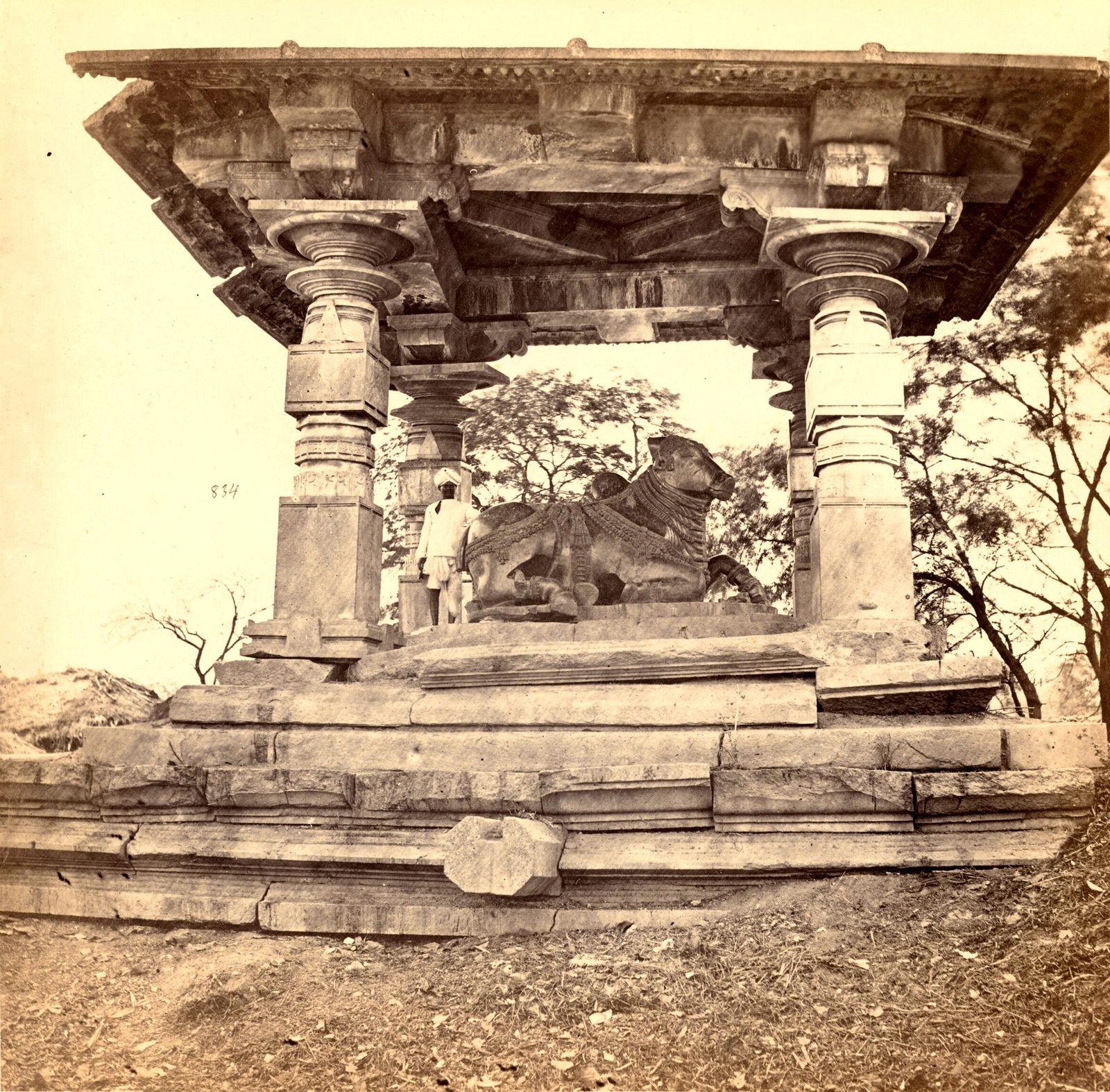
Photographed ca. 1850-1886
A stone Nandi bull lies under a pillared porch at the Thousand Pillar Temple. The porch stands on a stepped stone platform with some loose stones. The photograph dates from about 1850 to 1886.
Photo: unknown photographer, James Fergusson collection, Boston Public Library, via Digital Commonwealth · Public domain

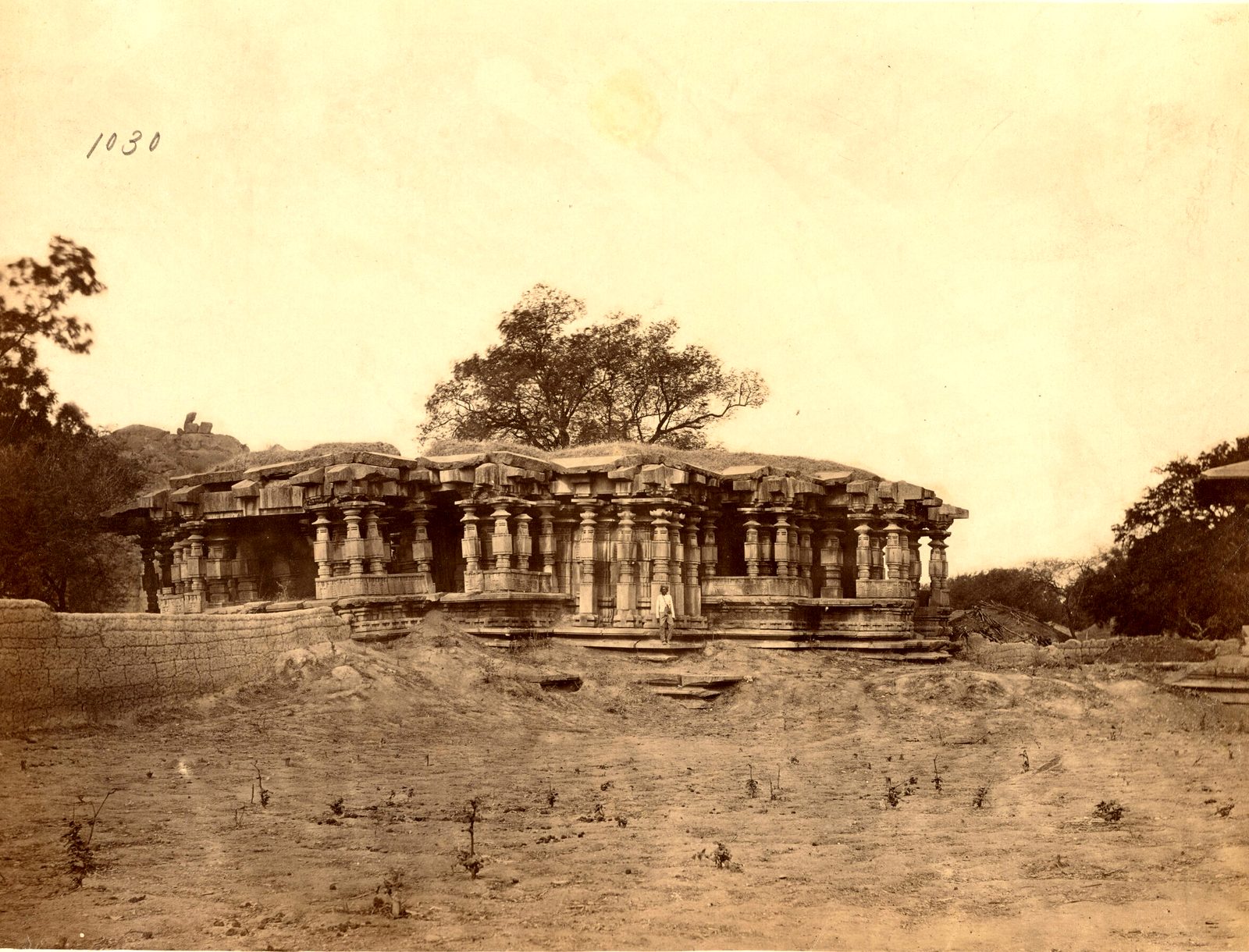
Photographed ca. 1850-1886
This view of the Thousand Pillar Temple shows a large tree growing from its roof. Bare, rough ground lies in front of the temple. The photograph dates from about 1850 to 1886.
Photo: unknown photographer, James Fergusson collection, Boston Public Library, via Digital Commonwealth · Public domain

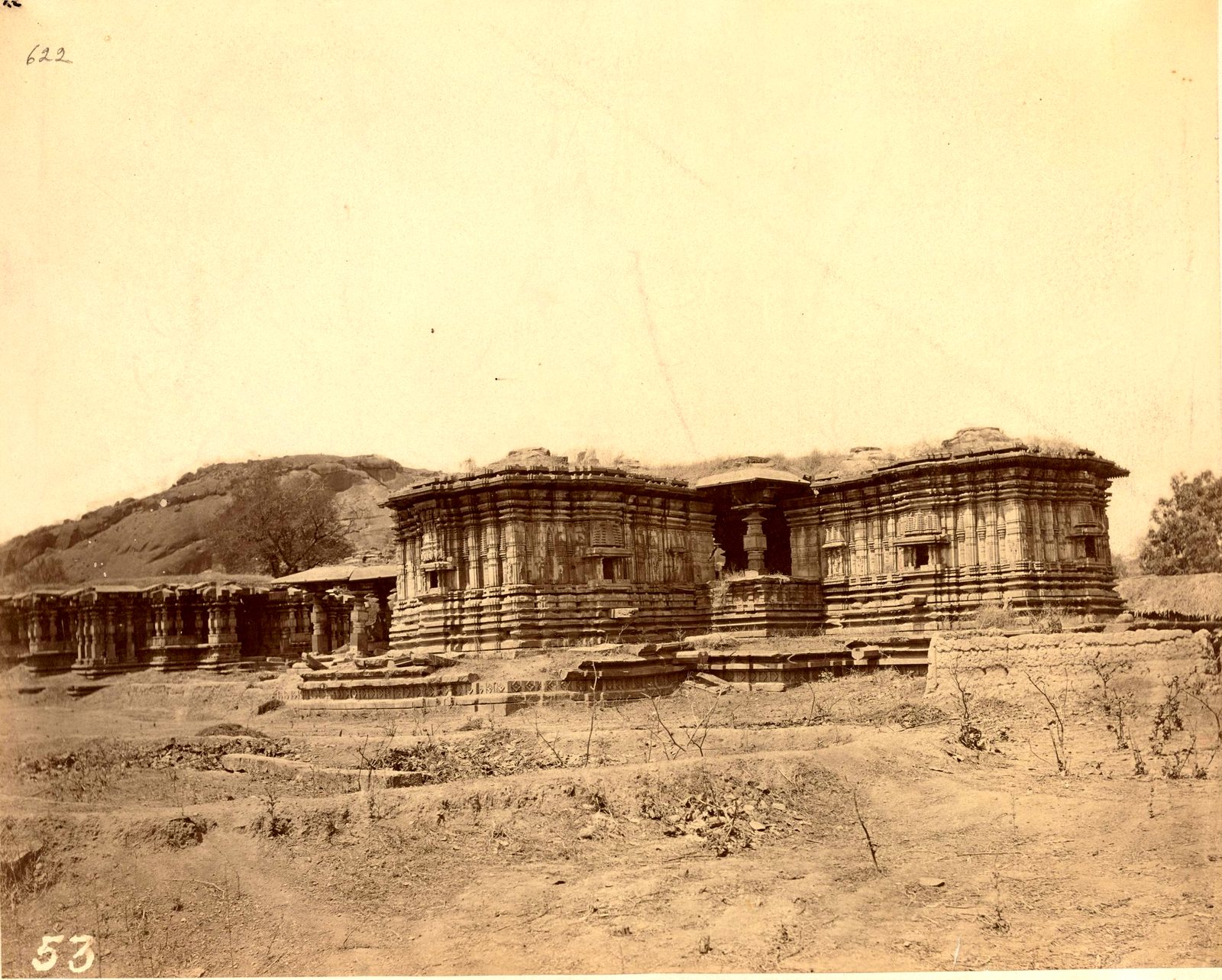
Photographed ca. 1850-1886
This photograph shows the shrines of the Thousand Pillar Temple below the Hanamkonda hill. A long pillared hall extends to the left. The photograph dates from about 1850 to 1886.
Photo: unknown photographer, James Fergusson collection, Boston Public Library, via Digital Commonwealth · Public domain

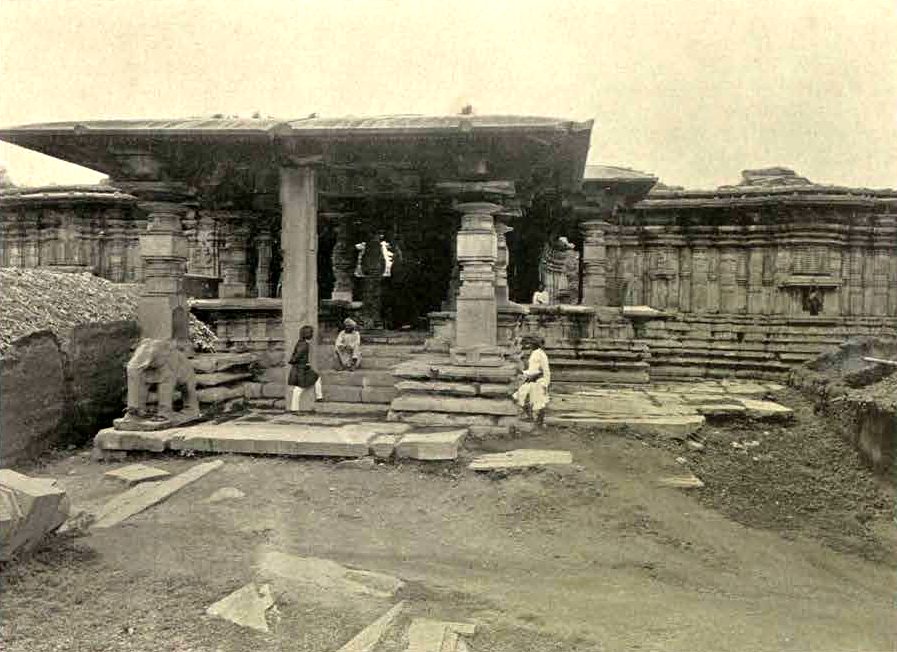
Photographed before 1898
This photograph shows the entrance porch of the Thousand Pillar Temple at Hanamkonda before 1898. A stone elephant stands beside the steps. Loose stone slabs lie on the ground in front.
Photo: unknown photographer, Glimpses of the Nizam's Dominions (A. Claude Campbell), 1898 · Public domain
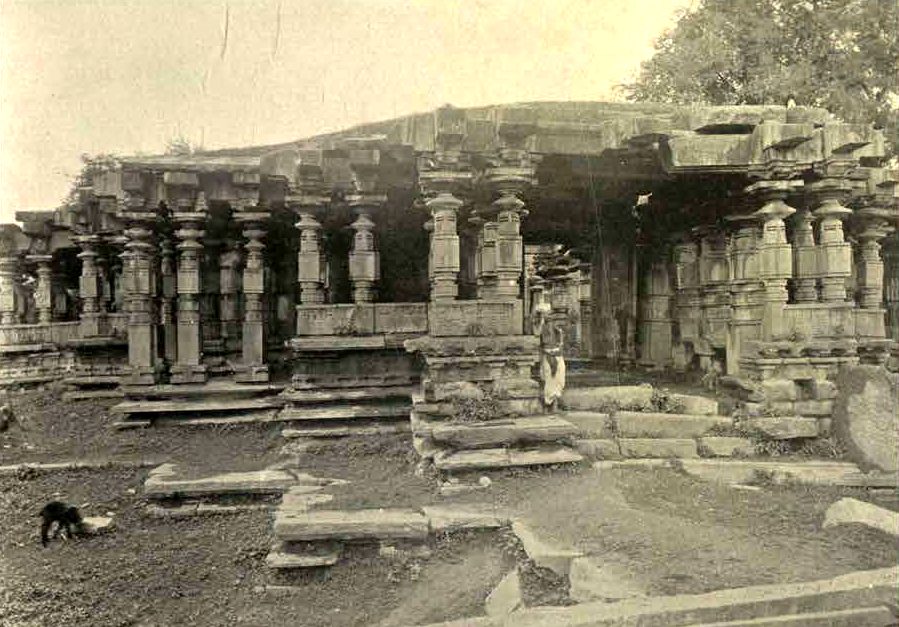
Photographed before 1898
Campbell's book calls this building the detached hall of the Thousand Pillar Temple. The hall stands on its carved pillars, but its roof line sags. Loose stones lie in front of the hall in this photograph from before 1898.
Photo: unknown photographer, Glimpses of the Nizam's Dominions (A. Claude Campbell), 1898 · Public domain
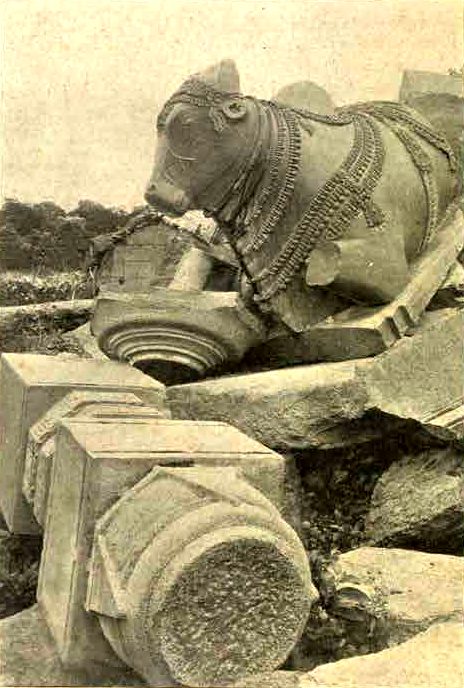
Photographed before 1898
Campbell's book calls this scene the fallen pavilion of the Thousand Pillar Temple. A carved stone Nandi bull lies tilted among fallen pillar parts. The photograph was published in 1898.
Photo: unknown photographer, Glimpses of the Nizam's Dominions (A. Claude Campbell), 1898 · Public domain
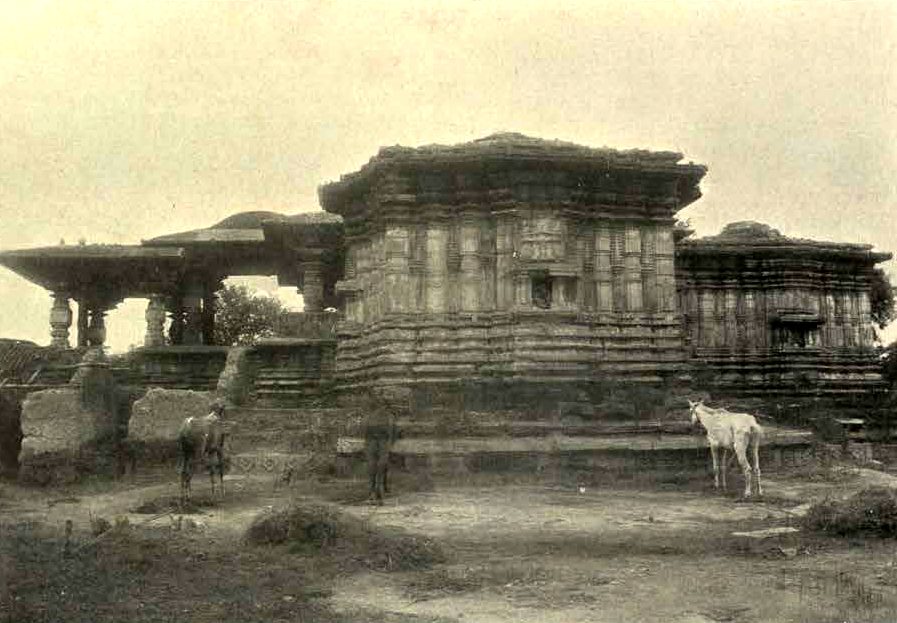
Photographed before 1898
This photograph shows the shrines of the Thousand Pillar Temple at Hanamkonda before 1898. Earth and rubble are heaped against the base of the temple. Horses graze on the open ground in front.
Photo: unknown photographer, Glimpses of the Nizam's Dominions (A. Claude Campbell), 1898 · Public domain
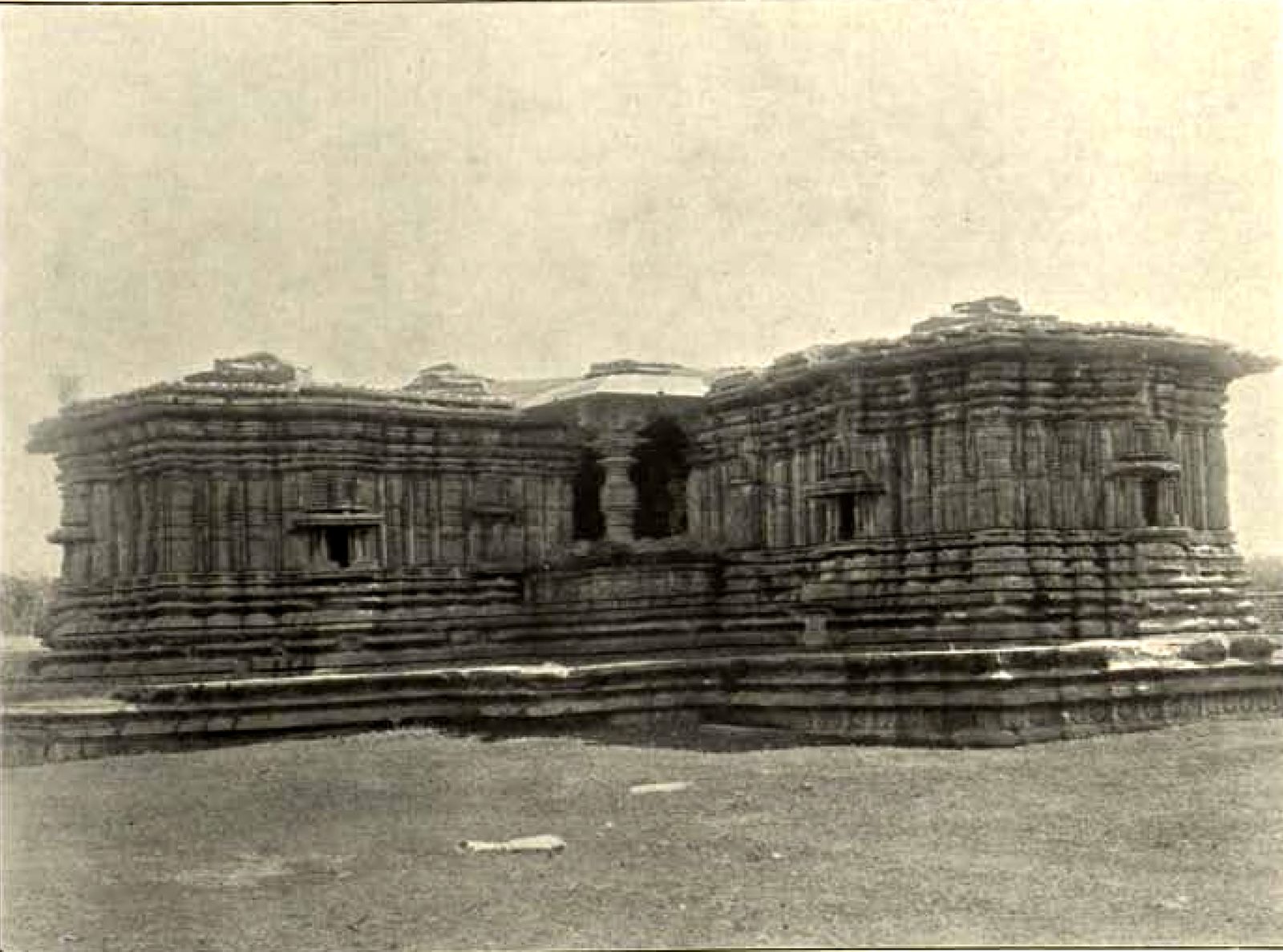
Photographed 1915-16
The Hyderabad Archaeological Department photographed the Thousand Pillar Temple in 1915-16. The department's report for 1921-24 states that its repairs to this temple were complete. The photograph was published in 1917.
Photo: Hyderabad Archaeological Department, Annual Report of the Archaeological Department of H.H. the Nizam's Dominions for 1915-16, 1917 · Public domain
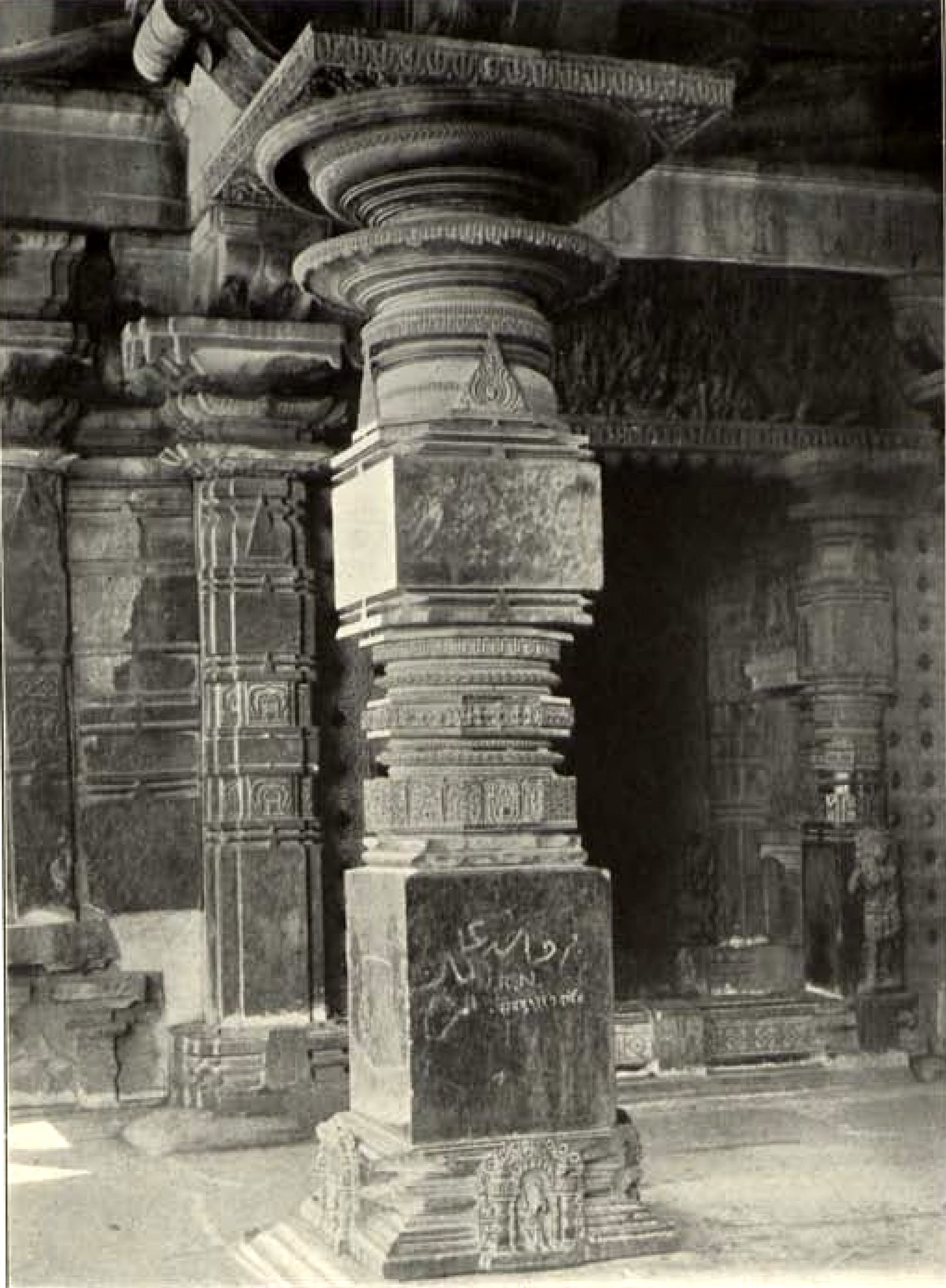
Photographed 1915-16
The Hyderabad Archaeological Department photographed this pillar of the Thousand Pillar Temple in 1915-16. Someone has scratched writing in two scripts on the pillar base. The photograph was published in 1917.
Photo: Hyderabad Archaeological Department, Annual Report of the Archaeological Department of H.H. the Nizam's Dominions for 1915-16, 1917 · Public domain
Ramappa Temple
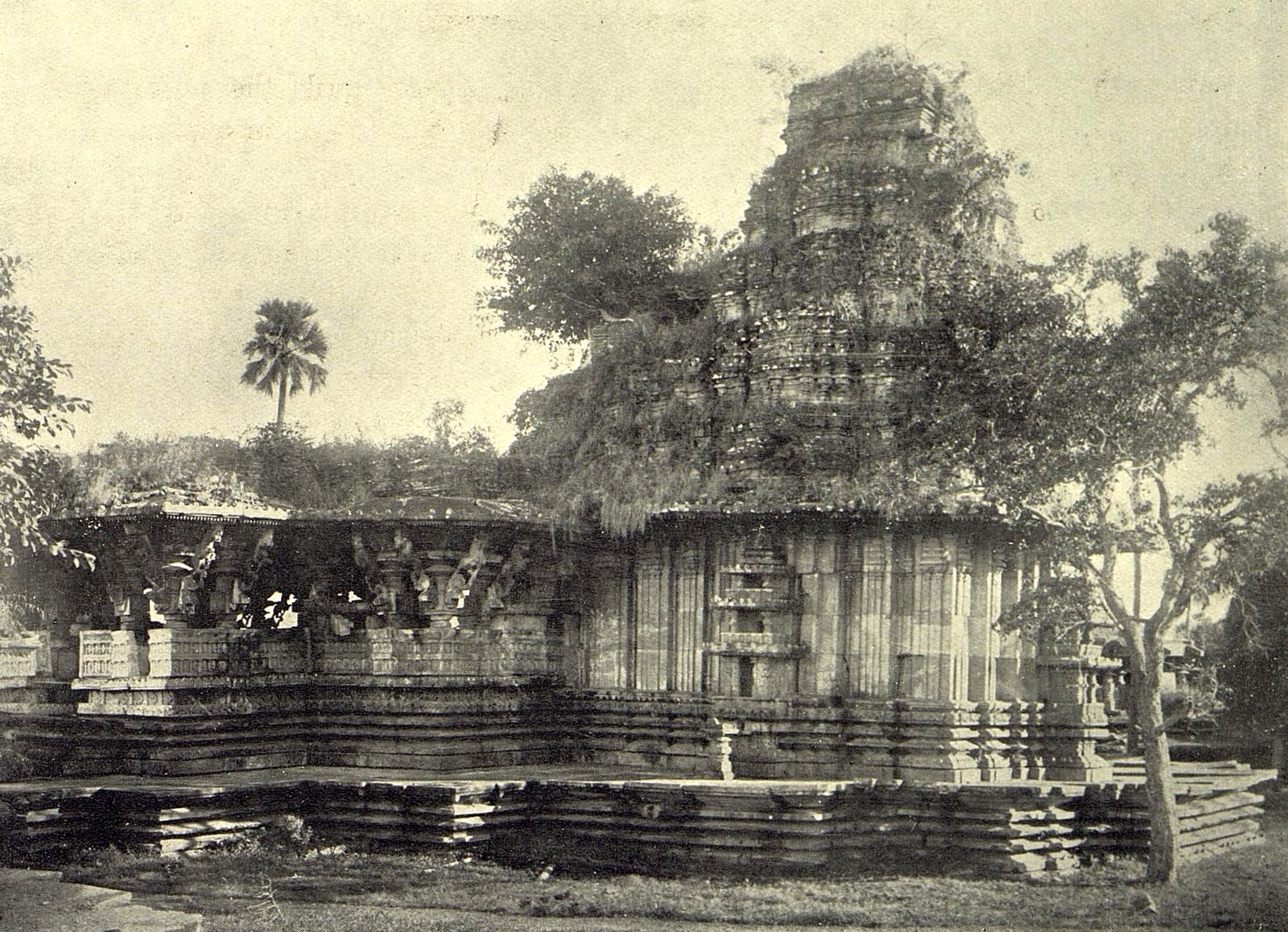
Photographed 1915-16
The Hyderabad Archaeological Department photographed the Ramappa Temple from the north-west in 1915-16. Grass and small trees grow on the roof and on the tower over the shrine. The department's report for 1930-31 states that its repairs to the Ramappa Temple were complete.
Photo: Hyderabad Archaeological Department, The Temples at Palampet (Memoirs of the Archaeological Survey of India 6), 1922 · Public domain
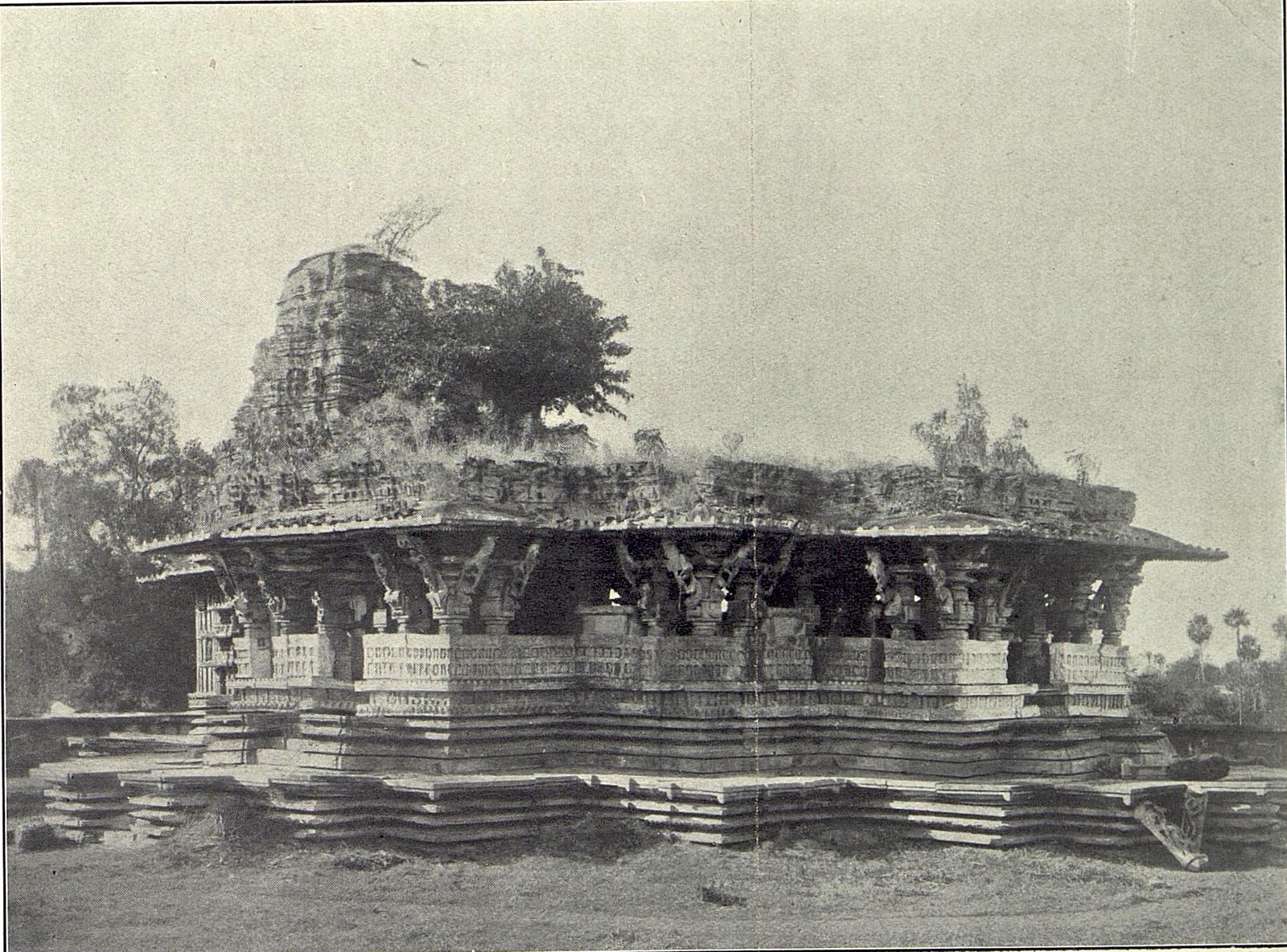
Photographed 1915-16
The Hyderabad Archaeological Department photographed the Ramappa Temple from the south-east in 1915-16. Plants grow along the roof of the hall, and a tree grows beside the tower. The photograph was published in 1917 and again in 1922.
Photo: Hyderabad Archaeological Department, The Temples at Palampet (Memoirs of the Archaeological Survey of India 6), 1922 · Public domain
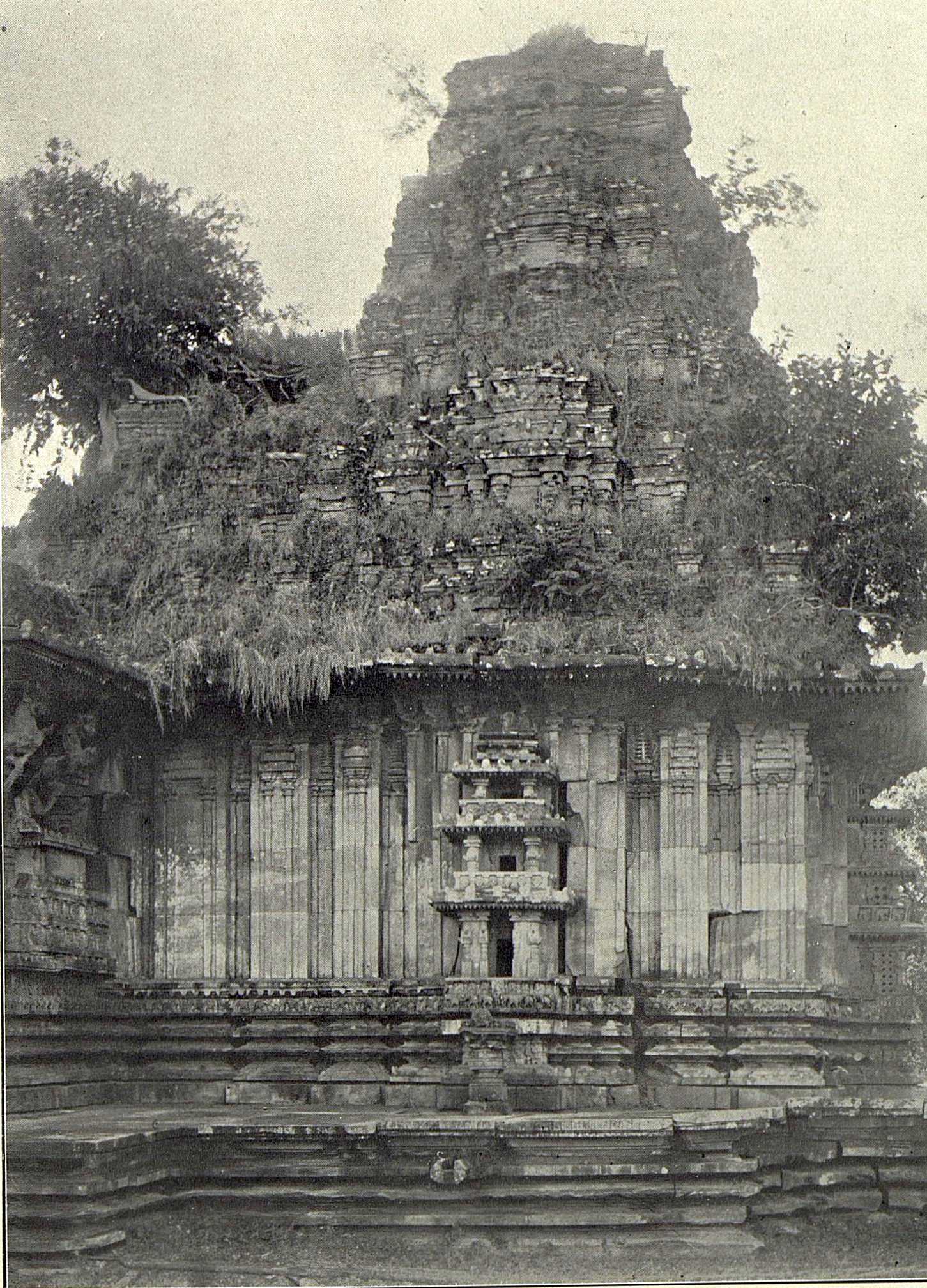
Photographed before 1917
This photograph shows the tower over the shrine of the Ramappa Temple. Grass, shrubs and a tree grow out of the joints of the tower. The photograph was published in 1917 and again in 1922.
Photo: Hyderabad Archaeological Department, The Temples at Palampet (Memoirs of the Archaeological Survey of India 6), 1922 · Public domain
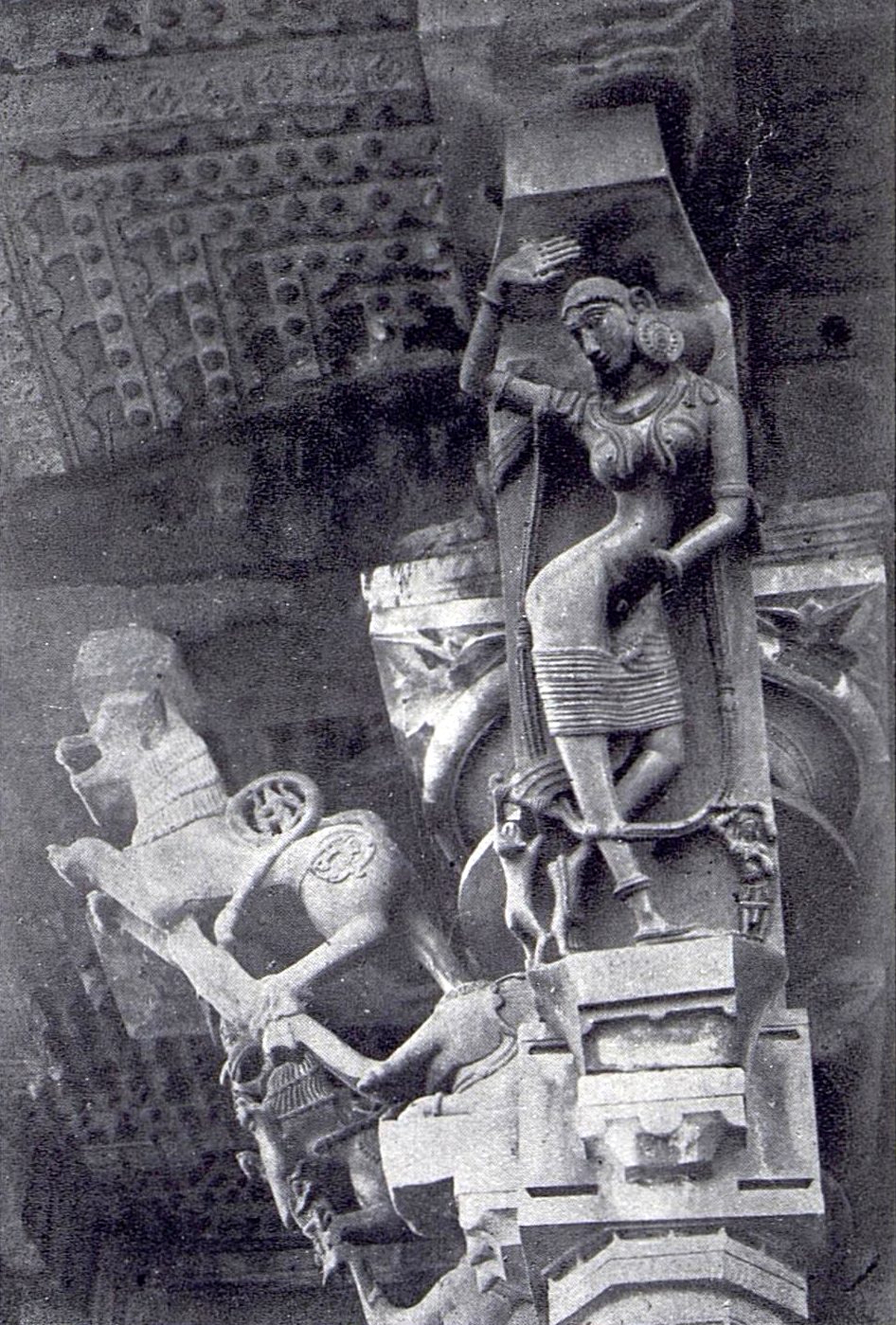
Photographed before 1922
A carved stone woman stands on a bracket between a pillar top and the eave of the Ramappa Temple. A rearing beast is carved on the next bracket. The photograph was published in 1922.
Photo: Hyderabad Archaeological Department, The Temples at Palampet (Memoirs of the Archaeological Survey of India 6), 1922 · Public domain
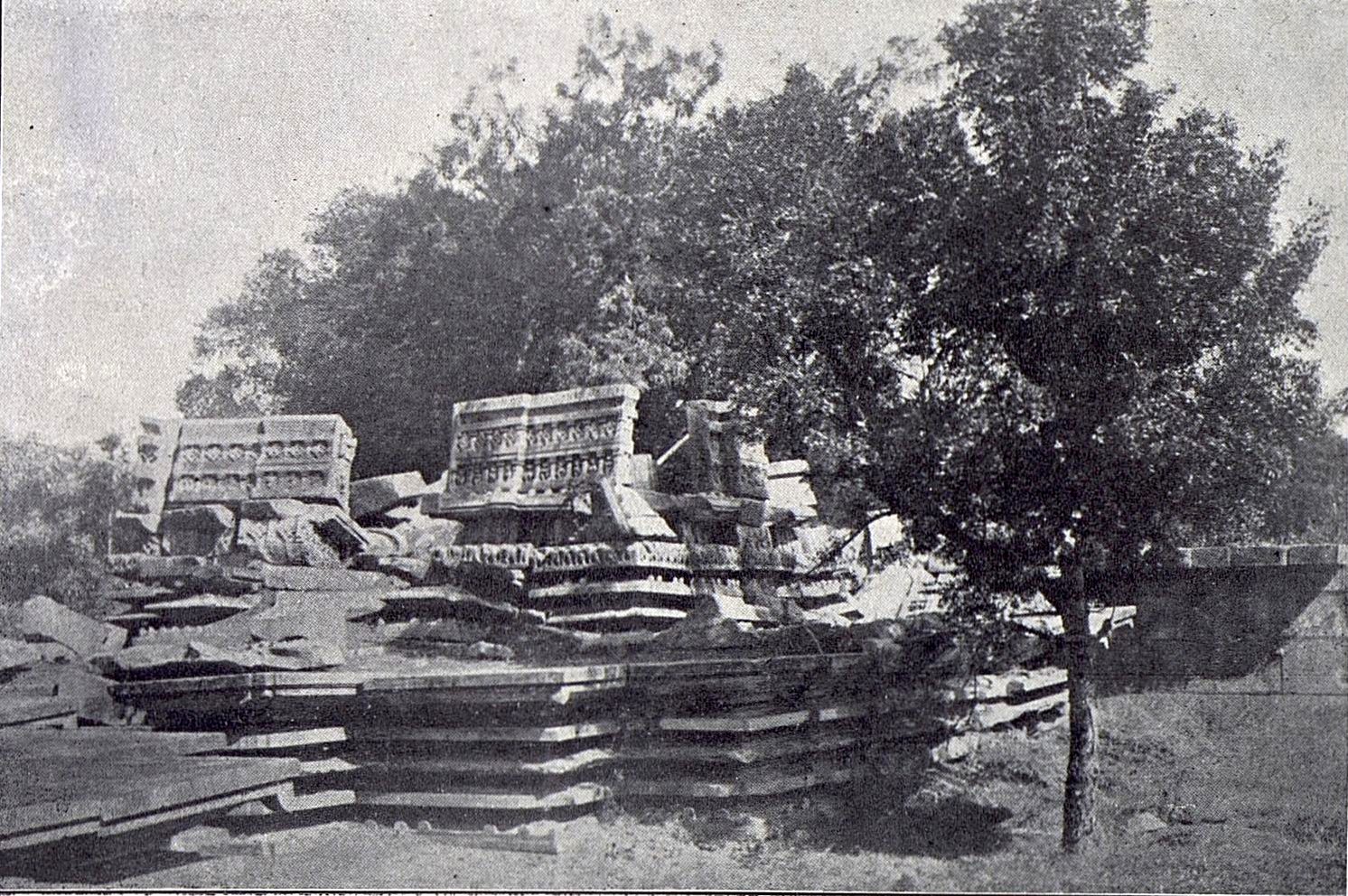
Photographed before 1922
The Nandi pavilion of the Ramappa Temple was in ruins when this photograph was published in 1922. Loose blocks and broken pillar parts lie on its stepped platform. A large tree grows beside it.
Photo: Hyderabad Archaeological Department, The Temples at Palampet (Memoirs of the Archaeological Survey of India 6), 1922 · Public domain
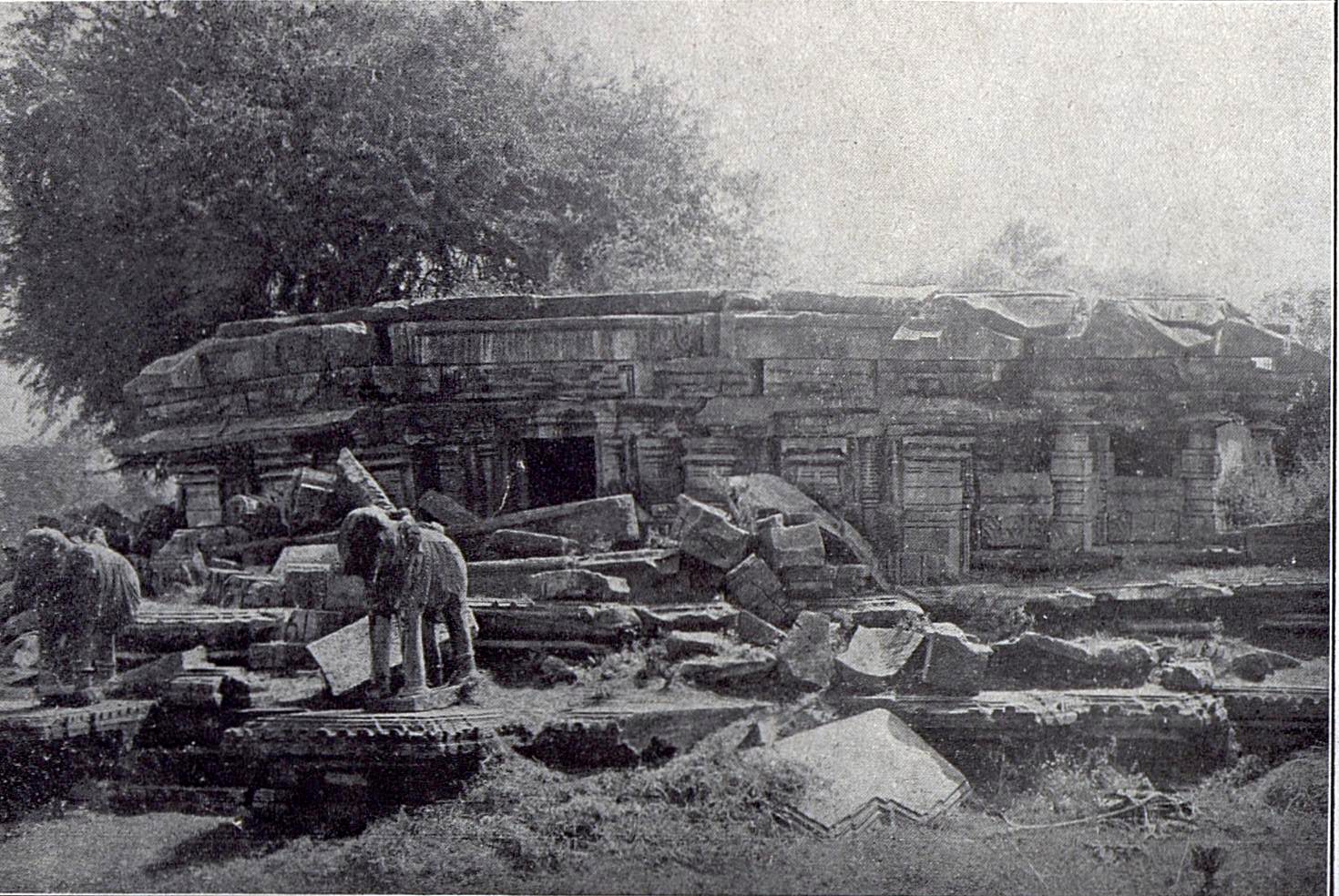
Photographed before 1922
A smaller temple north of the main Ramappa Temple was in ruins when this photograph was published in 1922. Fallen stone blocks lie in front of its walls. Two stone elephants stand among the blocks.
Photo: Hyderabad Archaeological Department, The Temples at Palampet (Memoirs of the Archaeological Survey of India 6), 1922 · Public domain
Uparpalle Temples
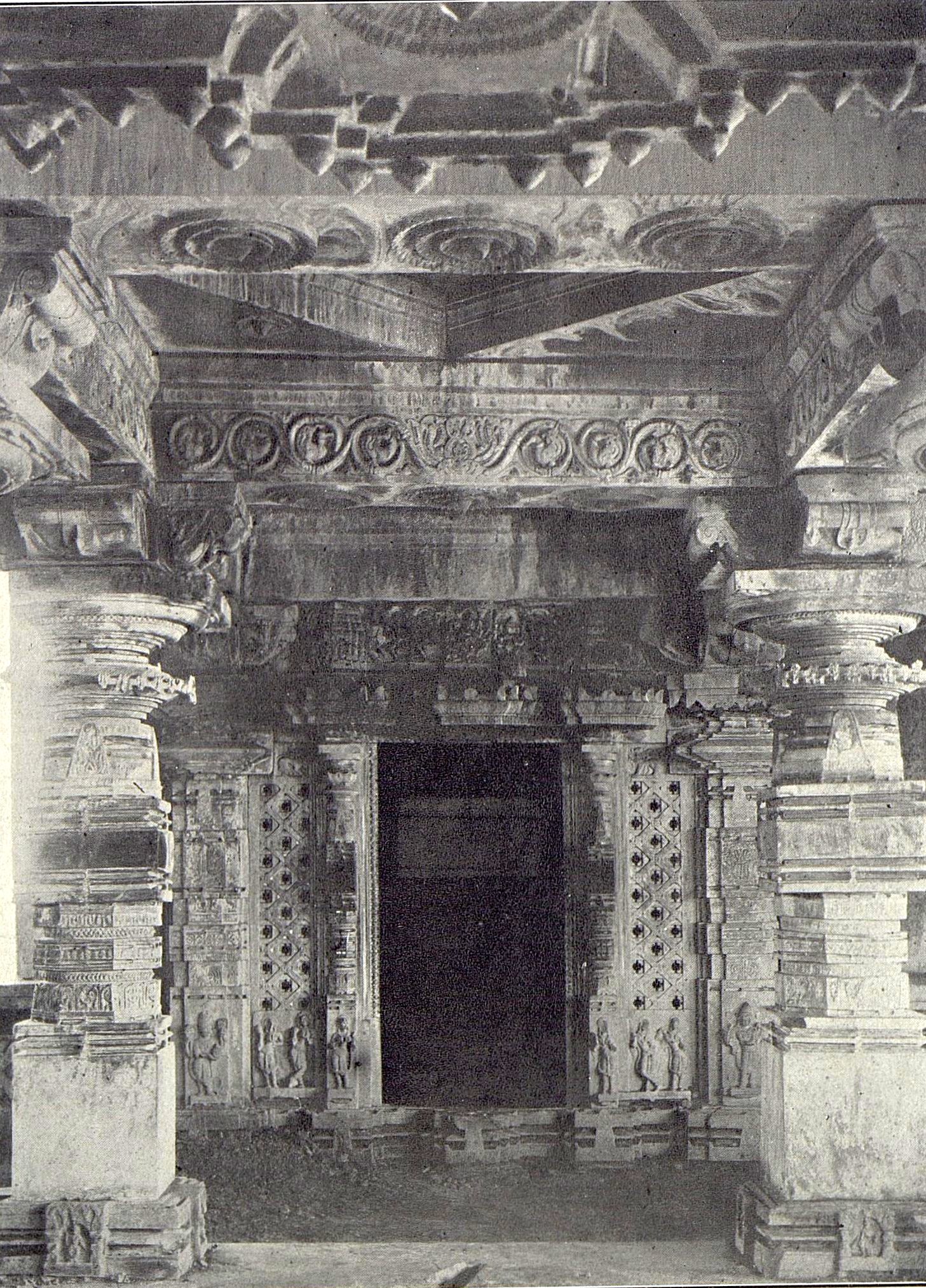
Photographed before 1917
This photograph shows the inside of the great temple at Uparpalle. Carved beams and a ceiling with lotus panels frame a shrine doorway with pierced stone screens. The photograph was published in 1917 and again in 1922.
Photo: Hyderabad Archaeological Department, The Temples at Palampet (Memoirs of the Archaeological Survey of India 6), 1922 · Public domain
Ramappa Lake
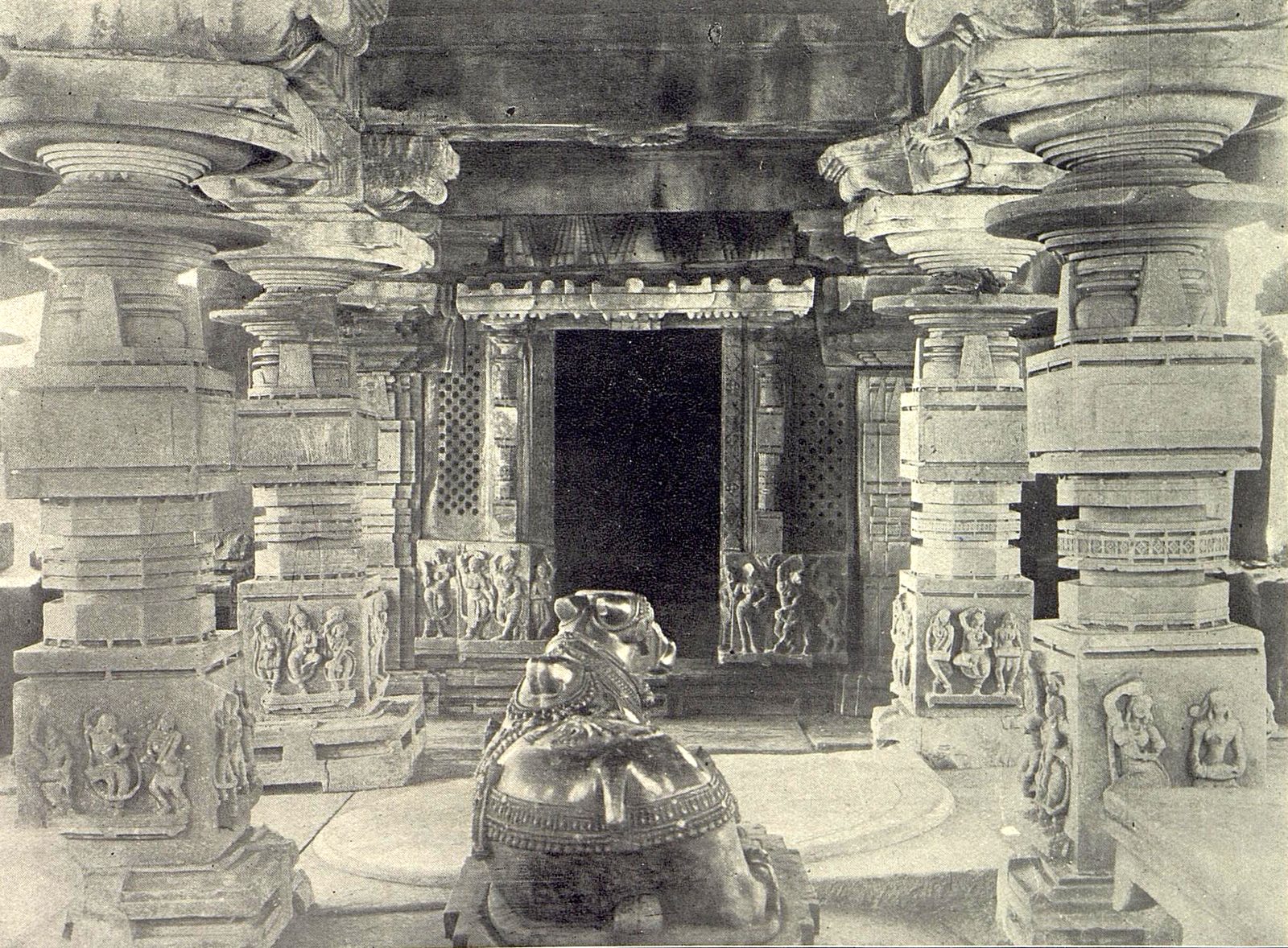
Photographed before 1917
This photograph shows the inside of a temple at the eastern end of the Ramappa Lake embankment. A stone Nandi bull faces the shrine doorway between carved pillars. The photograph was published in 1917 and again in 1922.
Photo: Hyderabad Archaeological Department, The Temples at Palampet (Memoirs of the Archaeological Survey of India 6), 1922 · Public domain
Khasi Mahal
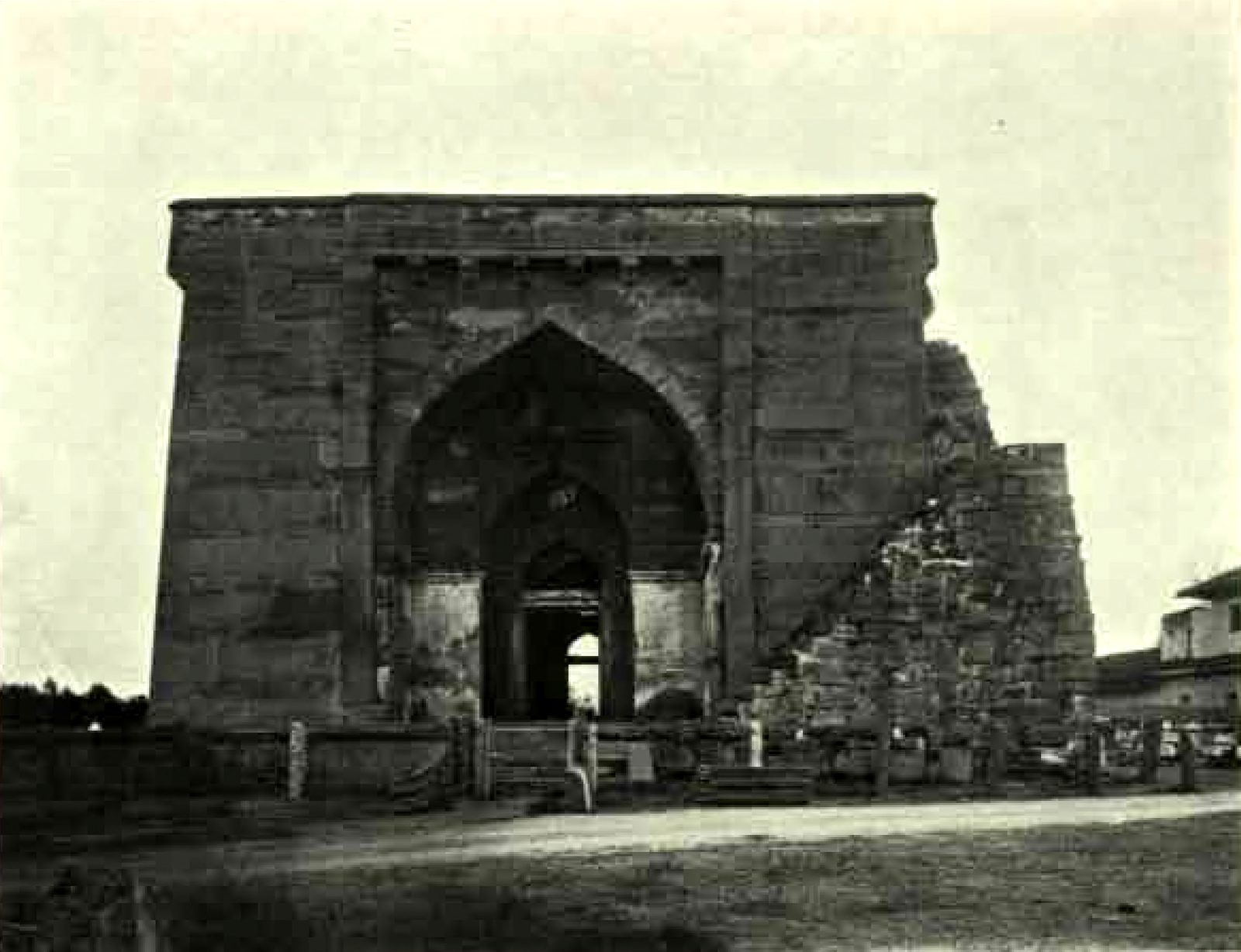
Photographed before 1928
The report for 1925-26 calls this building Shitab Khan's Hall in Warangal Fort. A sloping mass of rough masonry stands against its right side. The report was published in 1928.
Photo: Hyderabad Archaeological Department, Annual Report of the Archaeological Department of H.E.H. the Nizam's Dominions for 1925-26, 1928 · Public domain
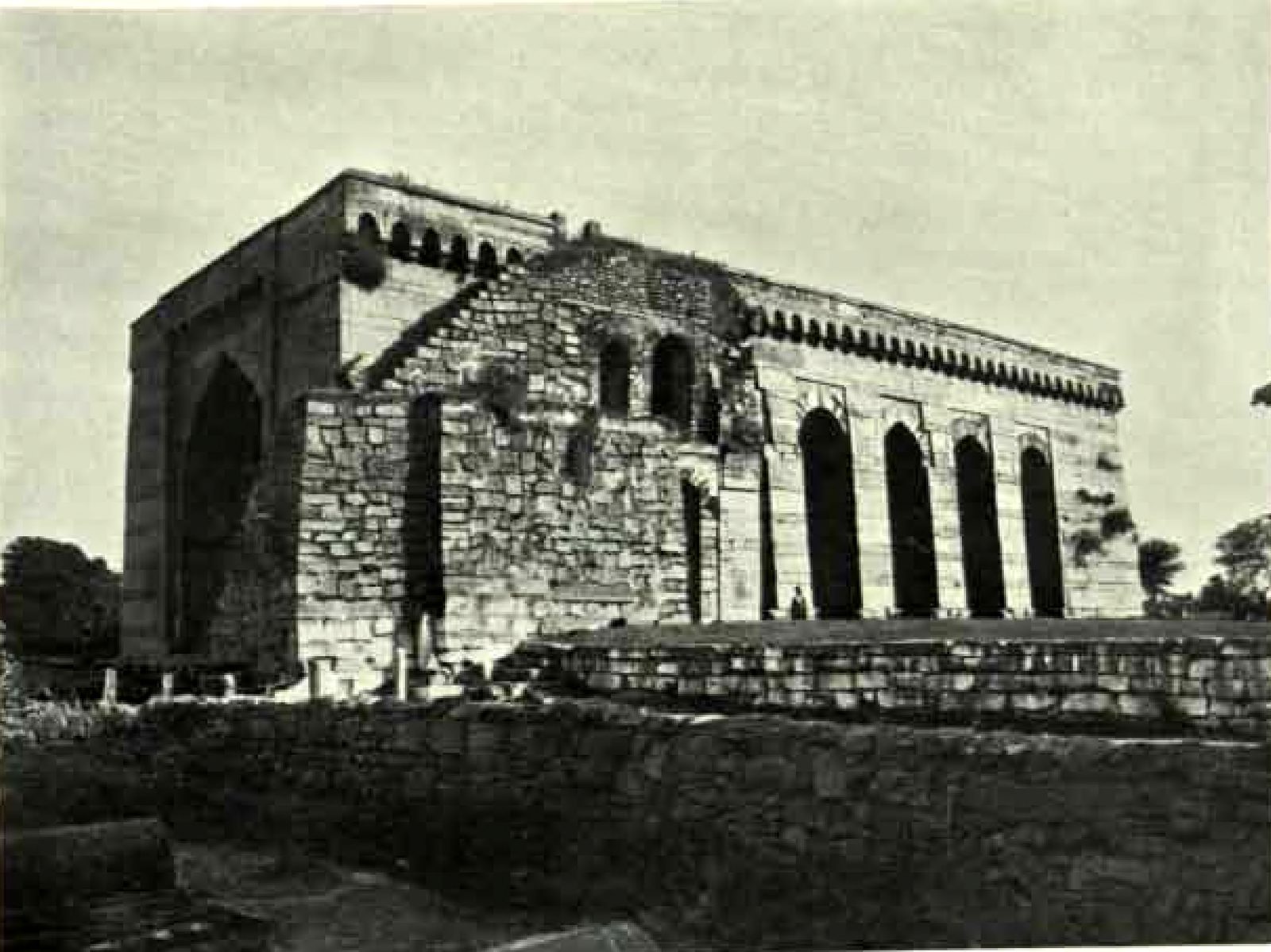
Photographed before 1928
The report for 1925-26 shows Shitab Khan's Hall from the north-west. Rough rubble masonry is built against one end of the hall. The report was published in 1928.
Photo: Hyderabad Archaeological Department, Annual Report of the Archaeological Department of H.E.H. the Nizam's Dominions for 1925-26, 1928 · Public domain
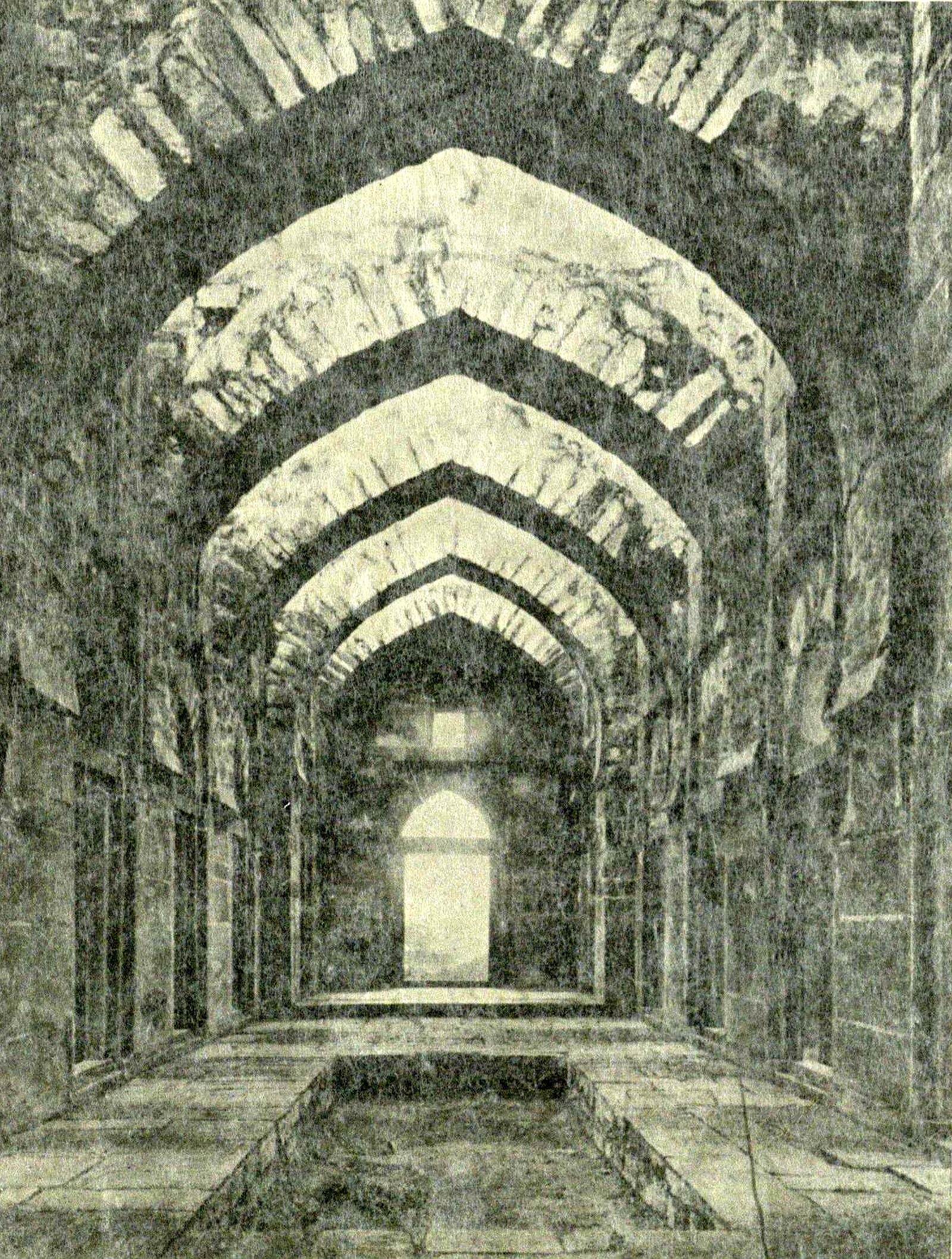
Photographed before 1932
This view inside Shitab Khan's Hall was published in 1932. A row of pointed stone arches spans the hall. A sunken channel runs along the middle of the floor.
Photo: Hyderabad Archaeological Department, Shitab Khan of Warangal (Hyderabad Archaeological Series 9), 1932 · Public domain
Bhongir Fort
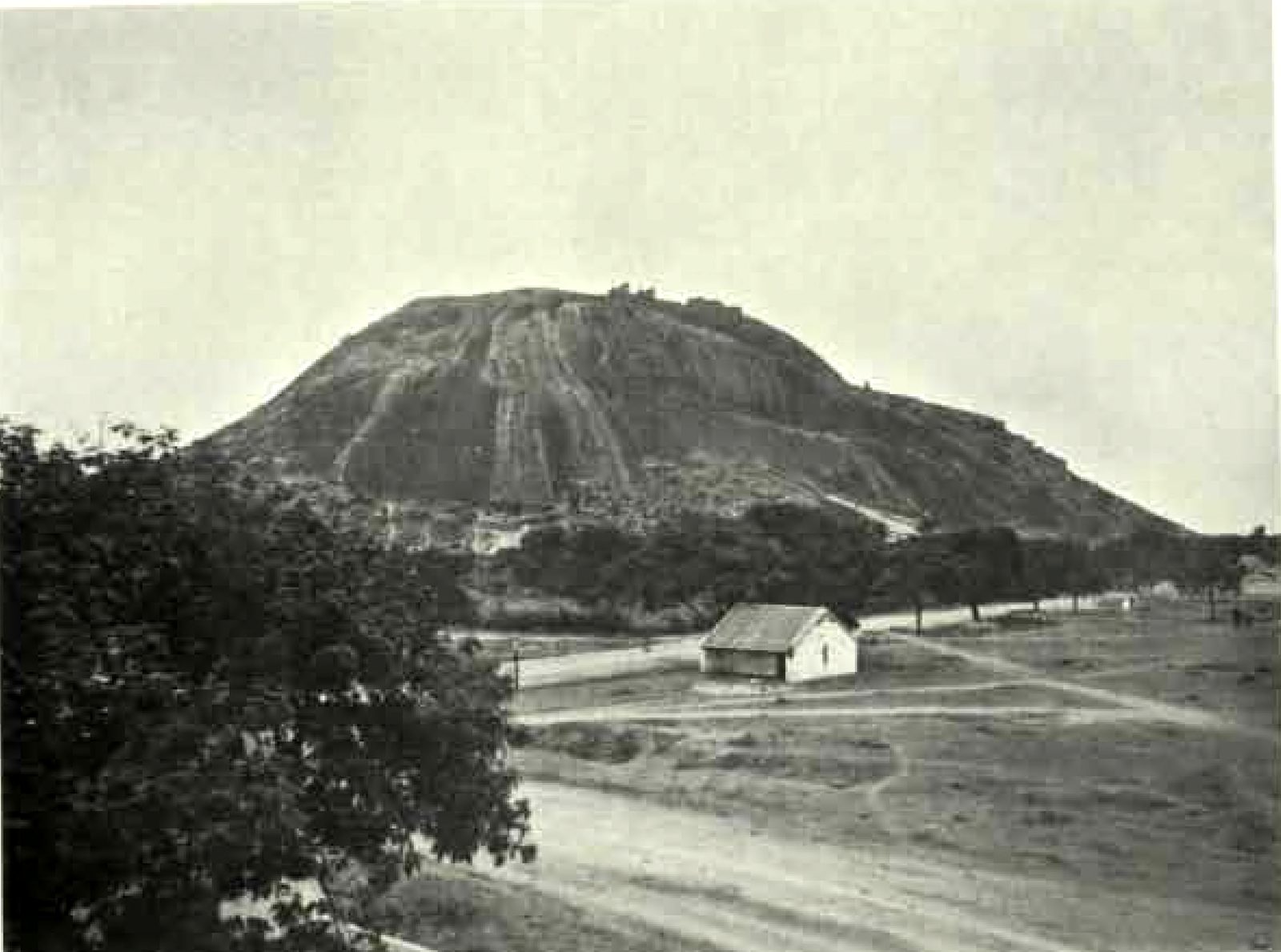
Photographed before 1928
The report for 1925-26 shows this general view of Bhongir Fort on its rock. A small building stands beside a road at the foot of the hill. The report was published in 1928.
Photo: Hyderabad Archaeological Department, Annual Report of the Archaeological Department of H.E.H. the Nizam's Dominions for 1925-26, 1928 · Public domain