Ramappa Temple
Ramappa Temple, at Palampet, is a single-shrine temple with three entrance porches, built in 1213 by the general Recherla Rudra. It stands on a high, two-tier, star-shaped platform. Its dolerite bracket sculptures and its light brick tower are its best-known features.
- Period
- Kakatiya, from 1213 CE
- Date
- 1213 CE (Saka 1135)
- Commissioned by
- Recherla Rudra (Recherla Chamupati), general of Ganapati Deva
- Materials
- Pink sandstone, with granite, dolerite and sandstone beams and pillars, and a brick tower
- Location
- 18.2594° N, 79.9425° E
Source of the position: Wikidata Q3380656
- Condition
- UNESCO inscribed the temple on the World Heritage List in 2021 as Kakatiya Rudreshwara (Ramappa) Temple, Telangana.
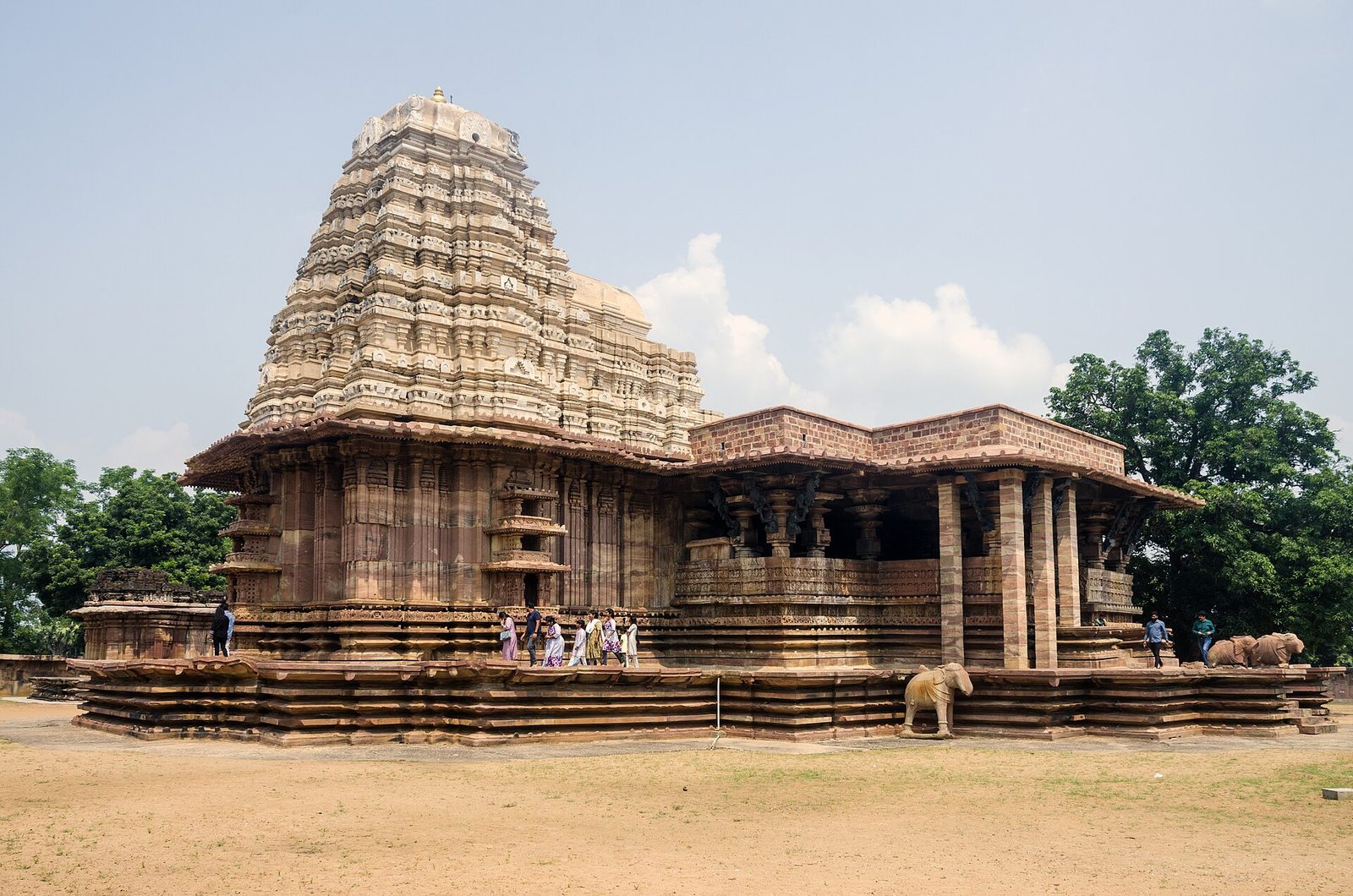
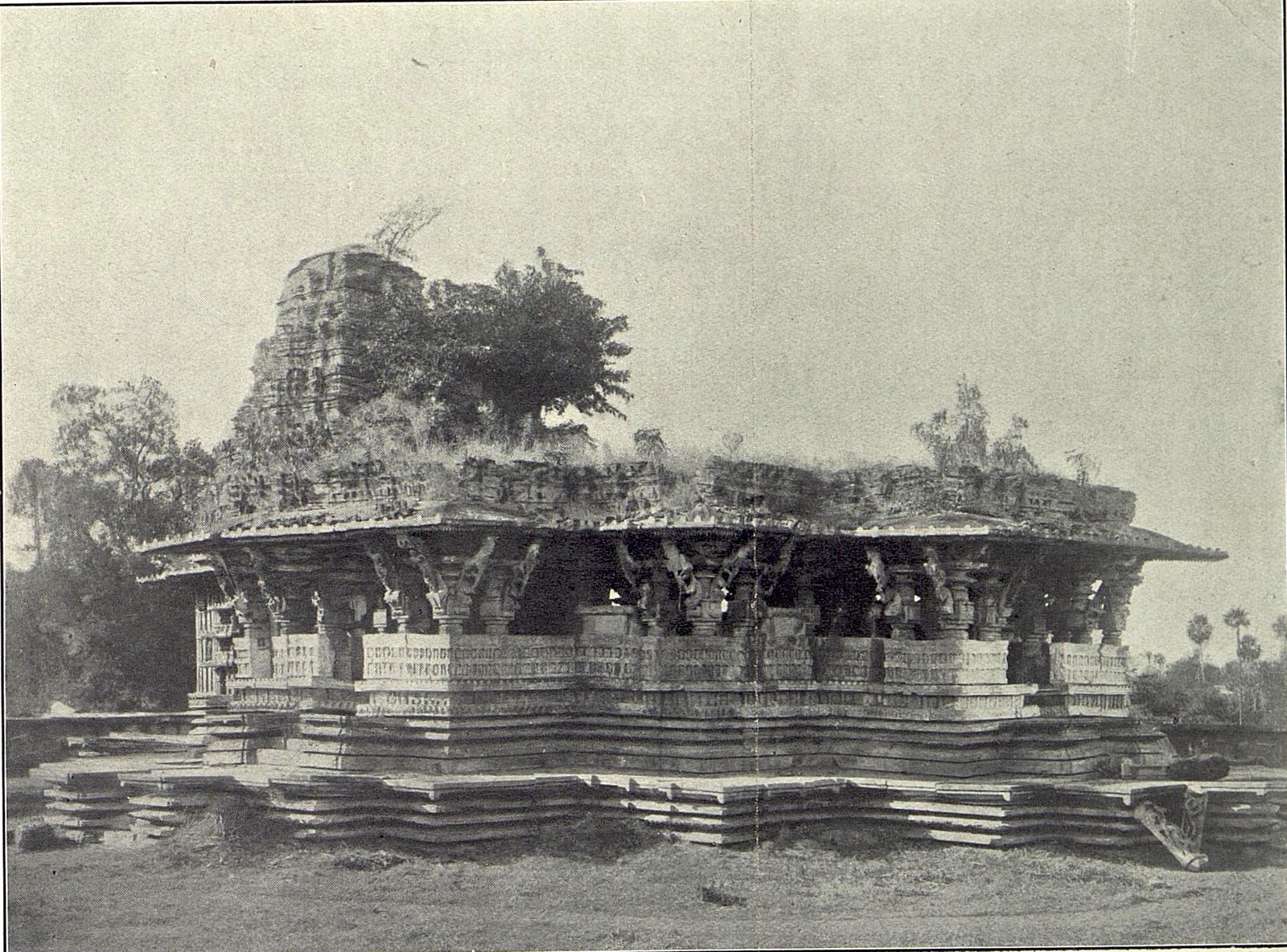
The vimana rises over the shrine at the left, and the mandapa, with its deep overhanging eaves, extends to the right. The whole temple stands on the raised star-shaped platform.
Photo: Rangan Datta Wiki, via Wikimedia Commons · CC BY-SA 4.0

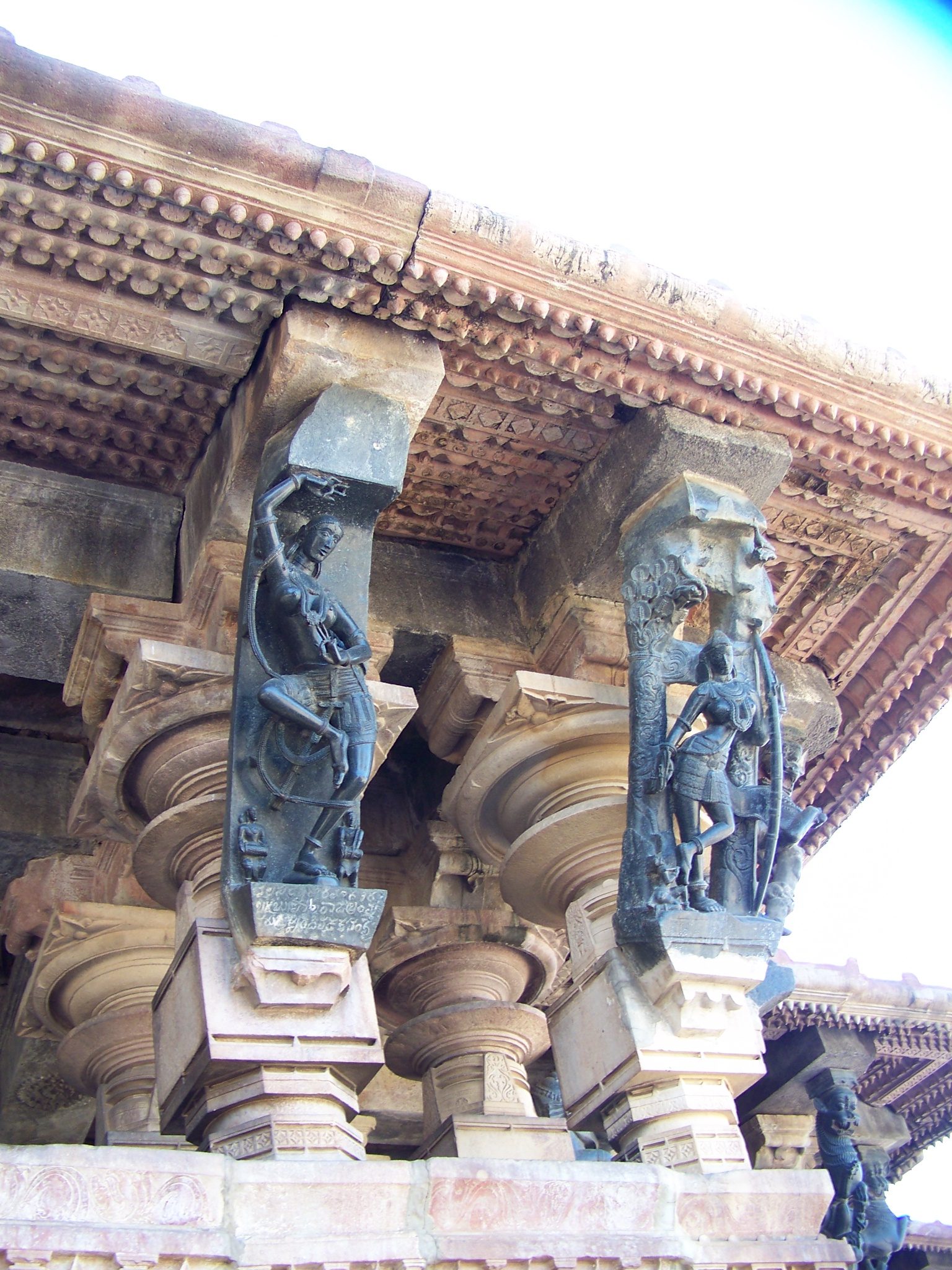
Bracket sculptures (madanikas) in dark polished stone spring from the outer columns of the mandapa to support the overhanging eave. The sculpture on the right holds a bow.

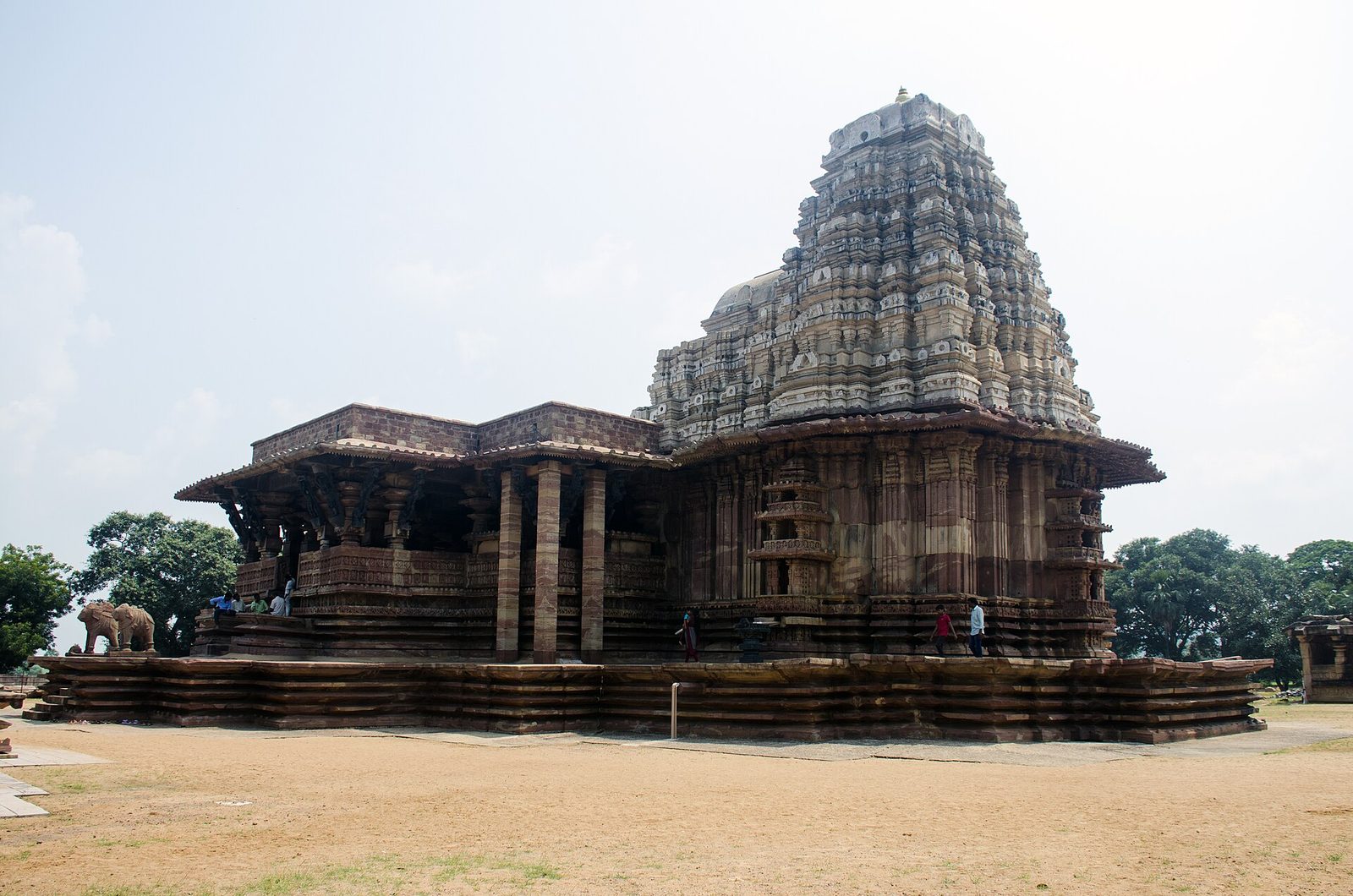
Ramappa (Rudreshwara) Temple at Palampet, built 1213 CE: the vimana over the shrine and the mandapa, on the raised platform.
Photo: Rangan Datta Wiki, via Wikimedia Commons · CC BY-SA 4.0

Detail
- Recherla Rudra, a general of Ganapati Deva, built the temple in 1213 in his new town of Atukuru. Atukuru is now Palampet.Barnett 1919Parabrahma Sastry 1978UNESCO dossier 2017
- The UNESCO dossier states that the temple takes its popular name from its chief sculptor, Ramappa. The dossier cites no inscription for the sculptor's name, so the name rests on tradition.UNESCO dossier 2017
- The 1900 survey and M. Rama Rao describe a single shrine with a great hall. The UNESCO nomination dossier calls the plan a trikuta form. Its drawings explain that the temple has one shrine and three entrances, which resembles a trikuta plan.ASI 1900Rama Rao 1966UNESCO dossier 2017
- The Kateshwara temple stands north of the main temple on its own high platform. The Kameshwara temple, now called the Kalyana Mandapa, stands to the south on a star-shaped platform of its own.UNESCO dossier 2017
- The temple is built mainly of pink sandstone. Its beams and pillars are of granite, dolerite and sandstone, and the ceiling of the hall is of granite.UNESCO dossier 2017
- The tower over the shrine is built of bricks that are light enough to float on water.UNESCO dossier 2017ASI 1900
- The temple stands on a sand-box foundation. The builders dug a pit two to three metres deep and filled it with sand.UNESCO dossier 2017
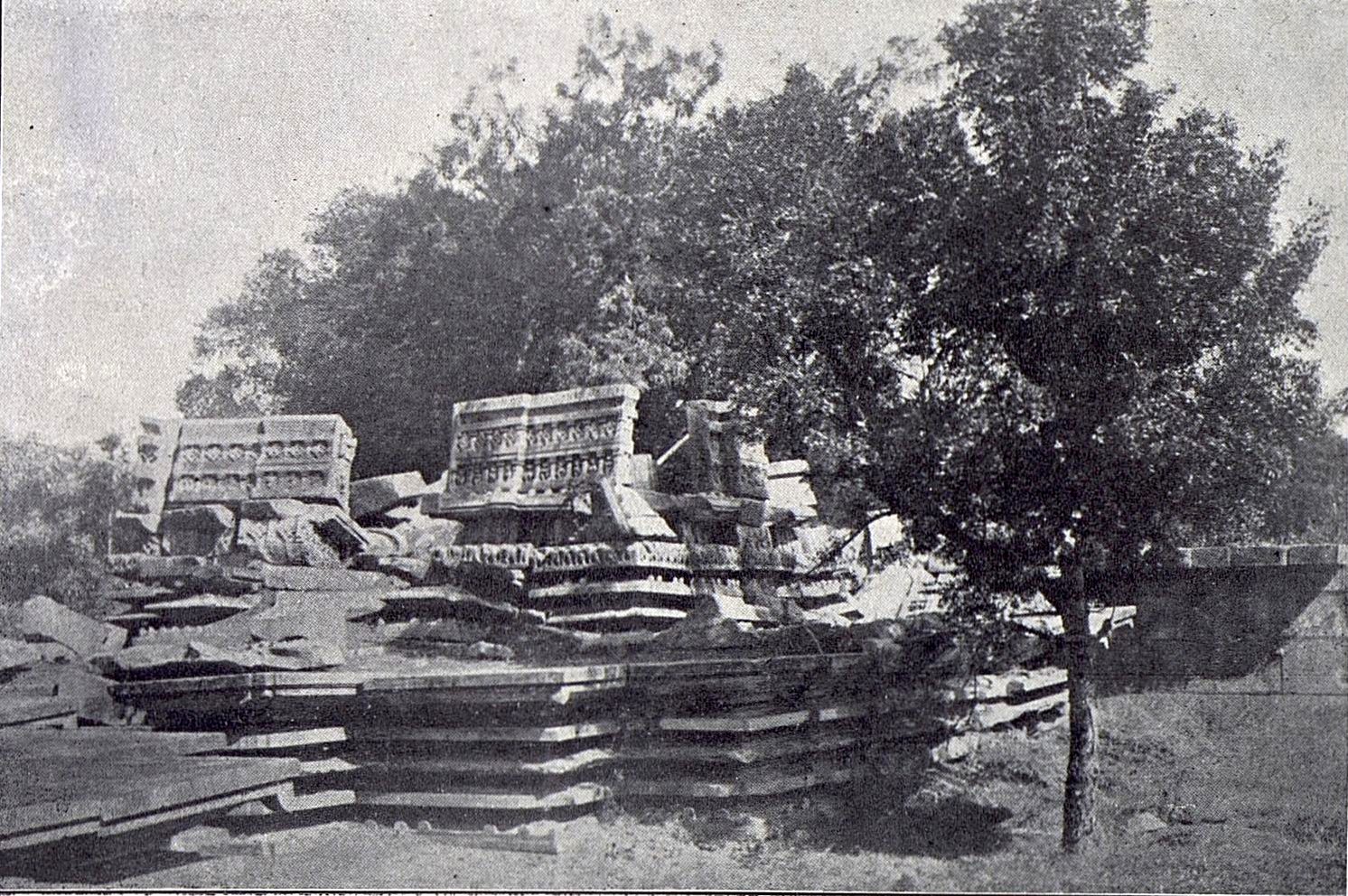
- Bracket sculptures of women, called madanikas, spring from the outer pillars of the porches to support the overhanging cornice. The sculptures are almost life-size and carved in dolerite.ASI 1900UNESCO dossier 2017Rama Rao 1966
- The UNESCO dossier counts 38 bracket sculptures on the hall, and twelve of them are madanikas. Elsewhere the same dossier gives 40 madanikas and gaja-vyalas, each about six feet tall.UNESCO dossier 2017
- The Hyderabad Archaeological Department described the temple in its report for 1914–15. That report gives the platform a height of 6 feet 4 inches. It also records a walkway 10 feet wide around the temple.UNESCO dossier 2017
- India first proposed the temple in 2014 with the Thousand Pillar Temple and the Swayambhu temple at Warangal Fort. The final nomination dropped the other two sites.UNESCO dossier 2017
Inscriptions on this monument
These images show the inscriptions themselves. The ink impressions come from the published editions, and the photographs show the stones today. How to read a Kakatiya inscription
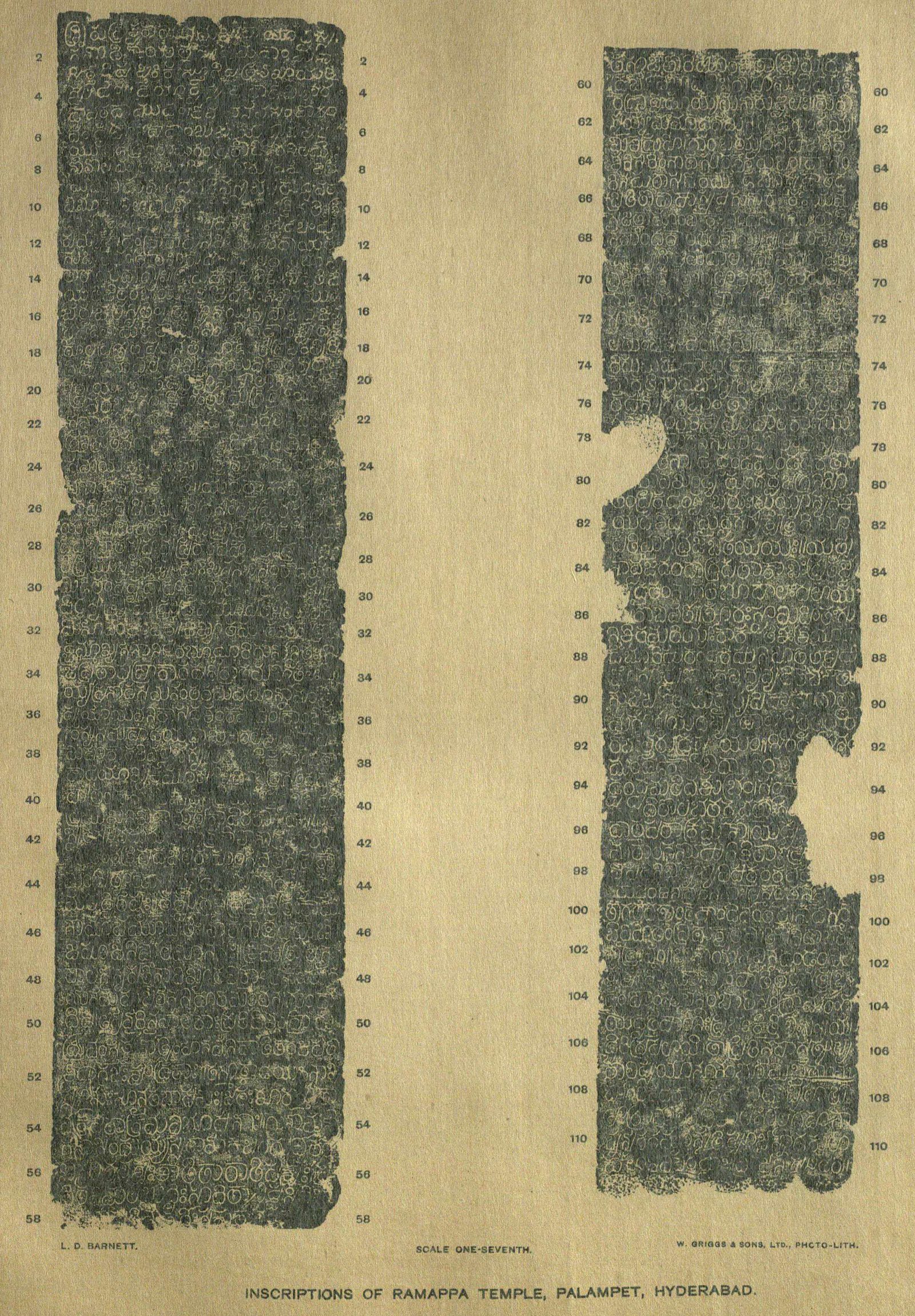
Estampage (ink impression)
This estampage shows lines 1 to 110 of the Sanskrit inscription of Recherla Rudra on a black basalt pillar at the Ramappa temple, Palampet. Barnett describes the letters as fairly good Telugu characters of the type usual in the period. The book prints the plate at one-seventh of the original size, with the caption "Inscriptions of Ramappa Temple, Palampet, Hyderabad".
Estampage published in L. D. Barnett (ed.), Inscriptions at Palampet and Uparpalli, Hyderabad Archaeological Series No. 3 (1919). Photo-lithograph by W. Griggs & Sons. G. Yazdani took the estampages in 1916. Plate: "Inscriptions of Ramappa Temple, Palampet, Hyderabad", scale one-seventh. · Public domain · This record in the database
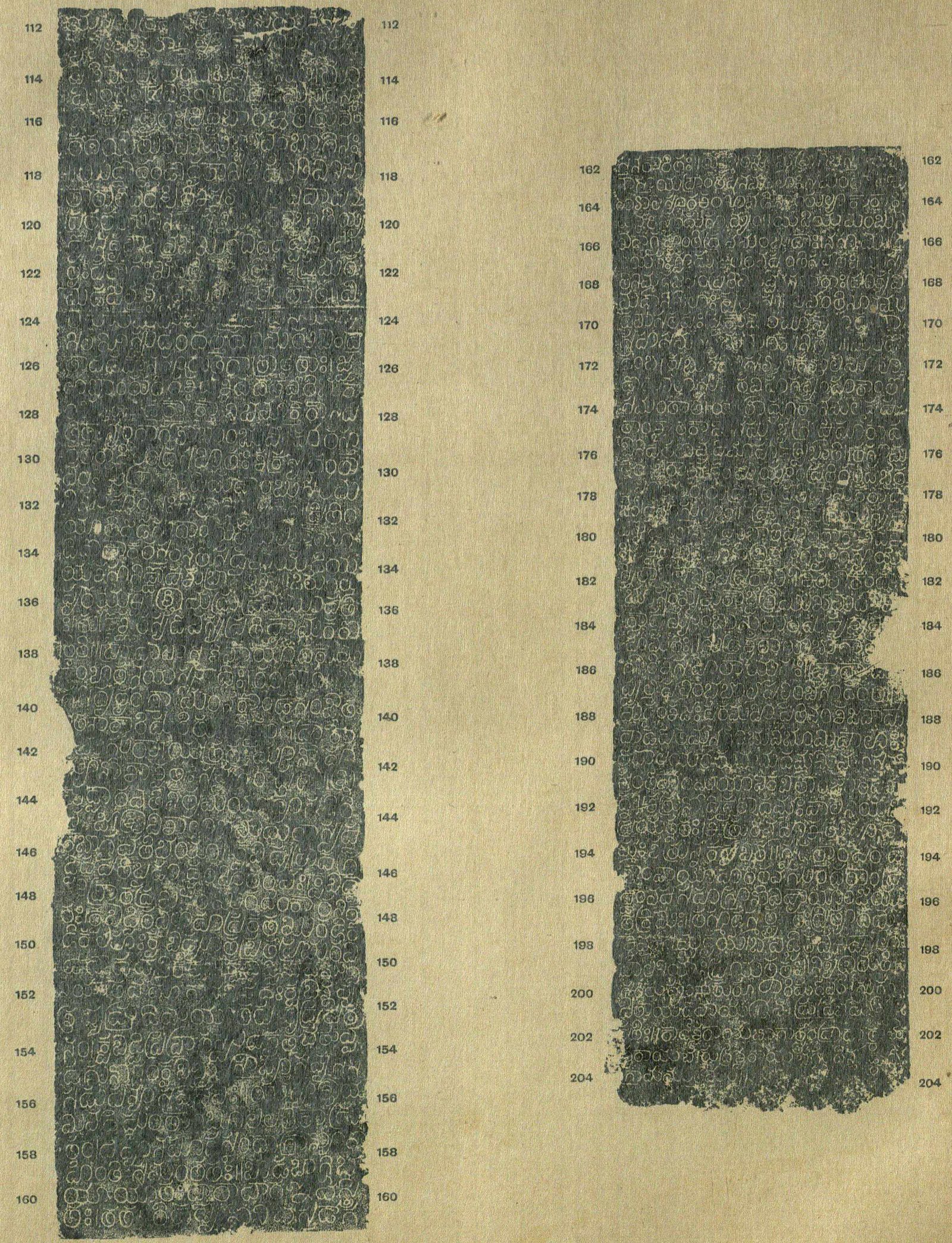
Estampage (ink impression)
This estampage continues the Ramappa pillar inscription from line 112 to line 204. Lines 183 and 184 in the right-hand column give the date of the grant. Barnett reads Saka 1135, the year Srimukha, Chaitra bright eighth day, Sunday, and equates it with 31 March 1213.
Estampage published in L. D. Barnett (ed.), Inscriptions at Palampet and Uparpalli, Hyderabad Archaeological Series No. 3 (1919). Photo-lithograph by W. Griggs & Sons. G. Yazdani took the estampages in 1916. Second page of the plate "Inscriptions of Ramappa Temple, Palampet, Hyderabad" (unnumbered continuation). · Public domain · This record in the database
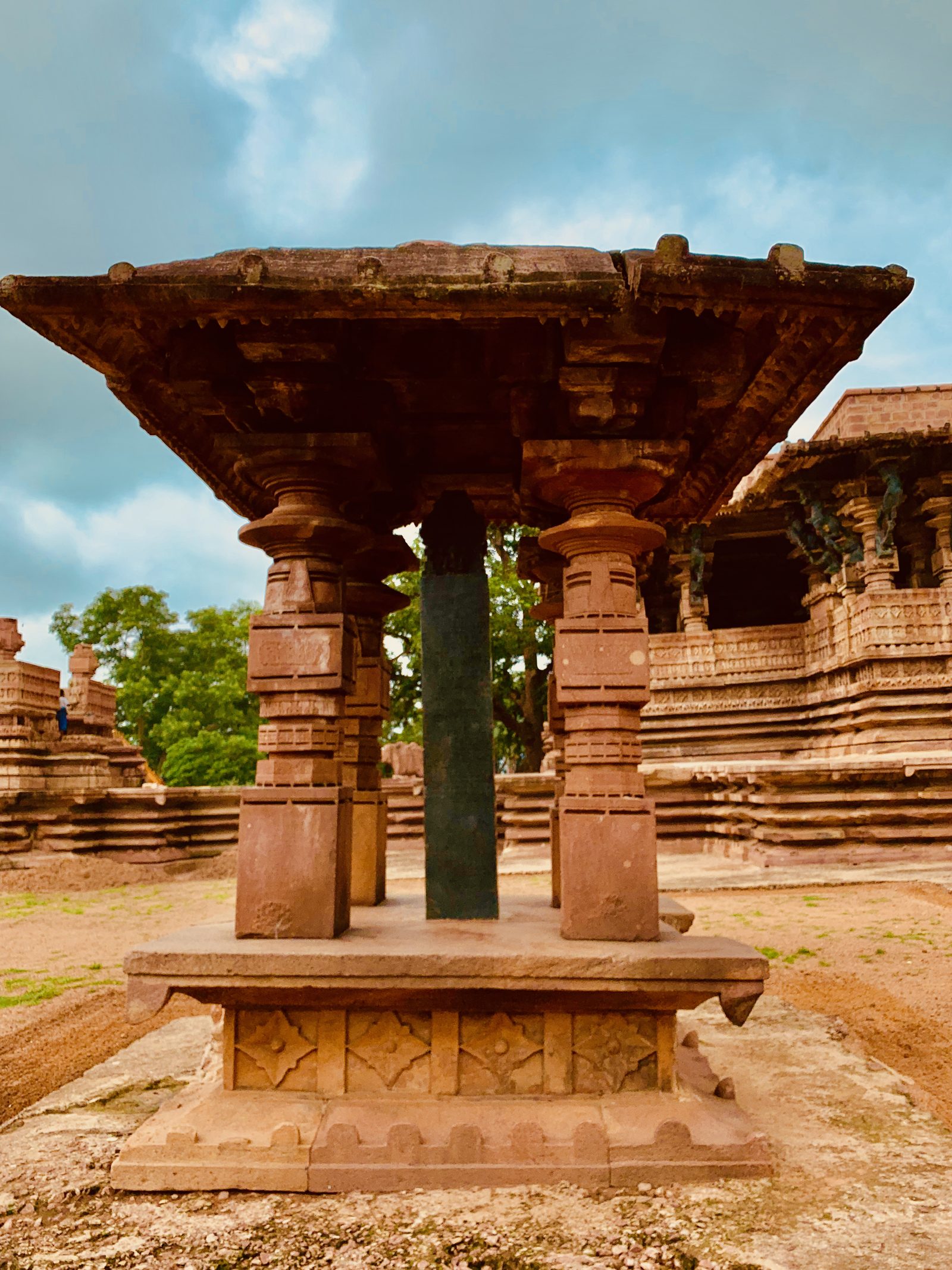
Photograph of the stone
The Ramappa inscription pillar stands in a small pavilion to the north-east of the temple. Recherla Rudra, a general of the Kakatiya king Ganapati, set up this Sanskrit record in 1213.
Photo: Ms Sarah Welch, via Wikimedia Commons · CC0 · This record in the database

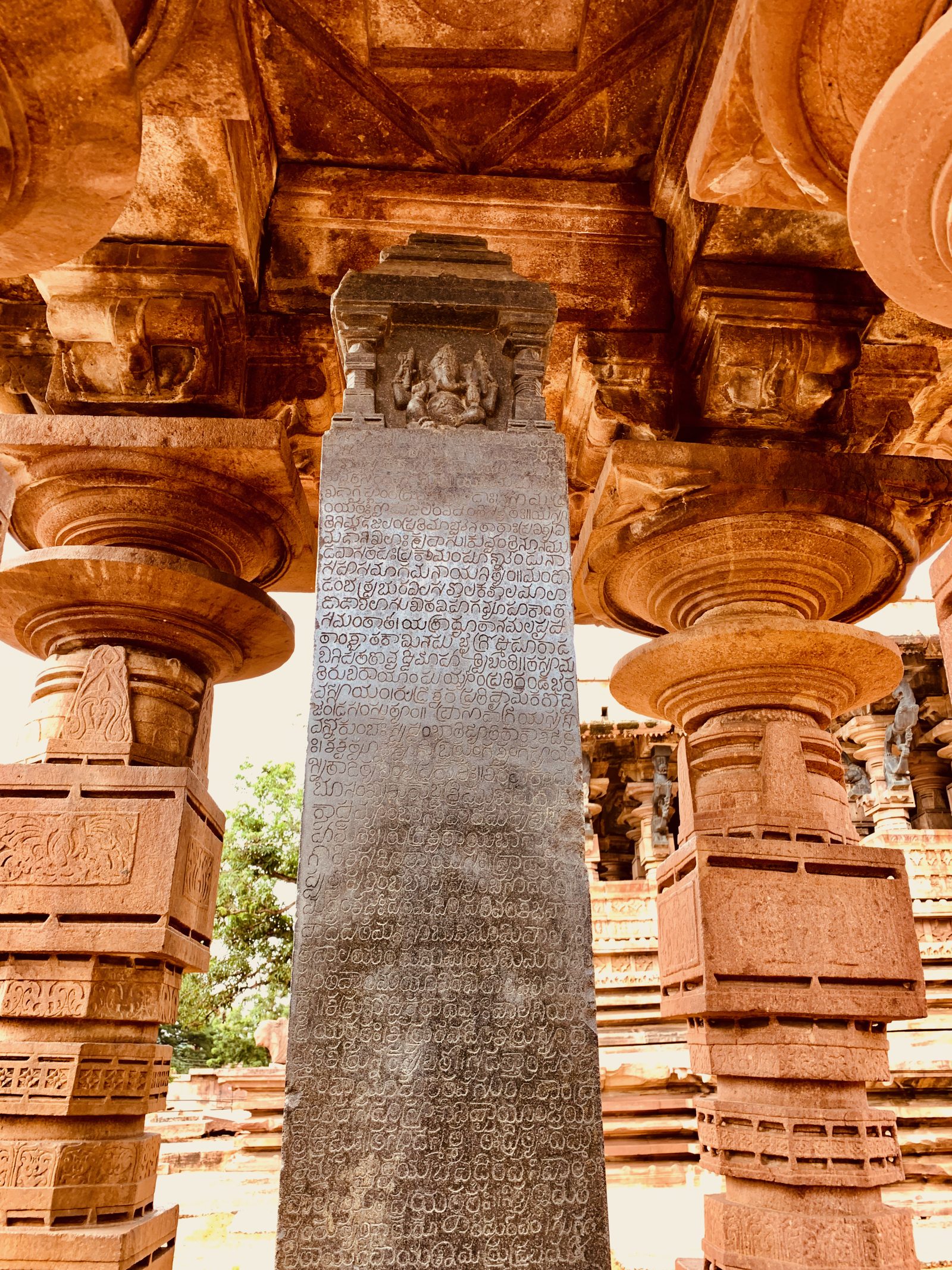
Photograph of the stone
Each of the four faces of the Ramappa pillar has a carved panel at the top. This face shows Ganesa. Barnett (1919) lists a linga, a cow and calf, and the sun and moon on the other faces.
Photo: Ms Sarah Welch, via Wikimedia Commons · CC0 · This record in the database

Historical photographs
These photographs were published a century or more ago. They show the monument as it stood before later repair and restoration.
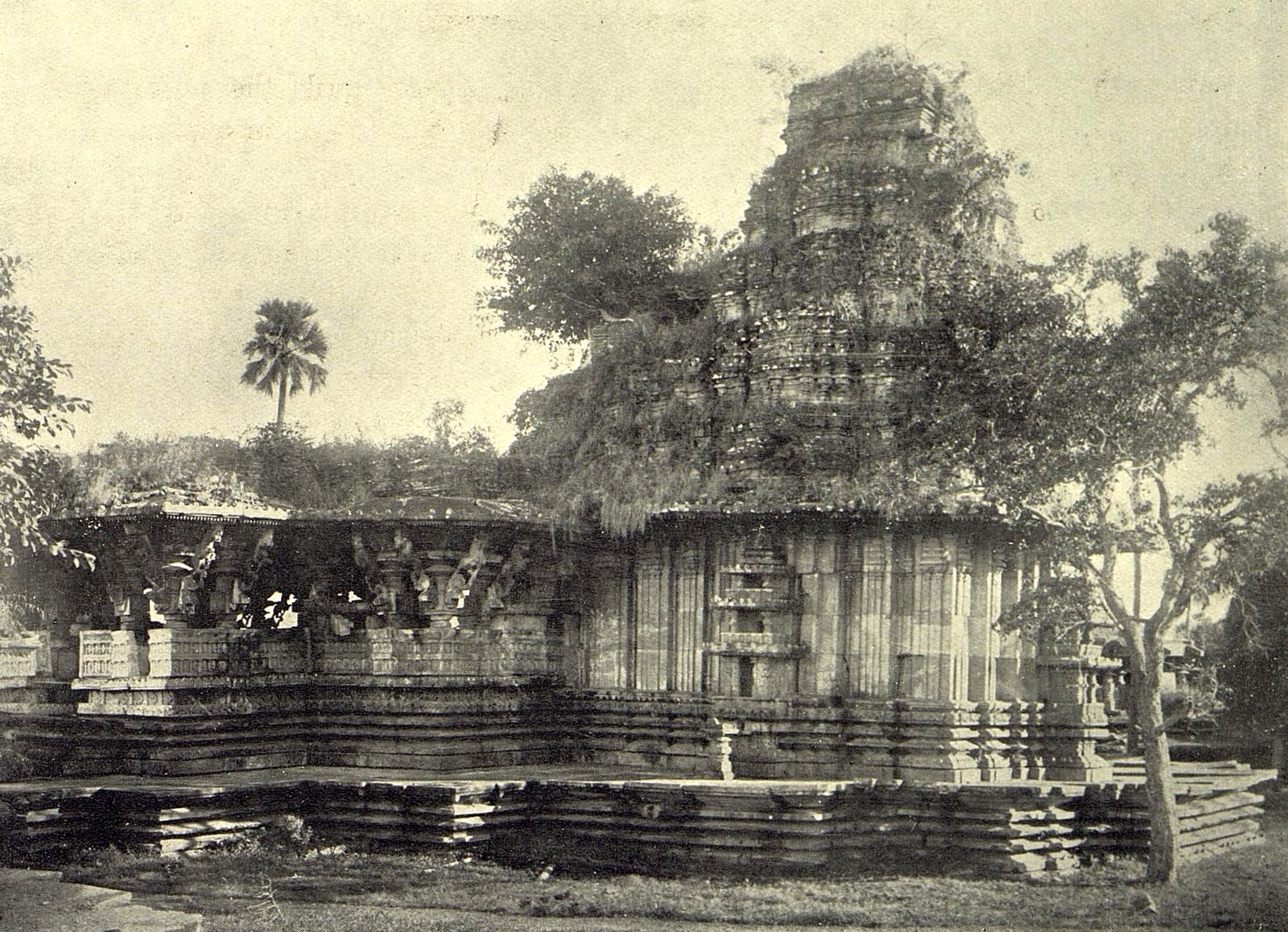
Photographed 1915-16
The Hyderabad Archaeological Department photographed the Ramappa Temple from the north-west in 1915-16. Grass and small trees grow on the roof and on the tower over the shrine. The department's report for 1930-31 states that its repairs to the Ramappa Temple were complete.
Photo: Hyderabad Archaeological Department, The Temples at Palampet (Memoirs of the Archaeological Survey of India 6), 1922 · Public domain
Photographed 1915-16
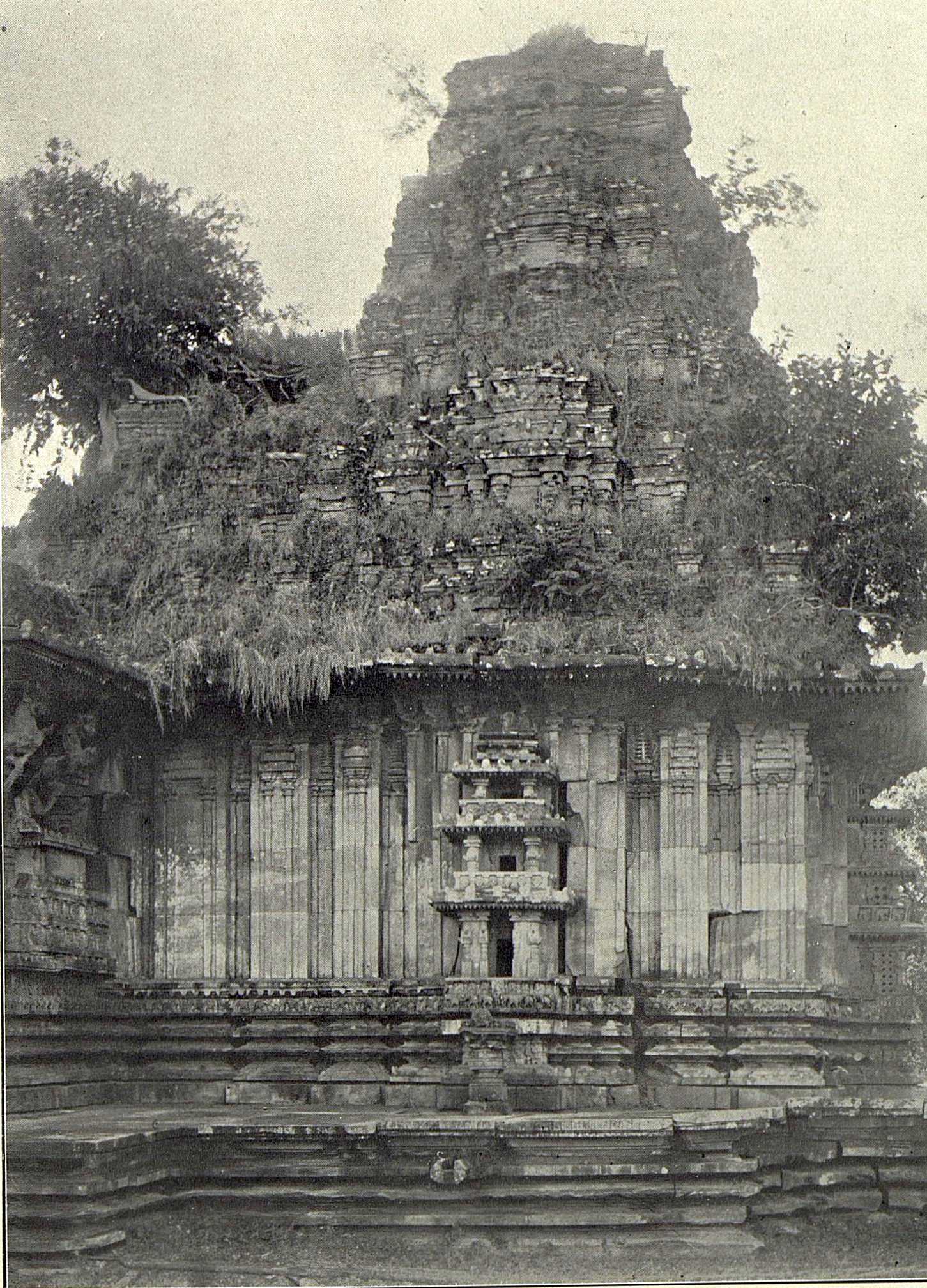
The Hyderabad Archaeological Department photographed the Ramappa Temple from the south-east in 1915-16. Plants grow along the roof of the hall, and a tree grows beside the tower. The photograph was published in 1917 and again in 1922.
Photo: Hyderabad Archaeological Department, The Temples at Palampet (Memoirs of the Archaeological Survey of India 6), 1922 · Public domain
Photographed before 1917
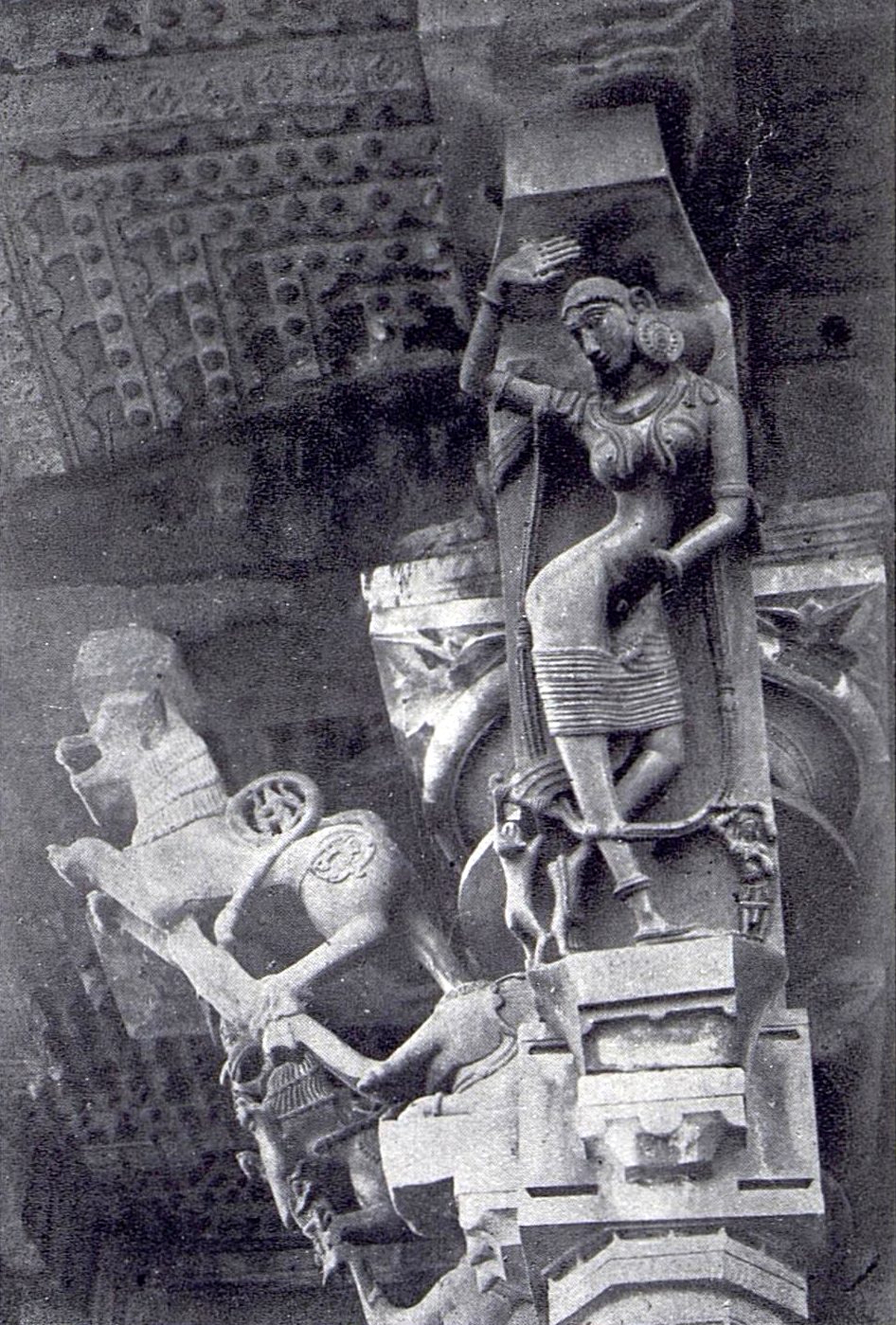
This photograph shows the tower over the shrine of the Ramappa Temple. Grass, shrubs and a tree grow out of the joints of the tower. The photograph was published in 1917 and again in 1922.
Photo: Hyderabad Archaeological Department, The Temples at Palampet (Memoirs of the Archaeological Survey of India 6), 1922 · Public domain
Photographed before 1922
A carved stone woman stands on a bracket between a pillar top and the eave of the Ramappa Temple. A rearing beast is carved on the next bracket. The photograph was published in 1922.
Photo: Hyderabad Archaeological Department, The Temples at Palampet (Memoirs of the Archaeological Survey of India 6), 1922 · Public domain
Photographed before 1922
The Nandi pavilion of the Ramappa Temple was in ruins when this photograph was published in 1922. Loose blocks and broken pillar parts lie on its stepped platform. A large tree grows beside it.
Photo: Hyderabad Archaeological Department, The Temples at Palampet (Memoirs of the Archaeological Survey of India 6), 1922 · Public domain
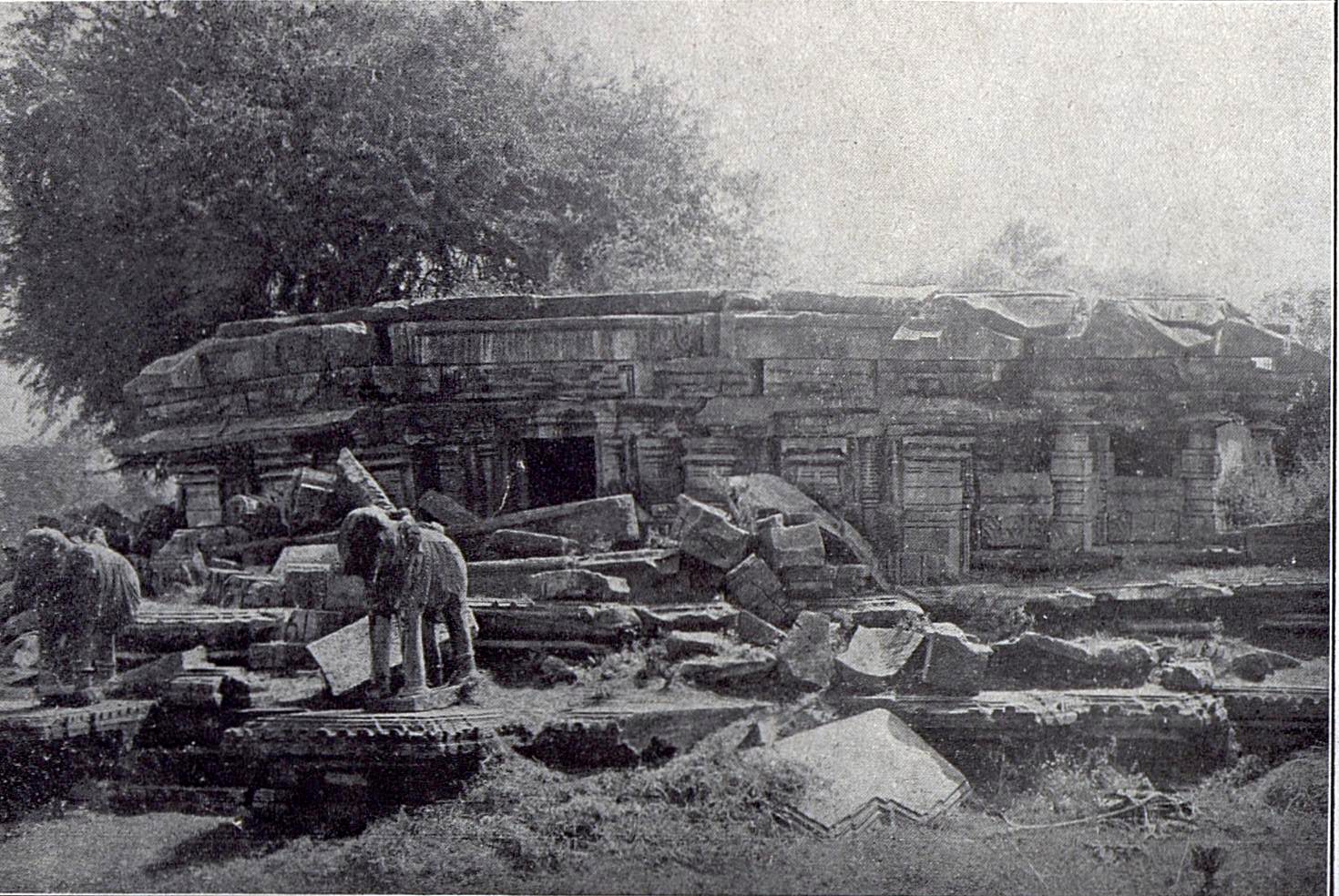
Photographed before 1922
A smaller temple north of the main Ramappa Temple was in ruins when this photograph was published in 1922. Fallen stone blocks lie in front of its walls. Two stone elephants stand among the blocks.
Photo: Hyderabad Archaeological Department, The Temples at Palampet (Memoirs of the Archaeological Survey of India 6), 1922 · Public domain
Also recorded as
- Rudreswara
- Rudreshwara
- Palampet
- Palampett
- Palampeta
- Pilampet
- Ramappa Gudi
- Ramappa
- Ramalingeswara