Pillalamarri Temples
Pillalamarri is a major Kakatiya temple centre in Suryapet taluk of present-day Nalgonda district. Parabrahma Sastry names it among the best surviving examples of the art and architecture of the period.
- Period
- Kakatiya, c. 13th century
- Location
- 17.1694° N, 79.5835° E
Source of the position: Wikidata Q104866660 and Q104867203 (the midpoint of the two temples)
- Condition
- The site requires field verification.
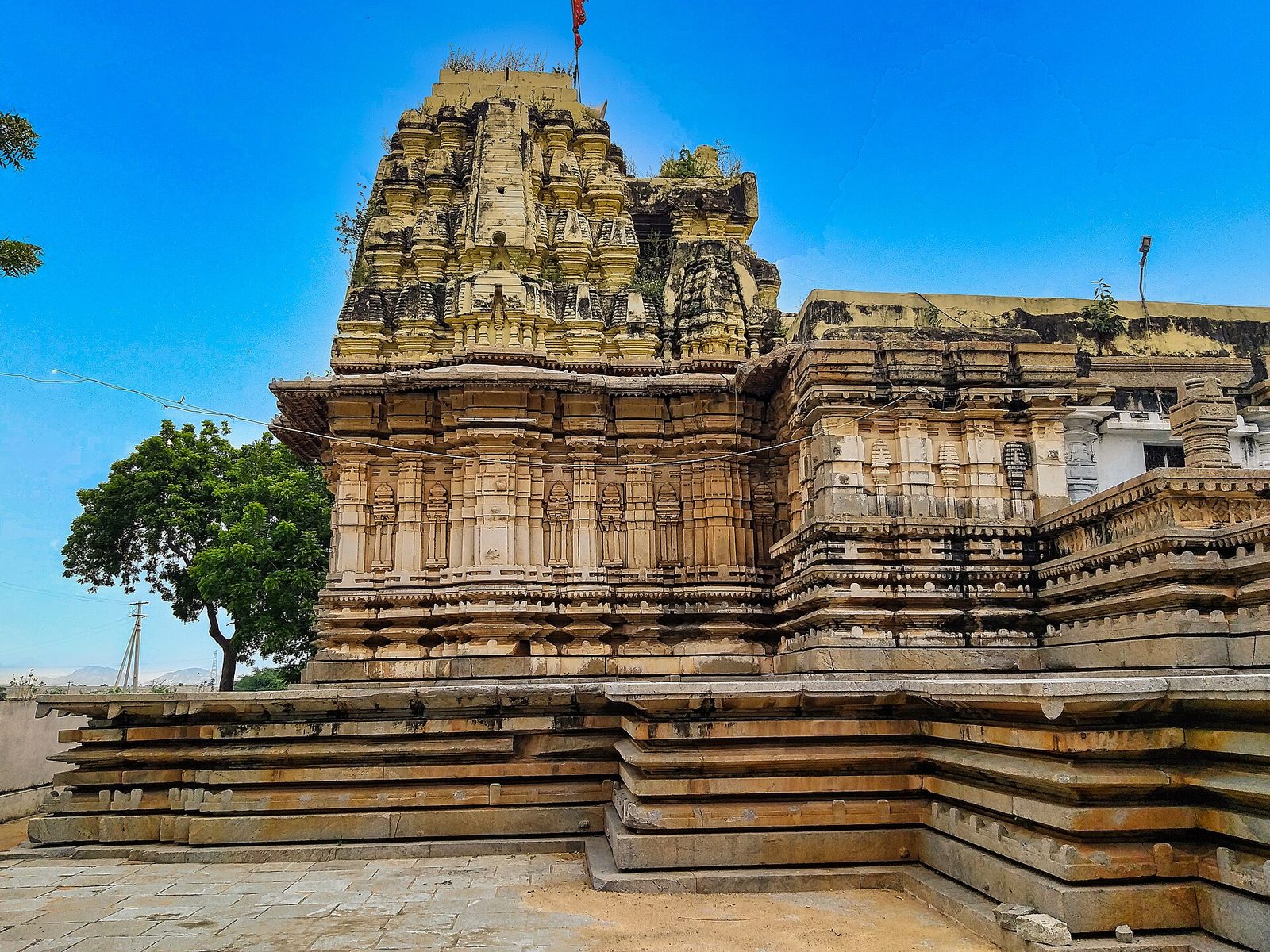
The Erakesvara temple at Pillalamarri: the shrine and its superstructure on a stepped, moulded platform.

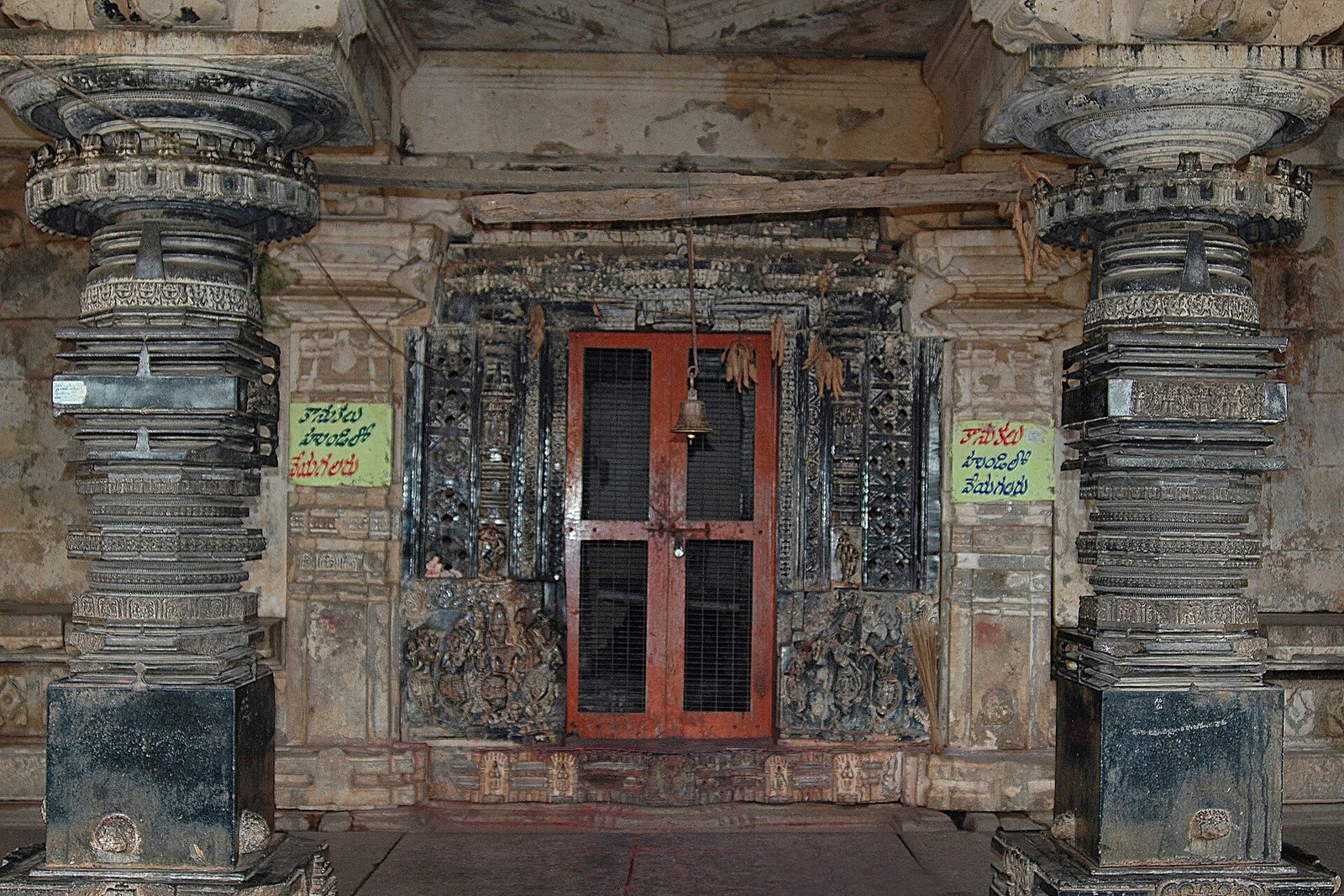
A shrine doorway in the Erakesvara temple, framed by two lathe-turned pillars of polished black stone.

Detail
- Parabrahma Sastry names the temples at Palampet, Pillalamarri, Anumakonda, Nagulapadu and Ghanpur as the best surviving examples of Kakatiya art and architecture.Parabrahma Sastry 1978
- Inscriptions record that Namireddi built a temple at Pillalamarri in 1195 and the Namesvara temple in 1202.Parabrahma Sastry 1978Epigraphia Telanganica 2023
- M. Rama Rao described the Pillalamarri temples in 1966.Rama Rao 1966
- The Telangana inscription corpora edit the inscriptions of the site.Epigraphia Telanganica 2023Sreenivasachar 1942
- An inscription of 1 June 1357 records that Erapotu, a servant of Kapaya Nayaka, reinstalled the god Erakesvara after Sultan Alavadin had damaged the image. Scholars differ on whether the Sultan was the Bahmani Ala-ud-din Hasan or Ala-ud-din Khalji.Epigraphia Telanganica 2023Yashoda Devi 1975
- Pillalamarri lies about three miles north-east of Suryapet. M. Rama Rao records that the village once stood inside a fort, now gone, and was the seat of the Recherla family.Rama Rao 1966
- Erakasani, wife of Beti Reddi of the Recherla family, built the Erakesvara temple in 1208. She also dug the Erakasamudram and Lakshmanasamudram tanks at Pillalamarri.Rama Rao 1966Epigraphia Telanganica 2023
- Rama Rao identifies the surviving temples from the inscriptions. The temple outside the village, now called Somesvara, is the Erakesvara of 1208. The single shrine in the village is the Namesvara of 1202. The triple shrine beside it, now called Mukkantisvara, is Nami Reddi's temple of 1195.Rama Rao 1966
- The Erakesvara temple stands on a double platform with porches on the east, north and south. Rama Rao gives the lower platform as 103 feet 3 inches from east to west and 100 feet from north to south. He finds the Namesvara temple more richly carved.Rama Rao 1966
Inscriptions on this monument
These images show the inscriptions themselves. The ink impressions come from the published editions, and the photographs show the stones today. How to read a Kakatiya inscription
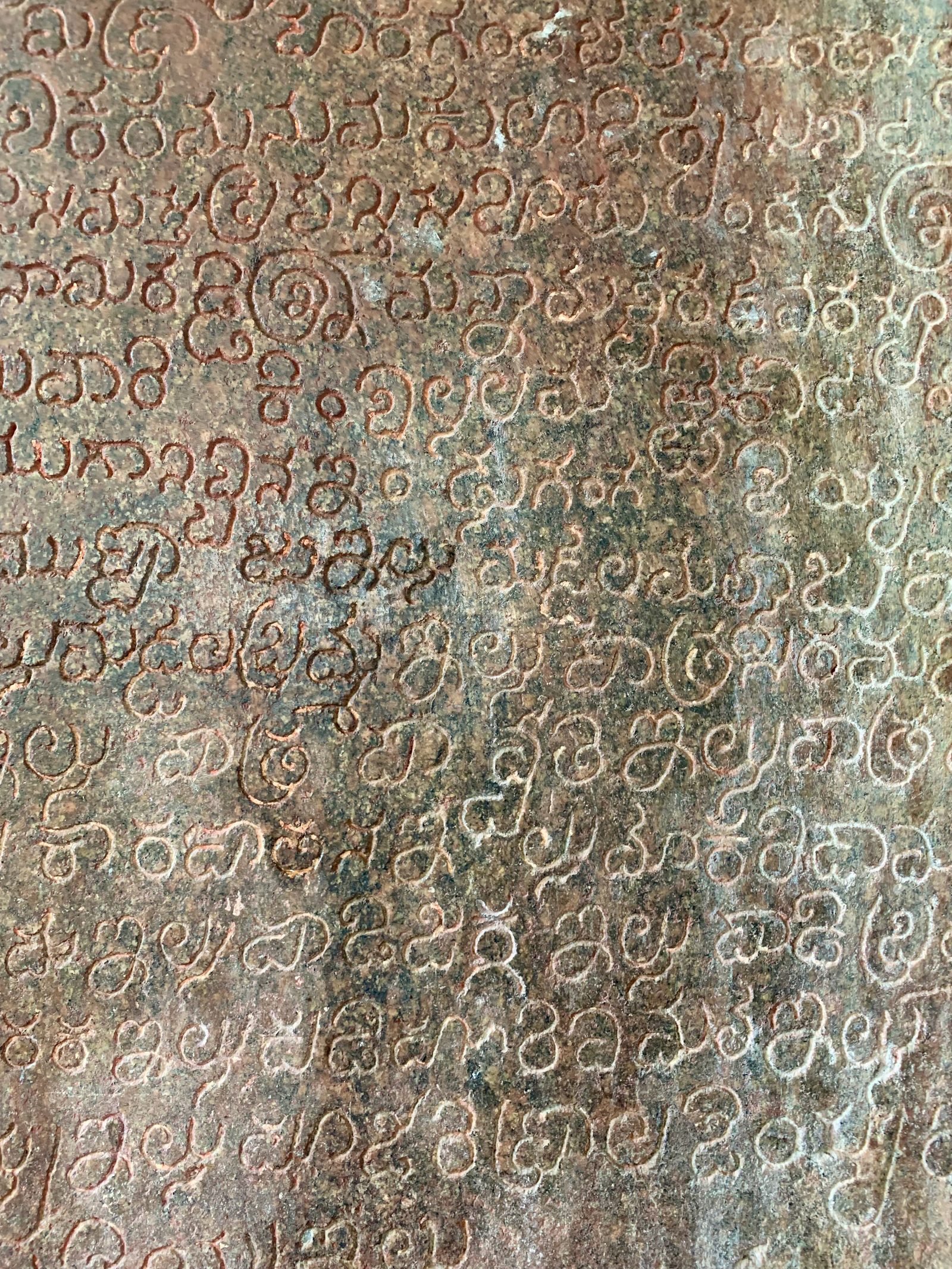
Photograph of the stone
This close view shows the rounded Telugu-Kannada letters of an inscription at the Nameshwara temple in Pillalamarri. Recherla chiefs who served the Kakatiya kings recorded gifts here in 1195 and 1202. The photograph does not show which record this is.

Also recorded as
- Pillalamarri
- Pillalamarry
- Pillalamari