Uparpalle Temples
The Uparpalle temples are ruined temples of about the same age as Hanamakonda and Ramappa. They are built mainly of granite, with decorated parts in the fine-grained black stone of Chalukyan work.
- Period
- Kakatiya, c. 13th century
- Materials
- Granite with fine-grained black stone for carved work
- Condition
- Ruined.
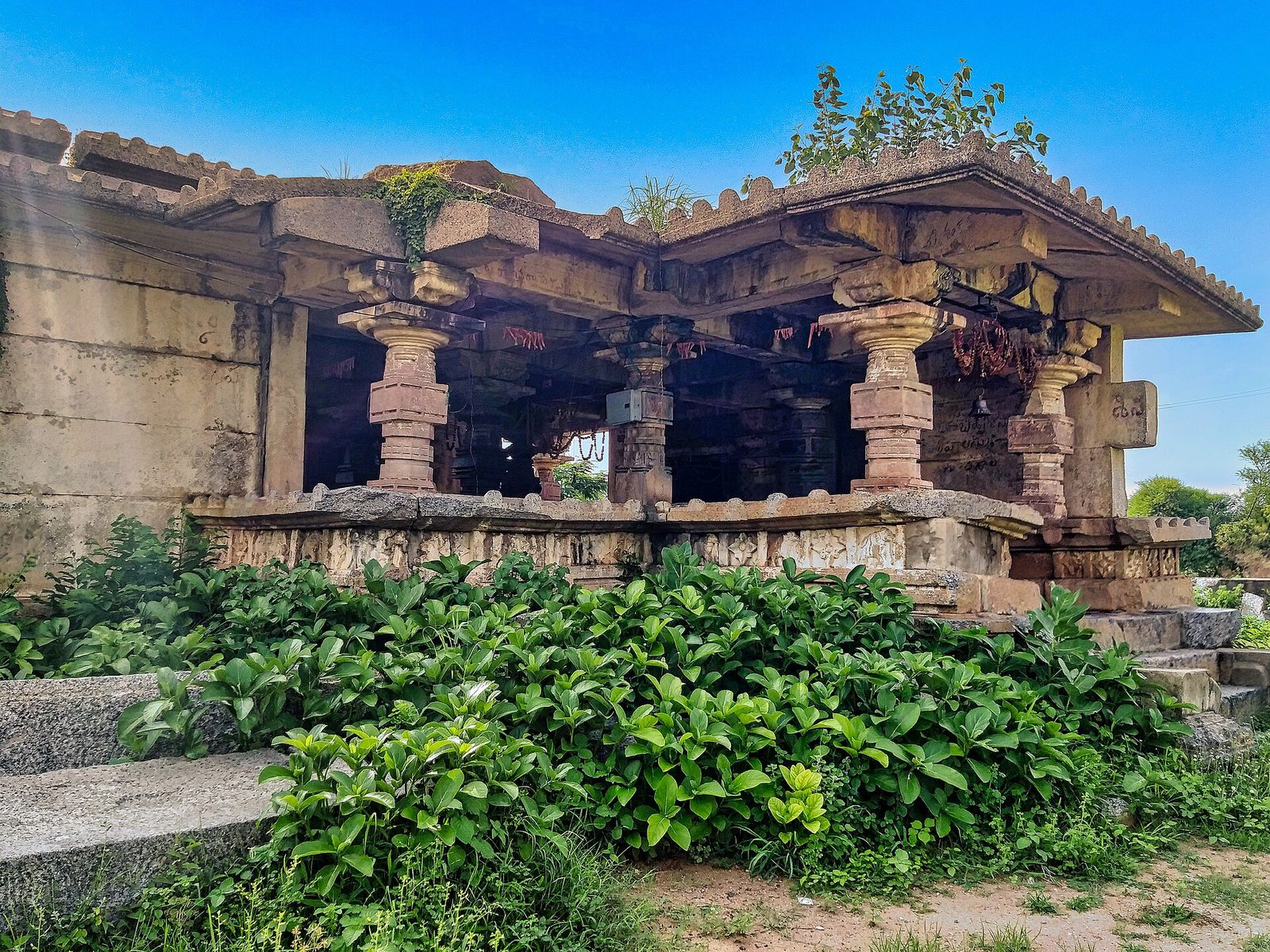
Commons describes these ruins near Upparapalli as the Godisala triple-shrine temples. Carved pillars stand on a raised base and carry a sloping stone eave over the mandapa.

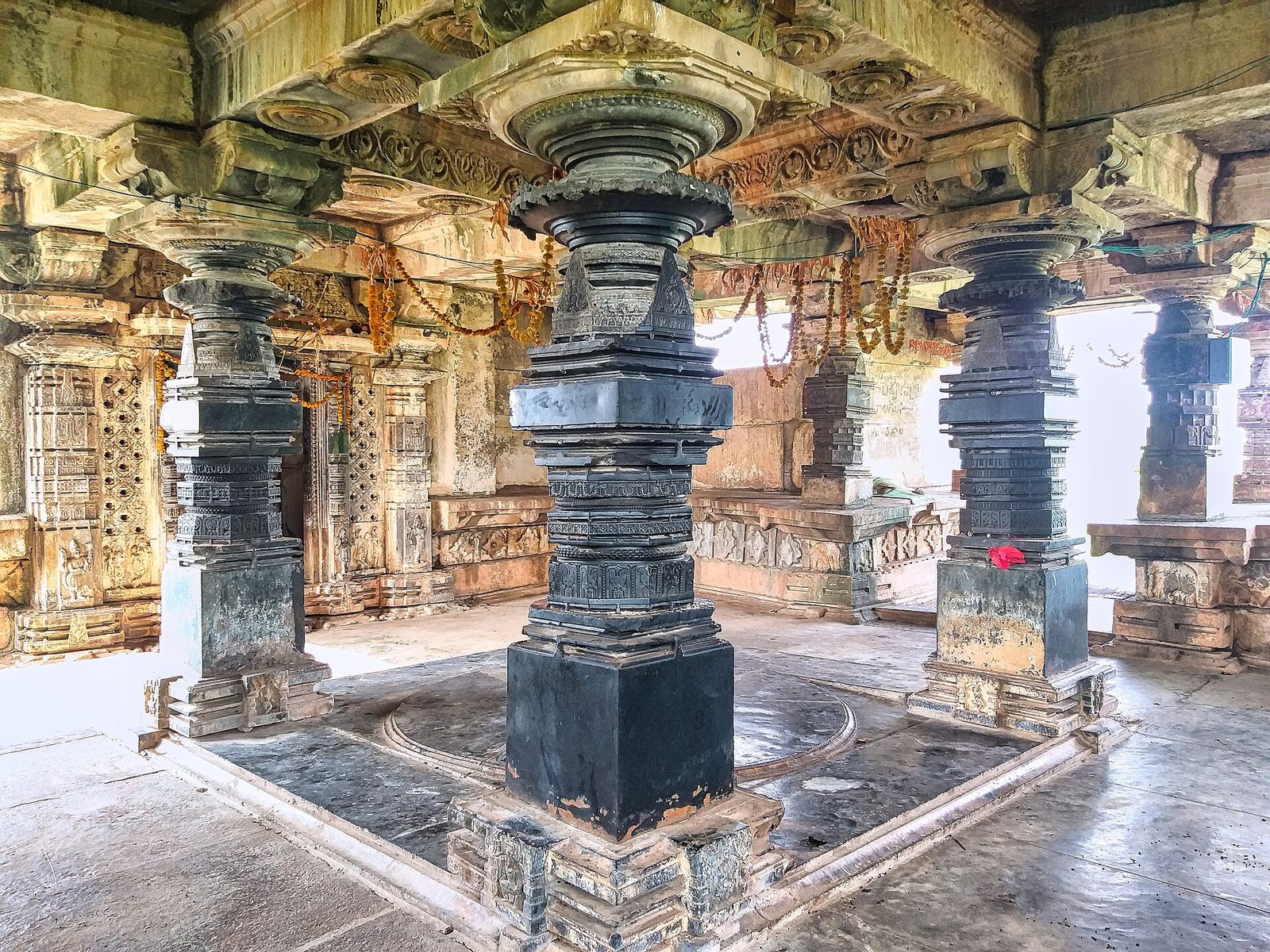
The central pillars of the hall are made of a dark, polished stone. The surrounding beams and walls are of lighter granite.

Detail
- The temples lie eight miles south of Mallangur and four and a half miles west by south of Yedlapuram, on the Karimnagar–Kazipet road.ASI 1900
- The temples are built mainly of granite. Their central columns, door frames and ceilings are of the fine-grained black stone found in Chalukyan temples.ASI 1900
- The 1900 survey notes that this black stone allows the very finest chiselling and takes a high polish.ASI 1900
- In 1213 Recherla Rudra granted the villages of Uparpalle and Borapalle to the Rudresvara temple at Palampet.Barnett 1919Rama Rao 1966UNESCO dossier 2017
- The Hyderabad Archaeological Department photographed the temple in 1915–16 and drew its plan in 1916–17. The department published its inscription in 1919.Nizam’s Archaeological Reports 1920–31Barnett 1919
Inscriptions on this monument
These images show the inscriptions themselves. The ink impressions come from the published editions, and the photographs show the stones today. How to read a Kakatiya inscription
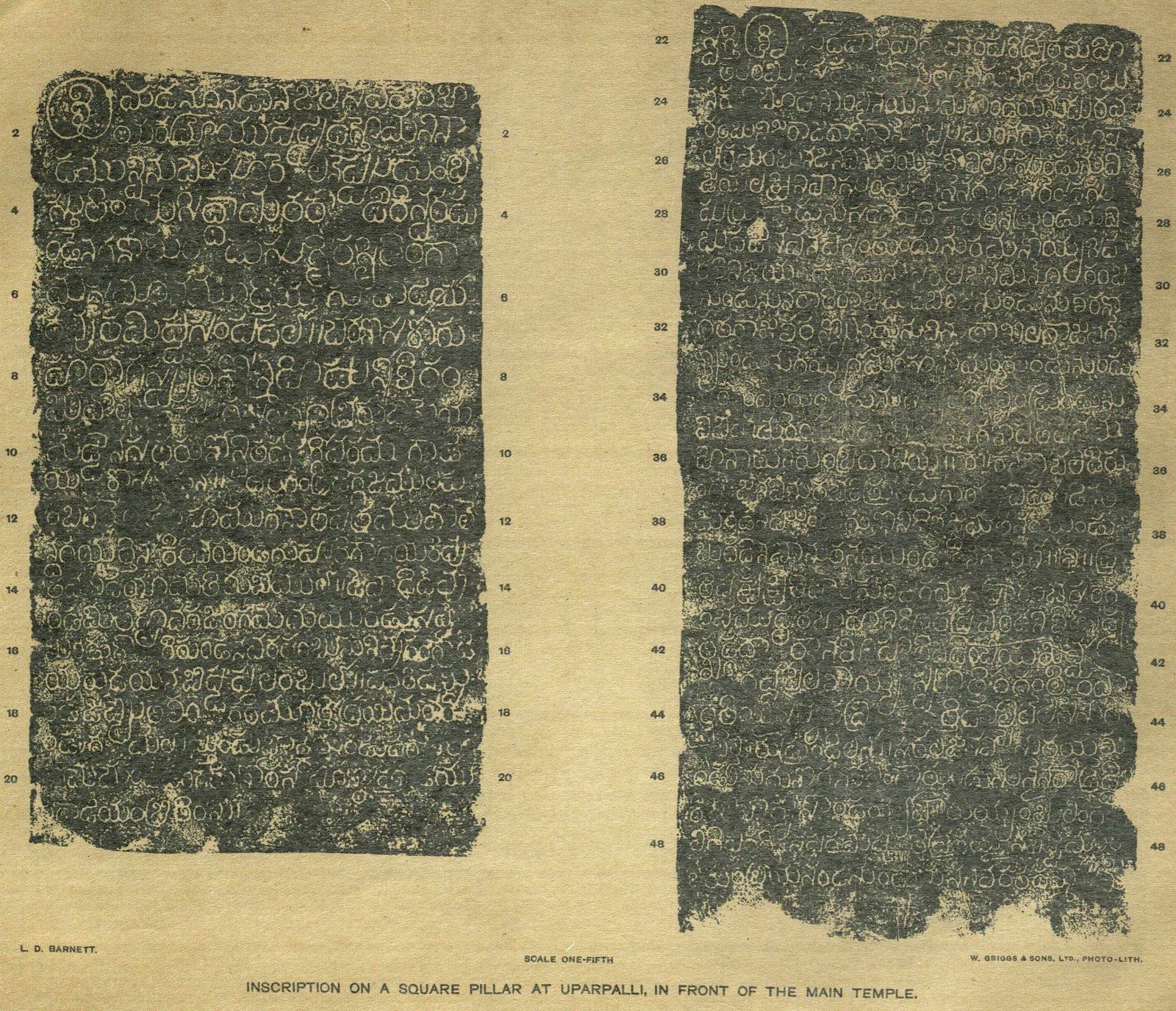
Estampage (ink impression)
This estampage shows the opening lines of the Telugu inscription on a square pillar in front of the main temple at Uparpalli. The record belongs to the reign of Ganapatideva and praises Kataya, a minister of Recherla Rudra. Barnett calls the script "Telugu of the period, of a regular and well-shaped type". The plate is one-fifth of the original size.
Estampage published in L. D. Barnett (ed.), Inscriptions at Palampet and Uparpalli, Hyderabad Archaeological Series No. 3 (1919). Photo-lithograph by W. Griggs & Sons. G. Yazdani took the estampages in 1916. Plate: "Inscription on a square pillar at Uparpalli, in front of the main temple", scale one-fifth. · Public domain · This record in the database
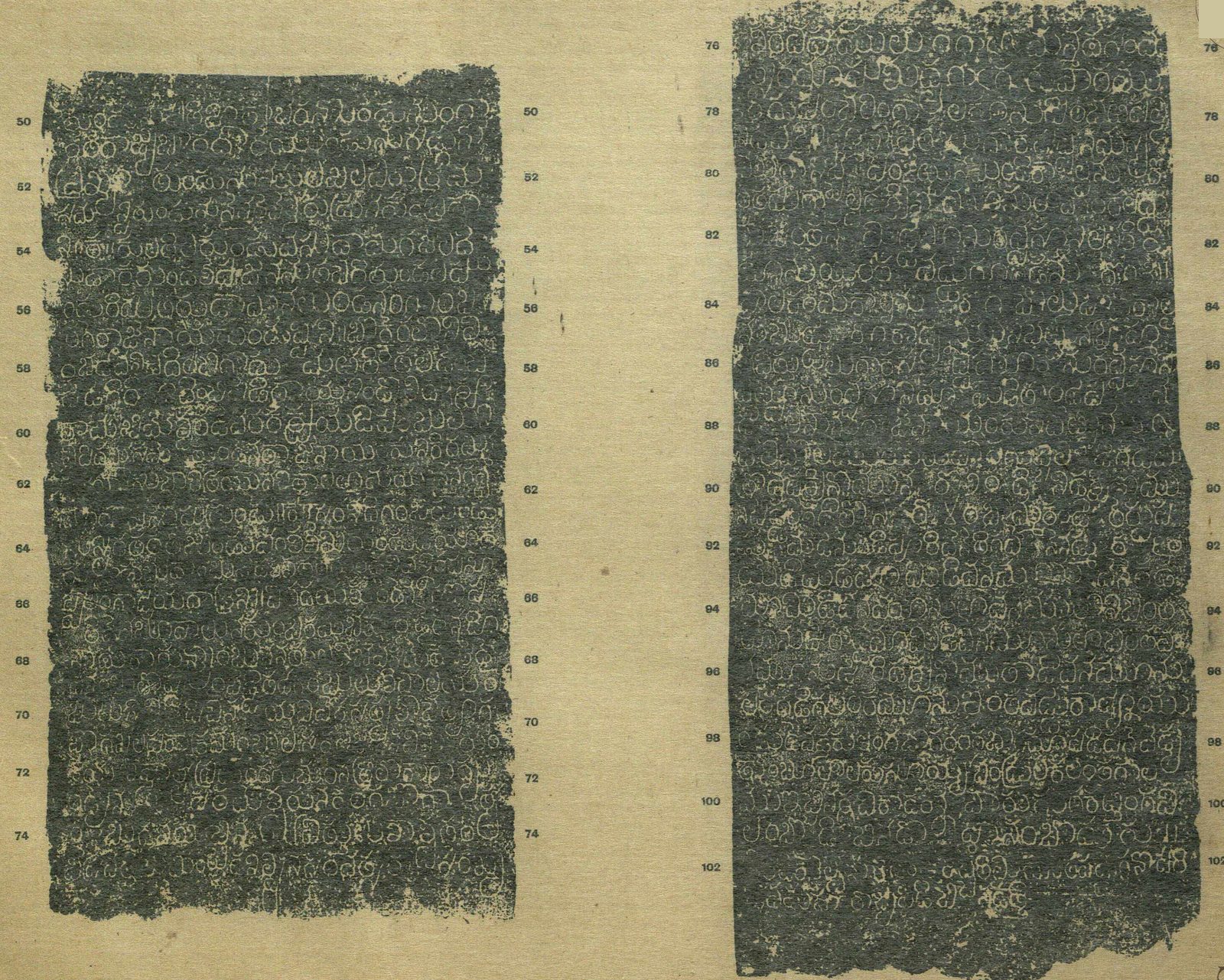
Estampage (ink impression)
This estampage shows lines 50 to 102 of the Uparpalli pillar inscription. Lines 76 to 78 give the date as Saka 1157, the year Manmatha, Magha bright fifteenth day, Thursday. Barnett equates the date with 24 January 1236. The book prints this plate sideways, and the image here is turned upright.
Estampage published in L. D. Barnett (ed.), Inscriptions at Palampet and Uparpalli, Hyderabad Archaeological Series No. 3 (1919). Photo-lithograph by W. Griggs & Sons. G. Yazdani took the estampages in 1916. Second page of the plate "Inscription on a square pillar at Uparpalli, in front of the main temple" (unnumbered continuation, printed sideways). · Public domain · This record in the database
Historical photographs
These photographs were published a century or more ago. They show the monument as it stood before later repair and restoration.
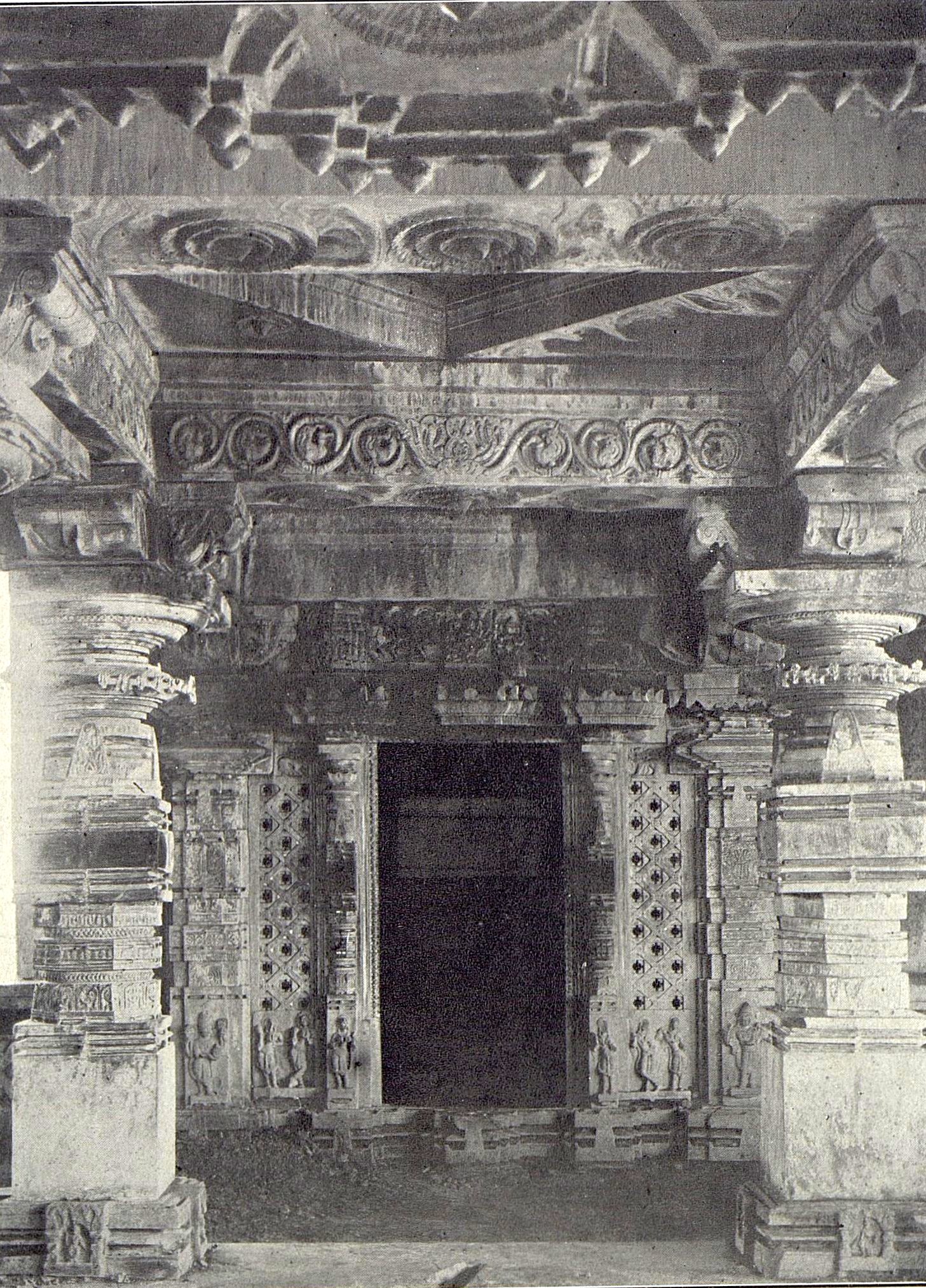
Photographed before 1917
This photograph shows the inside of the great temple at Uparpalle. Carved beams and a ceiling with lotus panels frame a shrine doorway with pierced stone screens. The photograph was published in 1917 and again in 1922.
Photo: Hyderabad Archaeological Department, The Temples at Palampet (Memoirs of the Archaeological Survey of India 6), 1922 · Public domain
Also recorded as
- Uparpalle
- Uparpalle temple
- Upparllapalli
- Yedlapuram temples